
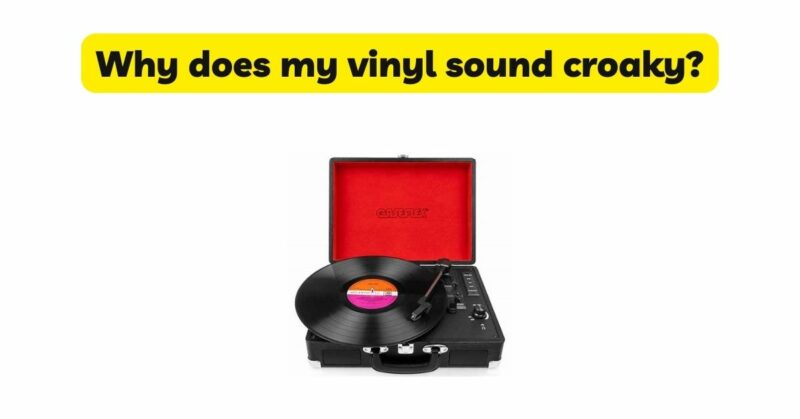
Vinyl records have experienced a remarkable resurgence in recent years, captivating music enthusiasts with their warm and authentic sound. However, encountering a croaky or distorted sound while playing vinyl records can be frustrating and disappointing. In this article, we will explore the potential causes behind a croaky vinyl sound and delve into the factors that can contribute to this issue. By understanding these causes, we can identify practical solutions to restore the true beauty of vinyl playback.
- Tracking Issues and Stylus Condition
One of the primary culprits of a croaky vinyl sound is tracking issues and the condition of the stylus:
a. Tracking Force: The tracking force is the pressure exerted by the stylus on the record’s grooves. Insufficient tracking force can result in the stylus struggling to follow the grooves, causing distortions and a croaky sound. On the other hand, excessive tracking force can damage the record and also lead to distorted playback.
b. Stylus Wear and Damage: A worn-out or damaged stylus can negatively affect the sound quality and contribute to a croaky playback. Regular stylus maintenance and replacement are crucial to ensure optimal tracking and prevent distortion.
- Misaligned Cartridge and Tonearm
Misalignment of the cartridge and tonearm can significantly impact the quality of vinyl playback:
a. Cartridge Alignment: Proper alignment of the cartridge is essential for accurate tracking and sound reproduction. A misaligned cartridge can cause the stylus to improperly engage with the record’s grooves, resulting in a croaky sound.
b. Tonearm Setup: Incorrect setup of the tonearm, including an improper tracking angle or height, can lead to tracking issues and a croaky sound. Ensuring the tonearm is correctly calibrated and balanced can help alleviate this problem.
- Vinyl Record Condition
The condition of the vinyl record itself can contribute to a croaky sound:
a. Surface Damage: Scratches, scuffs, or other forms of surface damage on the vinyl record can cause the stylus to encounter obstacles, leading to distortions and a croaky sound. Proper handling and storage of vinyl records are essential to minimize such damage.
b. Warped Records: Warping occurs when a vinyl record becomes unevenly or permanently bent, causing the stylus to unevenly track the grooves. This uneven tracking can result in a croaky or distorted sound.
- Dust, Debris, and Contaminants
The presence of dust, debris, and contaminants can have a significant impact on the sound quality of vinyl records:
a. Dust on the Record Surface: Dust particles that accumulate on the record’s surface can interfere with the stylus’s movement, causing distortions and a croaky sound. Regular cleaning of vinyl records using appropriate cleaning methods and tools can help mitigate this issue.
b. Dust on the Stylus: Dust particles that accumulate on the stylus can impede its ability to accurately track the grooves, leading to a croaky sound. Regular cleaning and maintenance of the stylus are essential to ensure optimal performance.
- Turntable and Equipment Issues
Problems with the turntable and associated equipment can contribute to a croaky sound:
a. Turntable Setup: An improperly set up turntable, including issues with the platter, motor, or belt, can result in speed variations or instability, causing a croaky sound. Proper turntable setup and maintenance are crucial for optimal playback.
b. Equipment Interference: Electrical interference or grounding issues with the turntable or other audio equipment can introduce noise and distortions into the sound, leading to a croaky playback. Ensuring proper grounding and minimizing interference sources can help alleviate this problem.
Conclusion
Encountering a croaky sound while playing vinyl records can be disheartening, but it is not an insurmountable issue. By addressing tracking issues, maintaining the stylus, ensuring proper alignment of the cartridge and tonearm, and keeping the vinyl records clean and in good condition, you can improve the sound quality and minimize distortions. Additionally, proper turntable setup and equipment maintenance are essential for optimal playback. By understanding and addressing these factors, you can restore the pure, high-fidelity sound that makes vinyl records so captivating.