
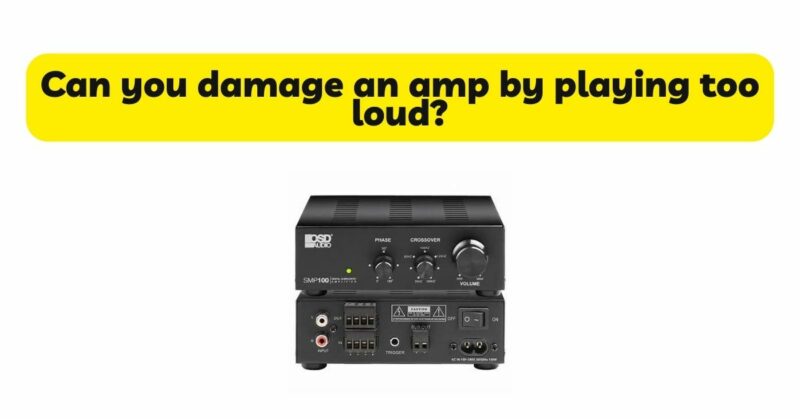
The pursuit of powerful, immersive sound experiences often leads music enthusiasts to explore the limits of their audio systems. However, pushing the volume levels to extreme levels may raise concerns about the potential damage it can cause to amplifiers. This article aims to address the question: Can playing music too loud damage an amp? We will delve into the effects of high volume on amplifiers, the risks involved, and provide insights on how to protect your amplifier while still enjoying a captivating audio experience.
- Understanding Amplifier Power and Speaker Sensitivity
To comprehend the impact of playing music at high volumes, it is crucial to understand the relationship between amplifier power and speaker sensitivity:
a. Amplifier Power: Amplifiers are rated for their power output, usually measured in watts. This rating indicates the maximum power the amplifier can deliver to the speakers.
b. Speaker Sensitivity: Speaker sensitivity refers to how efficiently a speaker converts electrical power into sound. It is measured in decibels (dB) and indicates the sound level produced with a given amount of input power.
- Effects of Playing Music at High Volumes
Playing music at high volumes can have several effects on both the amplifier and the speakers:
a. Clipping: When an amplifier is pushed beyond its maximum power output, it enters a state of distortion known as clipping. Clipping occurs when the amplifier attempts to reproduce a waveform that exceeds its capability, resulting in a distorted signal.
b. Heat Generation: Amplifiers generate heat during operation, and playing music at high volumes for extended periods can increase heat production. Inadequate heat dissipation can lead to overheating, potentially damaging the amplifier’s components.
c. Speaker Overloading: Playing music too loudly can cause the speaker cones to move excessively, potentially reaching their mechanical limits. This can lead to distortion, loss of clarity, and, in extreme cases, physical damage to the speakers.
d. Driver Fatigue: Continuous exposure to high volume levels can cause fatigue in the speakers’ drivers over time. This may result in reduced performance, compromised audio quality, and eventual speaker failure.
- Risks and Signs of Amplifier Damage
While playing music too loud can potentially damage an amplifier, it is essential to understand the associated risks and signs of damage:
a. Overheating: Continuous high-volume playback can cause the amplifier to overheat, leading to thermal stress on its components. This can result in performance degradation, distortion, or even component failure.
b. Reduced Lifespan: Consistently pushing an amplifier to its limits can shorten its lifespan. The excessive strain on the internal circuitry and components may lead to premature wear and degradation.
c. Distortion and Signal Artifacts: Playing music at extremely high volumes can introduce significant distortion and other undesirable signal artifacts, negatively impacting the audio quality.
d. Protection Circuitry Activation: Many modern amplifiers are equipped with protection circuitry designed to safeguard against damage caused by excessive power or heat. If the amplifier repeatedly triggers protection mechanisms, it is a clear indication that it is being pushed beyond its limits.
- Protecting Your Amplifier
While playing music at high volumes poses certain risks, there are measures you can take to protect your amplifier:
a. Adequate Ventilation: Ensure that the amplifier has sufficient ventilation to dissipate heat. Avoid placing it in enclosed spaces or stacking equipment on top that may restrict airflow.
b. Monitor Heat Levels: Keep an eye on the amplifier’s temperature during extended high-volume listening sessions. If it becomes excessively hot, consider reducing the volume or incorporating additional cooling solutions such as fans or heatsinks.
c. Match Amplifier and Speaker Power: Ensure that the amplifier’s power output matches the power requirements of your speakers. Overdriving the speakers can strain the amplifier and compromise audio quality.
d. Use High-Quality Audio Sources: Using high-quality audio sources minimizes the need to push the volume to extreme levels. Opt for lossless formats and well-recorded tracks to ensure optimal audio fidelity.
e. Listen at Comfortable Levels: It is essential to consider your listening environment and prioritize your hearing health. Enjoy music at levels that are comfortable and safe, allowing you to appreciate the details without risking damage to your amplifier or your ears.
- Regular Maintenance and Servicing
Regular maintenance and servicing can help identify potential issues and ensure the longevity of your amplifier:
a. Cleaning: Dust and debris can accumulate inside the amplifier, obstructing ventilation and causing heat buildup. Periodically clean the amplifier’s vents and surfaces using compressed air and a soft cloth.
b. Inspection: Regularly inspect the amplifier for loose connections, signs of wear, or any unusual behavior. Addressing potential issues promptly can prevent further damage.
c. Professional Servicing: Consider professional servicing periodically to ensure optimal performance and address any underlying issues. Professional technicians can diagnose and repair any amplifier problems effectively.
Conclusion
Playing music at high volumes can pose risks to both amplifiers and speakers, including clipping, heat generation, speaker overloading, and potential damage. It is crucial to strike a balance between audio enjoyment and responsible usage to protect your amplifier. By understanding the effects of high volume, monitoring heat levels, matching amplifier and speaker power, using high-quality sources, and maintaining your amplifier properly, you can enjoy powerful sound experiences while safeguarding your audio equipment’s longevity. Remember, responsible listening practices not only protect your amplifier but also ensure the preservation of your hearing health.