
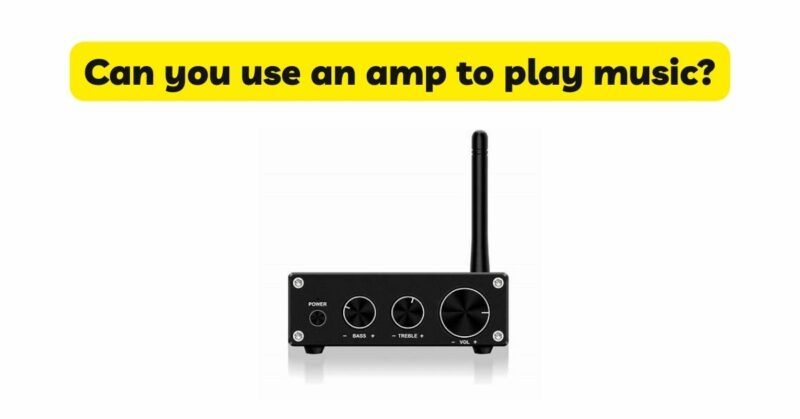
Music has the power to move us, inspire us, and transport us to different emotional realms. To truly appreciate the intricate details and nuances of our favorite songs, the right audio equipment is crucial. Amplifiers, commonly known as amps, play a pivotal role in the music playback process. In this article, we will delve into the world of amplifiers and explore how they enhance the music experience, allowing us to immerse ourselves in the beauty of sound.
- Understanding Amplifiers:
Amplifiers are electronic devices designed to increase the power and voltage of audio signals. They act as a bridge between the source device, such as a music player or receiver, and the speakers or headphones. Amplifiers receive the low-level audio signal from the source device and boost it to a level suitable for driving speakers or headphones. They ensure that the audio signal is delivered with sufficient power and clarity, enriching the music playback experience.
- Powering the Sound:
One of the primary functions of an amplifier is to provide the necessary power to drive speakers or headphones. Speakers require a certain amount of electrical power to vibrate the speaker cones and produce sound waves. Amplifiers supply this power, allowing the speakers to faithfully reproduce the music as intended by the artist. Similarly, headphones rely on amplifiers to amplify the audio signal and drive the headphone drivers, resulting in accurate and immersive sound reproduction.
- Amplifying the Signal:
In addition to providing power, amplifiers also amplify the audio signal itself. The incoming audio signal from the source device is often at a low level, which may be insufficient to drive speakers or headphones effectively. Amplifiers boost the signal, increasing its amplitude and ensuring that every musical detail is faithfully reproduced. This amplification process allows for a more dynamic and engaging music experience.
- Enhancing Audio Fidelity:
One of the significant advantages of using an amplifier is the improvement in audio fidelity. Amplifiers are designed to deliver a clean and accurate amplification of the audio signal. By reducing distortion and noise, they help preserve the integrity of the music and maintain its original quality. This results in a more lifelike and enjoyable listening experience, allowing the listener to fully immerse themselves in the music.
- Control and Customization:
Amplifiers often come with various controls and features that allow users to customize their listening experience. These include tone controls, equalizers, balance adjustments, and gain controls, among others. These features provide the opportunity to fine-tune the sound according to personal preferences or to compensate for room acoustics. The ability to control and customize the sound further enhances the music playback experience, tailoring it to individual taste.
- Matching Amplifiers with Speakers/Headphones:
To maximize the potential of an amplifier, it is essential to match it with compatible speakers or headphones. Different amplifiers have specific power output capabilities and impedance ratings, and selecting the right speakers or headphones ensures optimal performance. Impedance matching is crucial to prevent signal loss and to ensure that the amplifier and speakers/headphones work harmoniously together.
- Choosing the Right Amplifier:
When selecting an amplifier for music playback, several factors need to be considered:
a. Power Output: Ensure that the amplifier has enough power output to drive your speakers or headphones. Insufficient power can result in distortion or a lack of volume.
b. Amplifier Class: Amplifiers come in different classes, such as Class A, Class AB, and Class D. Each class has its strengths and weaknesses, so it’s important to choose the one that best suits your needs and preferences.
c. Connectivity Options: Consider the connectivity options provided by the amplifier, such as analog inputs, digital inputs, and wireless connectivity. These options determine how you can connect your music source to the amplifier.
d. Budget and Quality: Strike a balance between your budget and the quality of the amplifier. While high-end amplifiers may offer superior performance, there are also excellent options available at more affordable price points.
- Integrating Amplifiers into Music Systems:
Amplifiers can be integrated into various music systems, depending on individual preferences and requirements:
a. Stereo Systems: Amplifiers are a fundamental component of traditional stereo systems, where they drive two speakers to create a balanced and immersive stereo soundstage.
b. Home Theater Systems: In home theater setups, amplifiers power multiple speakers, delivering surround sound for a cinematic experience.
c. Personal Audio Systems: Amplifiers can also be used in personal audio setups, where they drive high-quality headphones, providing exceptional sound quality for private listening sessions.
- Portable Amplifiers:
For music enthusiasts on the go, portable amplifiers offer the advantage of enhancing the audio quality of portable music players, smartphones, or laptops. These compact amplifiers provide a boost in power and audio fidelity, allowing listeners to enjoy their music with enhanced clarity and detail.
Conclusion:
In conclusion, amplifiers are essential tools for elevating the music experience. By providing power and amplifying the audio signal, amplifiers ensure that music is reproduced with clarity, accuracy, and increased dynamics. Whether integrated into stereo systems, home theater setups, or personal audio systems, amplifiers enhance audio fidelity and allow us to fully immerse ourselves in the magic of music. So, the next time you want to indulge in your favorite songs, consider incorporating an amplifier into your music setup and experience the transformative power of amplified music.