
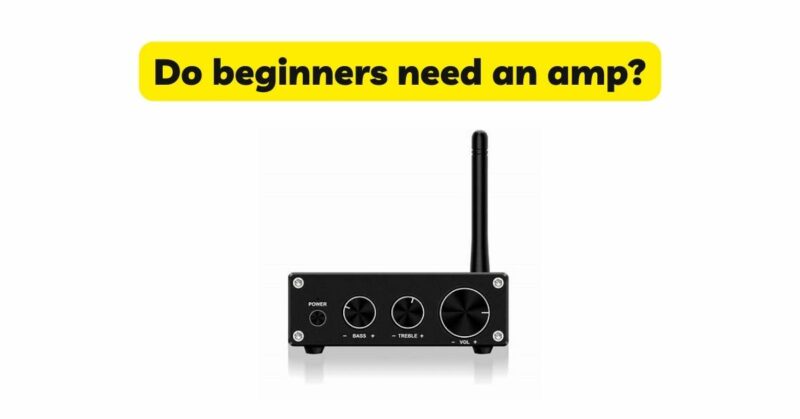
Embarking on a journey into the world of music is an exciting and fulfilling endeavor. As a beginner, you may find yourself wondering whether an amplifier is necessary for your musical pursuits. In this article, we will explore the role of amplifiers for beginners and delve into the benefits they offer in terms of sound quality, learning opportunities, and overall musical growth.
- Understanding Amplifiers:
Amplifiers, also known as amps, are electronic devices that increase the power and voltage of audio signals. They serve as the driving force behind speakers or headphones, ensuring that the audio signal is amplified to a level suitable for enjoyable listening. Amplifiers come in various types and configurations, offering different features and sonic characteristics.
- Sound Quality Improvement:
One of the key advantages of using an amplifier, even as a beginner, is the improvement in sound quality. Most entry-level audio sources, such as guitars, keyboards, or digital pianos, have built-in amplification systems that may not deliver the best sound reproduction. By connecting your instrument or audio device to an external amplifier, you can experience a significant enhancement in audio fidelity, clarity, and tonal balance. This allows you to fully appreciate the nuances and intricacies of your playing, inspiring you to explore and develop your musical skills.
- Volume Control and Projection:
Amplifiers provide control over volume levels, allowing you to adjust the sound output to suit different environments and playing situations. As a beginner, having the ability to control your instrument’s volume is essential, especially when practicing at home or performing in small venues. Amplifiers also help project your sound more effectively, ensuring that your music reaches the intended audience with the desired impact.
- Learning and Practice:
Amplifiers offer unique learning opportunities for beginners. By connecting your instrument to an amplifier, you can better hear the details of your playing, including articulation, dynamics, and tone. This heightened audio feedback helps you identify areas for improvement and refine your technique. Additionally, amplifiers often come with built-in effects such as reverb, delay, or distortion, which can inspire creativity and allow you to experiment with different sounds and styles as you develop your musical voice.
- Versatility and Connectivity:
Amplifiers provide versatility in terms of connectivity options. Many amplifiers have multiple input jacks, allowing you to connect different instruments, microphones, or audio devices simultaneously. This versatility enables you to experiment with various setups, collaborate with other musicians, or play along with backing tracks. Additionally, some amplifiers feature built-in audio interfaces or headphone outputs, enabling you to connect to recording equipment or practice silently with headphones.
- Performance Opportunities:
As a beginner, you may eventually aspire to perform in front of an audience or join a band. Amplifiers are essential for these scenarios as they ensure that your instrument’s sound is amplified to a level that can compete with other instruments and vocals on stage. Amplifiers designed for live performances often offer features such as EQ controls, feedback suppression, and stage monitoring capabilities, further enhancing your live sound experience.
- Amplifier Options for Beginners:
When considering an amplifier as a beginner, it’s important to select one that suits your needs and budget. Here are a few options to consider:
a. Practice Amps: These compact and affordable amplifiers are designed for practice sessions at home or in small spaces. They typically offer lower wattage and simpler controls, making them user-friendly for beginners.
b. Combo Amps: Combo amplifiers combine the amplifier and speakers in a single unit, providing a convenient all-in-one solution. They come in various sizes and power options, allowing you to choose one that matches your playing requirements.
c. Modeling Amps: Modeling amplifiers simulate the sounds of different amplifiers and effects, offering a wide range of tonal options. They are particularly useful for beginners who want to explore different genres and experiment with various sound textures.
d. Acoustic Amps: If you play acoustic instruments such as guitars or violins, acoustic amplifiers are specifically designed to amplify the natural sound of these instruments. They often feature built-in effects tailored for acoustic performance.
- Budget Considerations:
As a beginner, it’s natural to have budget constraints. The good news is that there are amplifiers available at various price points, catering to different budgets. While high-end amplifiers may offer advanced features and superior sound quality, entry-level amplifiers can still provide satisfactory performance and meet the needs of beginner musicians. It’s important to strike a balance between your budget and the features you prioritize.
Conclusion:
While it is possible to start your musical journey without an amplifier, incorporating one into your practice and performance routine as a beginner can greatly enhance your overall experience. Amplifiers offer improved sound quality, volume control, and learning opportunities, helping you develop your skills and creativity. They provide versatility, connectivity, and performance capabilities that enable you to explore different musical styles and collaborate with others. By carefully selecting an amplifier that aligns with your needs and aspirations, you can unlock your musical potential and enjoy a fulfilling journey in the world of music.