
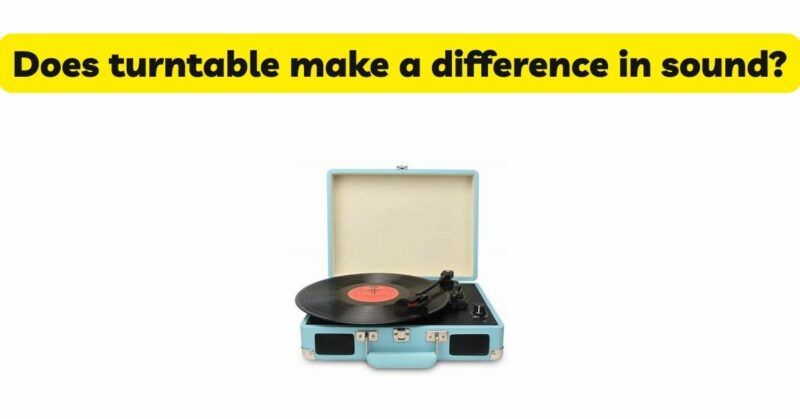
The resurgence of vinyl records in recent years has sparked discussions about the impact of turntables on sound quality. Audiophiles and music enthusiasts often debate whether turntables truly make a difference in sound compared to digital formats. In this article, we will explore the various aspects of turntables and their influence on sound reproduction. From the components of a turntable to the vinyl playback process, we will examine the factors that contribute to the unique sonic characteristics associated with turntables.
- Components of a Turntable
The design and components of a turntable play a significant role in shaping the sound. Here are some key components and their impact:
a. Platter: The platter is where the vinyl record rests during playback. The material and mass of the platter can affect the rotational stability, resonance, and damping characteristics, which in turn influence the accuracy and stability of the sound reproduction.
b. Tonearm: The tonearm holds the cartridge and stylus, tracking the grooves of the vinyl record. The materials, rigidity, and tracking ability of the tonearm impact the accuracy of the tracking, the amount of vibration transmitted to the cartridge, and ultimately, the fidelity of the sound.
c. Cartridge and Stylus: The cartridge houses the stylus, which is responsible for physically tracing the grooves of the record. The choice of cartridge and stylus shape can influence the frequency response, tracking ability, and overall sonic characteristics, such as warmth, detail retrieval, and channel separation.
d. Motor and Drive System: The motor and drive system dictate the rotational speed and stability of the platter. High-quality motors and drive systems minimize speed fluctuations and vibration, ensuring consistent playback and accurate reproduction of the audio signal.
- Analog Sound Characteristics
Turntables are often celebrated for their unique analog sound characteristics. Here are some aspects that contribute to the distinct sonic qualities of turntables:
a. Warmth and Richness: The continuous waveform reproduction of analog audio lends a warmth and richness to the sound. Many listeners find the analog sound more organic and natural, with a pleasing tonal balance that enhances the listening experience.
b. Dynamic Range: Vinyl records, with their wider grooves, can accommodate a broader dynamic range compared to some digital formats. This capability allows for a faithful reproduction of the original recording’s dynamics, resulting in a more immersive and engaging sound experience.
c. Sound Coloration: Vinyl records have their own unique sound coloration, influenced by factors such as surface noise, pops, and crackles. While these may be considered imperfections, they can add character and a sense of nostalgia to the music, creating a more authentic and human connection.
- Vinyl Playback Process
The process of playing vinyl records on a turntable introduces additional elements that can impact sound quality:
a. Surface Condition and Cleaning: The condition of the vinyl record’s surface and its cleanliness play a crucial role in sound reproduction. Dust, debris, and scratches can cause distortion and affect the fidelity of the sound. Proper cleaning and maintenance of vinyl records contribute to optimal playback.
b. Turntable Setup: The setup of a turntable, including proper leveling, alignment of the cartridge, and adjustment of tracking force and anti-skate, significantly influence sound quality. Precise setup ensures accurate tracking, minimizes distortion, and optimizes the performance of the turntable.
c. Phono Preamp and Amplification: The phono preamp, also known as a phono stage, is a crucial component for amplifying the low-level signal from the turntable’s cartridge. The quality of the phono preamp and subsequent amplification stages can affect the accuracy, detail, and tonal balance of the sound.
- Listener’s Perception and Preferences
It is important to acknowledge that sound perception is subjective, and individual preferences vary. What sounds better to one listener may not hold the same appeal to another. Factors such as personal taste, listening environment, and familiarity with different sound signatures can influence how a person perceives and evaluates sound quality. Therefore, the impact of a turntable on sound is not universal and depends on the individual’s preferences and expectations.
- The Role of Source Material
The quality of the source material, in this case, the vinyl record, significantly affects sound reproduction. Vinyl records can vary in terms of mastering quality, pressing quality, and condition. High-quality vinyl records that are well-mastered and properly pressed can showcase the full potential of a turntable’s capabilities, while poorly produced or damaged records may limit the sound quality.
Conclusion
In conclusion, turntables do make a difference in sound reproduction. The unique components, analog sound characteristics, and vinyl playback process contribute to the distinct sonic qualities associated with turntables. From the warmth and richness of the sound to the wider dynamic range and sound coloration, turntables offer a unique listening experience. However, it is essential to consider individual preferences, source material quality, and proper turntable setup to fully appreciate the benefits of a turntable. Whether one prefers the analog sound and the tactile experience of vinyl or the convenience and accuracy of digital formats, the ultimate goal is to connect with the music and derive enjoyment from the listening experience.