
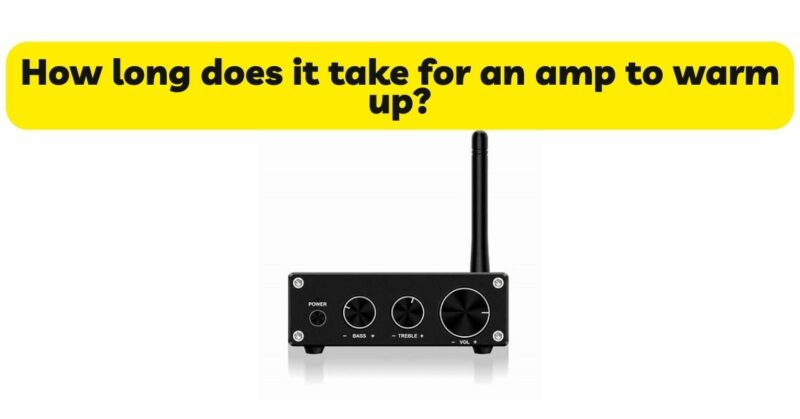
When it comes to audio equipment, one aspect that often garners attention is the warm-up period of an amplifier. Many audiophiles and music enthusiasts believe that amplifiers need time to “warm up” before reaching their optimal performance. This warm-up period refers to the time required for the amplifier’s circuits and components to stabilize and operate at their best. In this article, we will delve into the topic of amplifier warm-up, exploring the factors that influence the warm-up period, the reasons behind it, and practical considerations for achieving the best sound quality.
I. Understanding the Warm-Up Period:
- Definition: The warm-up period of an amplifier refers to the time it takes for the electronic components, including capacitors, transistors, and tubes, to reach their stable operating temperatures. During this time, the amplifier gradually transitions from a cold start to its ideal performance state.
- Factors Affecting Warm-Up Time: The duration of the warm-up period can vary depending on several factors, including the amplifier’s design, circuitry, type of components used (solid-state or tube), and ambient conditions.
II. The Importance of Warm-Up:
- Stabilizing Component Performance: The warm-up period allows the amplifier’s components to stabilize and operate within their specified temperature range. This stability is crucial for achieving consistent sound quality and performance over extended listening sessions.
- Optimizing Sound Quality: As the amplifier warms up, its circuitry becomes more stable, resulting in improved audio performance. This includes reduced distortion, enhanced frequency response, improved transient response, and better overall sonic accuracy.
III. Warm-Up Time for Different Amplifier Types:
- Solid-State Amplifiers: Solid-state amplifiers typically have shorter warm-up times compared to tube amplifiers. They can reach their stable operating state within a few minutes, allowing users to enjoy optimal performance relatively quickly.
- Tube Amplifiers: Tube amplifiers generally require a longer warm-up period due to the nature of vacuum tubes. The warm-up time can vary from a few minutes to half an hour or more, depending on the specific amplifier design and the type of tubes used.
IV. Practical Considerations:
- Preheating Routine: To ensure optimal performance, it is advisable to incorporate a preheating routine into your audio setup. This involves turning on the amplifier a few minutes before initiating critical listening sessions, giving it time to warm up and stabilize.
- Ambient Conditions: The ambient temperature can influence the warm-up time of an amplifier. Extremely cold environments may require longer warm-up periods, while warmer environments may facilitate quicker stabilization. Maintaining a consistent room temperature can help optimize the warm-up process.
- Manufacturer Recommendations: It is essential to refer to the manufacturer’s instructions or recommendations regarding warm-up time for your specific amplifier model. Some manufacturers may provide guidelines on the optimal warm-up period or specific instructions for achieving the best performance.
V. Debunking Myths:
- Continuous Warm-Up: Contrary to popular belief, amplifiers do not require continuous warm-up to maintain optimal performance. Once the amplifier reaches its stable operating temperature, it can deliver consistent performance throughout extended listening sessions.
- Audible Differences: While the warm-up period is essential for optimal performance, the audible differences between a cold and fully warmed-up amplifier are usually subtle. The most noticeable changes occur during the initial minutes of warm-up, after which the sound quality stabilizes.
VI. Conclusion:
The warm-up period of an amplifier plays a significant role in achieving optimal sound quality and performance. While solid-state amplifiers require a shorter warm-up time, tube amplifiers may require a longer period to reach their stable operating state. By incorporating a preheating routine and adhering to manufacturer recommendations, audiophiles can ensure they are experiencing the amplifier’s full potential. Remember that the warm-up period is not a continuous process but rather a transition to stability, leading to consistent and enjoyable audio reproduction throughout your listening sessions.