
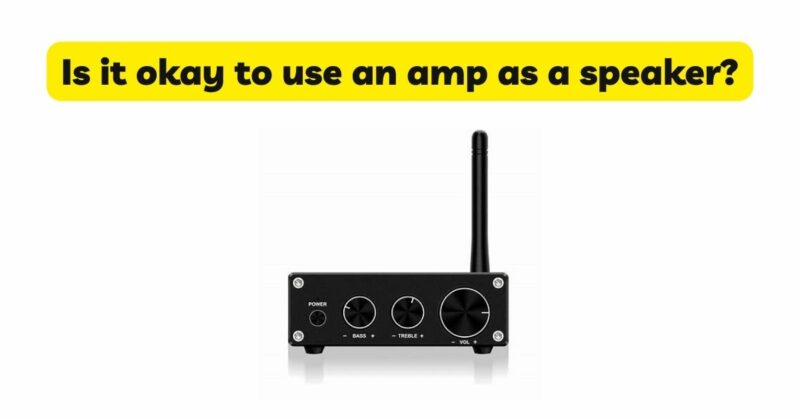
When it comes to audio systems, the amplifier and the speaker are two key components that work together to produce high-quality sound. While each serves a distinct purpose, there may be instances where users contemplate using an amplifier as a speaker or vice versa. In this article, we will explore the differences between amplifiers and speakers, evaluate the feasibility of using an amp as a speaker, and highlight the potential benefits and drawbacks. So, let’s dive into the world of audio technology and shed light on this intriguing topic.
- Understanding Amplifiers and Speakers
To comprehend whether it is acceptable to use an amplifier as a speaker, it is essential to grasp the basic functionalities of both components.
Amplifiers: An amplifier is an electronic device designed to increase the amplitude of an audio signal, thereby enhancing its power to drive speakers. Amplifiers come in various types, such as solid-state, tube, and digital amplifiers, each offering unique characteristics and sound reproduction capabilities. Their primary purpose is to amplify the weak electrical signal from the source and deliver it to the speakers with greater power.
Speakers: On the other hand, speakers are transducers that convert electrical signals into audible sound waves. They consist of a diaphragm or cone, a voice coil, and a magnet. When an electrical signal from the amplifier passes through the voice coil, it interacts with the magnetic field, causing the cone to vibrate and produce sound. Speakers are available in a range of sizes, designs, and configurations, catering to different audio applications.
- Compatibility and Technical Considerations
Using an amplifier as a speaker or vice versa involves technical considerations and compatibility issues that need to be addressed.
Impedance Matching: Impedance, measured in ohms, plays a crucial role in ensuring optimal performance and protection of both the amplifier and the speaker. Amplifiers and speakers have specific impedance ratings, and mismatching them can result in poor audio quality, distortion, or even damage to the components. Therefore, it is crucial to verify the impedance compatibility before attempting to use an amp as a speaker or vice versa.
Power Handling: Power handling capabilities also differ between amplifiers and speakers. Amplifiers are designed to handle power and distribute it to the speakers, while speakers are engineered to convert electrical power into sound waves. Using an amplifier as a speaker may not provide the desired sound output, as amplifiers generally lack the necessary components, such as cones or diaphragms, to produce sound efficiently.
- Benefits and Drawbacks of Using an Amp as a Speaker
While the notion of using an amp as a speaker might seem plausible in certain situations, it is important to consider the potential benefits and drawbacks associated with such a setup.
Benefits:
a. Cost Efficiency: If the purpose is to create sound in a limited capacity or for experimental purposes, using an amplifier as a speaker may be a cost-effective alternative. In some cases, it can eliminate the need to purchase additional speakers.
b. Customization and Experimentation: Some audio enthusiasts and professionals may find value in experimenting with different configurations and setups. Using an amp as a speaker could allow for creative customization, enabling unique sound experiences.
Drawbacks:
a. Limited Sound Quality: Amplifiers are primarily designed to amplify and distribute audio signals, whereas speakers are optimized to reproduce sound accurately. Using an amp as a speaker may result in compromised sound quality, lacking the fidelity and depth typically associated with dedicated speakers.
b. Potential Damage: Since amplifiers are not built with the components necessary for producing sound, driving an amplifier as a speaker may strain its internal circuitry, leading to overheating or even permanent damage. It is important to remember that amplifiers and speakers are designed for specific purposes, and using them interchangeably can have adverse effects.
- Alternative Solutions and Recommendations
Rather than using an amp as a speaker, exploring alternative solutions can yield better results and enhance the audio experience. Some recommendations include:
a. Invest in Quality Speakers: To ensure optimal sound reproduction, consider investing in high-quality speakers that are specifically designed to meet your audio requirements. This will deliver superior sound performance and a more immersive experience.
b. Select an Appropriate Amplifier: Match your speakers with an amplifier that complements their impedance and power requirements. This ensures efficient power delivery and helps achieve the best possible sound quality.
c. Seek Professional Advice: If you’re unsure about which components to choose or how to optimize your audio setup, consult audio professionals or experts who can provide tailored recommendations based on your specific needs.
Conclusion
While it may be tempting to repurpose an amplifier as a speaker or vice versa, it is important to understand the distinctions between these components and their intended functionalities. Amplifiers and speakers have unique roles in an audio system, and attempting to interchange them can lead to compromised sound quality, compatibility issues, and potential damage. To achieve the best audio experience, it is recommended to invest in quality speakers and select an appropriate amplifier that matches their requirements. By embracing the intended purpose of amplifiers and speakers, users can unleash the true potential of their audio systems and indulge in a rich, immersive sound journey.