
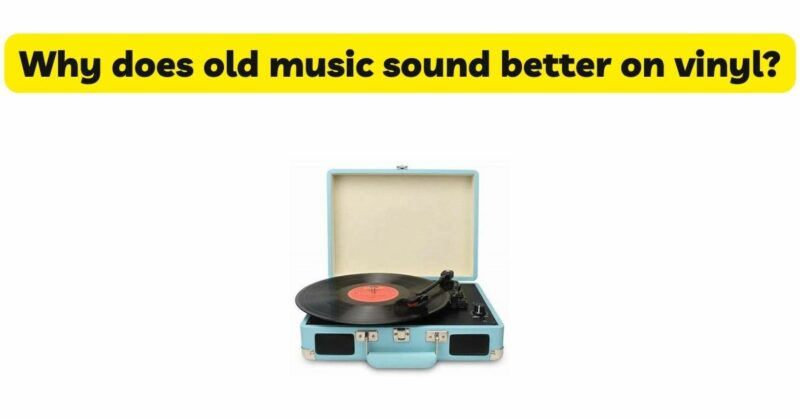
In an era dominated by digital music and streaming services, vinyl records have experienced a resurgence in popularity. Audiophiles and music enthusiasts alike have rekindled their love for the warm and nostalgic sound that vinyl provides. Interestingly, many argue that old music, particularly recordings from past eras, sounds better when played on vinyl. In this article, we will explore the reasons behind this perception and delve into the factors that contribute to the belief that old music is best enjoyed on vinyl.
- The Analog Nature of Vinyl
Vinyl records are an analog medium that captures sound in a physical and organic way. The process of playing a vinyl record involves a needle physically tracing the grooves on the record’s surface, which converts the mechanical movement into electrical signals that are then amplified and reproduced through speakers. This analog process lends a unique warmth and depth to the sound, preserving the natural qualities of the music. Old music, which was predominantly recorded using analog techniques, is a perfect match for the vinyl format as it retains its original analog characteristics.
- The Art of Mastering
Mastering, the final stage of music production, plays a crucial role in the sonic quality of a recording. Older music was often mastered with vinyl in mind, considering the limitations and unique characteristics of the medium. Mastering engineers would take into account the dynamics, frequency response, and limitations of vinyl during the mastering process, ensuring that the music would translate well to the vinyl format. As a result, older recordings, which were crafted specifically for vinyl, often exhibit superior sound quality and better compatibility with the vinyl playback system.
- Dynamic Range and Compression
Dynamic range, the difference between the softest and loudest sounds in a recording, is an essential aspect of music reproduction. Vinyl records, with their wider groove space, can accommodate a broader dynamic range compared to the digital counterparts. Older recordings, which were typically mastered with higher dynamic range and minimal compression, retain the original dynamics more faithfully on vinyl. This allows the listener to experience the full range of emotions and nuances present in the music, making it sound richer and more engaging.
- Imperfections and Charms of Vinyl
Vinyl records are not perfect. They are prone to imperfections such as surface noise, pops, and crackles. Paradoxically, these imperfections contribute to the unique appeal of vinyl and enhance the listening experience, especially when it comes to old music. The nostalgic crackling and pops create an intimate connection with the past, reminding us of the physical nature of vinyl and its history as a medium for music consumption. These imperfections add character to the music, making it feel authentic and evoking a sense of nostalgia that complements old recordings particularly well.
- Enhanced Artwork and Packaging
Vinyl records offer a larger canvas for artwork and packaging compared to digital formats. Old music often had elaborate and thoughtfully designed album covers and inserts, which were created to be appreciated in the vinyl format. The visual appeal and tangible nature of vinyl records add to the overall experience of enjoying old music. Holding the record, examining the artwork, and reading the liner notes create a more immersive and engaging experience, connecting the listener to the music and the artist in a meaningful way.
- Engaging in Active Listening
Vinyl records demand a more engaged and active listening experience. Unlike digital music, which can be easily skipped or shuffled, playing a vinyl record requires attention and intentionality. This focused listening experience allows the listener to fully immerse themselves in the music, appreciating the subtleties and nuances that may go unnoticed in casual listening. Old music, with its often intricate arrangements and thoughtful songwriting, benefits from this dedicated listening approach, making it feel more captivating and enjoyable on vinyl.
Conclusion
The perception that old music sounds better on vinyl stems from a combination of factors. The analog nature of vinyl, the art of mastering, the wider dynamic range, and the imperfections that add charm all contribute to the superior listening experience offered by vinyl records. Additionally, the enhanced artwork and packaging, as well as the engagement required for active listening, further enhance the enjoyment of old music on vinyl. While personal preference plays a significant role in this perception, it is undeniable that vinyl records provide a unique and immersive way to experience the magic and timelessness of old music.