
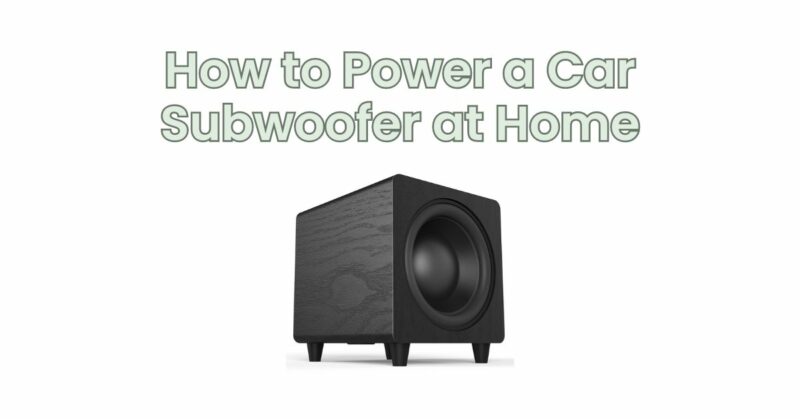
Car subwoofers are designed to deliver powerful and low-frequency bass response while driving. However, you may find yourself wanting to enjoy that same bass experience at home. Fortunately, it is possible to power a car subwoofer indoors with the right equipment and setup. In this article, we will guide you through the process of powering a car subwoofer at home, allowing you to bring the thunderous bass to your personal audio setup.
Step 1: Choose a Suitable Power Source Since car subwoofers typically run on DC power from a car’s electrical system, you will need to find a suitable AC-to-DC power supply to convert the power for indoor use. Look for a power supply that matches the voltage and current requirements of your car subwoofer. The power supply should provide stable and sufficient power to the subwoofer.
Step 2: Determine the Wiring Setup Car subwoofers typically require a specific wiring setup that includes a positive and negative connection. Identify the terminals on the subwoofer for these connections. You may need to refer to the user manual or the manufacturer’s website for specific information about your subwoofer’s wiring setup.
Step 3: Connect the Power Supply Connect the positive and negative terminals of the power supply to the corresponding terminals on the car subwoofer. Ensure a secure connection by using appropriate connectors or wiring techniques. Double-check the polarity to ensure that the positive and negative terminals are correctly aligned.
Step 4: Connect an Audio Source To provide audio input to the subwoofer, you will need to connect an audio source. This can be done by using an audio cable, such as an RCA or 3.5mm cable, depending on the input options available on your subwoofer. Connect one end of the cable to the audio output of your audio source (e.g., a receiver, amplifier, or computer), and the other end to the corresponding input on the subwoofer.
Step 5: Power on the Setup Once all the connections are made, power on the AC-to-DC power supply. The subwoofer should receive power, and the audio source should start sending audio signals to the subwoofer. Adjust the volume levels on both the audio source and the subwoofer to a comfortable level.
Step 6: Fine-tuning and Testing To ensure optimal sound quality, adjust the subwoofer’s settings according to your preferences. This may include adjusting the crossover frequency, phase control, and volume control on the subwoofer. Experiment with these settings to achieve the desired bass response and blend with your existing audio setup.
Step 7: Maintenance and Safety Considerations Ensure that the power supply and wiring connections are secure and well-maintained. Regularly inspect the cables, connectors, and power supply for any signs of wear or damage. Additionally, follow safety precautions when dealing with electrical components and power sources.
Conclusion: By following these steps, you can power a car subwoofer at home and enjoy the deep and powerful bass that it provides. Remember to choose a suitable power supply, understand the wiring setup of your subwoofer, and connect an audio source for an enhanced audio experience. With proper setup and adjustments, you can bring the excitement of car audio bass to your personal listening space. Embrace the thunderous lows and immerse yourself in the rich and dynamic sound of your powered car subwoofer in the comfort of your home.