
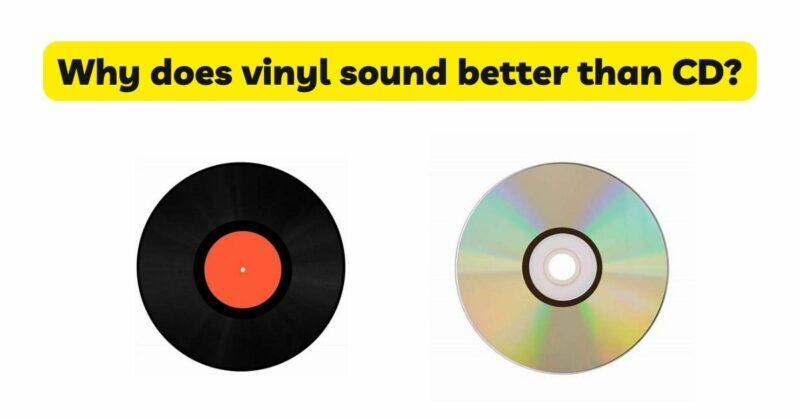
In the ongoing debate between vinyl and CD, one prevailing belief among music enthusiasts is that vinyl records offer superior sound quality compared to their digital counterparts. Vinyl’s resurgence in popularity has been fueled by the perception that it provides a more immersive and authentic listening experience. In this article, we will explore the factors that contribute to the belief that vinyl sounds better than CD, examining the technical and subjective aspects that underpin this captivating phenomenon.
- Analog Warmth and Character: Vinyl enthusiasts often argue that the analog nature of vinyl playback imparts a unique warmth, depth, and character to the sound that digital formats struggle to replicate. The imperfections of vinyl, such as surface noise, pops, and crackles, contribute to its distinct sonic signature. These analog characteristics are often perceived as more organic, captivating, and emotionally engaging, adding to the belief that vinyl sounds better.
- Dynamic Range and Compression: Vinyl records offer a wider dynamic range compared to CDs, which can enhance the listening experience. Vinyl’s ability to handle transients and volume changes more gracefully allows for greater expressiveness and dynamic nuances in the music. In contrast, CDs often employ compression techniques to optimize loudness, potentially sacrificing some dynamic range and musical detail.
- Mastering for Vinyl: Vinyl records undergo a separate mastering process tailored specifically for analog playback. The mastering engineer takes into account the unique characteristics of vinyl, making adjustments to optimize the sound quality. This specialized mastering can contribute to the perception that vinyl sounds better by preserving the original artistic intent and capturing the nuances of the music in a way that is tailored to the analog medium.
- Harmonic Distortion and Saturation: Vinyl playback introduces a subtle harmonic distortion and saturation that some listeners find appealing. This distortion can add a pleasing “warmth” and richness to the sound, contributing to the perception that vinyl offers a more enjoyable and immersive listening experience. The slight distortion introduced by vinyl playback is often seen as an aesthetic feature that enhances the overall sonic quality.
- Listening Experience and Engagement: The vinyl listening experience extends beyond the music itself. The ritual of handling vinyl records, carefully placing the needle on the groove, and engaging with the larger album artwork and liner notes all contribute to a more immersive and engaging experience. The tangible nature of vinyl creates a deeper connection to the music, heightening the enjoyment and perception of superior sound quality.
- Subjective Perception and Emotional Connection: The perception of sound quality is inherently subjective and influenced by personal preferences and emotional connections. For many, vinyl records evoke a sense of nostalgia and authenticity, connecting the listener to the history and cultural significance of the medium. This emotional connection and positive bias can influence the perception that vinyl sounds better, as the listener’s enjoyment and engagement are heightened.
- Audiophile-Quality Sound: Vinyl’s resurgence has been closely tied to the audiophile community, who seek the ultimate in sound quality. Audiophiles argue that vinyl, when played on high-quality turntables, cartridges, and amplification systems, can deliver exceptional sound reproduction. The unique sonic characteristics of vinyl, including its analog warmth and depth, cater to the preferences of audiophiles who value nuanced and high-fidelity sound reproduction.
- Equipment and System Synergy: Vinyl playback often requires a dedicated and high-quality audio setup, including a well-designed turntable, a carefully selected cartridge, and amplification system. The synergy between the different components of the vinyl playback system can significantly impact the sound quality. The attention to equipment quality and system integration contributes to the perception that vinyl sounds better than CD.
- Sampling Rate and Resolution: CDs are limited by their sampling rate and resolution, which may result in some limitations in accurately capturing the original analogsound. Vinyl records, on the other hand, do not have the same technical limitations. The analog nature of vinyl allows for a continuous wave representation of the audio, which some argue provides a more faithful reproduction of the original recording. This perceived advantage in capturing the nuances and subtleties of the music adds to the belief that vinyl sounds better.
- Listener Training and Experience: Listeners with extensive experience and training in audio production, engineering, or music performance may have a heightened ability to discern subtle differences in sound quality. Familiarity with specific recordings, genres, and exposure to various audio systems over time can sharpen the listener’s perception and sensitivity to nuances. These trained listeners may be more likely to appreciate the qualities that make vinyl sound better to them.
Conclusion: The belief that vinyl sounds better than CD is rooted in a combination of technical and subjective factors. The analog warmth, character, wider dynamic range, specialized mastering for vinyl, harmonic distortion, and the immersive listening experience all contribute to the perception that vinyl provides superior sound quality. Furthermore, personal preferences, emotional connections, and the engagement derived from the vinyl listening experience shape the individual perception of sound quality.It is important to recognize that technological advancements in digital audio have narrowed the gap in sound quality between vinyl and CD. CDs offer benefits such as accuracy, durability, and convenience that make them a preferred choice for many listeners.Ultimately, the preference for vinyl over CD or vice versa comes down to individual taste and the desired listening experience. Both formats have their merits and can provide an enjoyable and immersive musical journey. The beauty of music lies in its ability to touch individuals in unique ways, and whether vinyl truly sounds better than CD is a personal judgment based on one’s subjective perception and emotional connection to the music.