
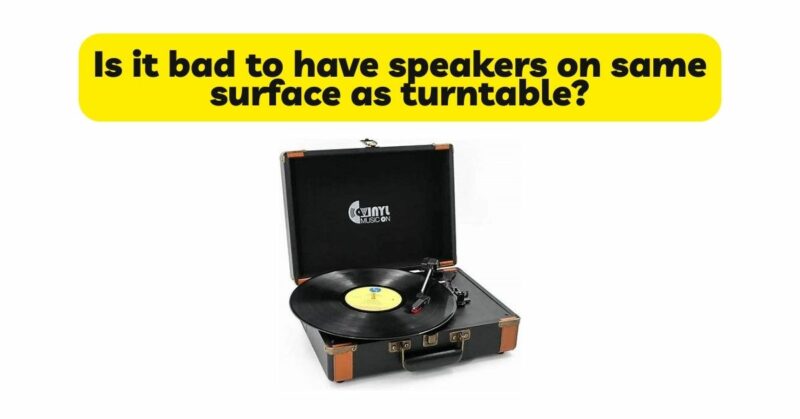
When setting up a turntable and speaker system, one common question that arises is whether it is detrimental to have speakers placed on the same surface as the turntable. The concern stems from potential vibrations and acoustic interference that could affect the performance and sound quality of the turntable. In this article, we will explore the impact of co-locating speakers and turntables, examining the potential risks and providing guidance on how to mitigate any adverse effects to ensure optimal playback quality and preserve the integrity of your vinyl records.
- Understanding Potential Risks: Placing speakers on the same surface as a turntable can introduce several risks that may impact sound quality and performance. It is important to be aware of these risks to make informed decisions:
a. Vibrations and Resonance: Speakers generate vibrations as they produce sound, and these vibrations can transfer to the turntable through the shared surface. This can cause unwanted resonance, resulting in audible distortion and potential damage to the stylus or record.
b. Acoustic Interference: Sound waves emitted by the speakers can directly impact the performance of the turntable’s stylus. When the stylus tracks the grooves of the vinyl record, any interference caused by nearby speakers can lead to distorted sound reproduction and compromised playback quality.
c. Electro-Magnetic Interference: The magnets and electronic components within speakers can generate electro-magnetic fields that have the potential to interfere with the delicate cartridge and stylus assembly of the turntable. This interference can negatively affect the accuracy of audio reproduction.
- Minimizing Vibrations and Resonance: To mitigate the risks associated with co-locating speakers and turntables, consider the following measures:
a. Isolation Pads or Feet: Place isolation pads or feet under both the speakers and turntable to minimize the transfer of vibrations between the two. These pads absorb vibrations and prevent them from affecting the turntable’s performance.
b. Vibration-Resistant Surface: Use a vibration-resistant surface, such as a heavy-duty stand or shelf, for both the speakers and turntable. This helps isolate them from external vibrations, reducing the risk of resonance and interference.
c. Spacing and Distance: Place the turntable and speakers on separate stands or shelves to create physical separation. Position the speakers at a suitable distance from the turntable to minimize the transfer of vibrations and reduce the potential for acoustic interference.
- Acoustic Considerations: Co-locating speakers and turntables can also introduce acoustic challenges that impact sound quality. Consider the following factors:
a. Sound Reflections: Placing speakers on the same surface as the turntable can create sound reflections and unwanted reverberations. These reflections can distort the sound and compromise the overall listening experience. Position the speakers and turntable in a way that minimizes direct sound reflections.
b. Acoustic Treatment: Implement basic room acoustic treatments to address sound reflections and improve overall sound quality. This can include the use of curtains, rugs, or acoustic panels to dampen reflections and enhance the clarity of the audio playback.
- Electro-Magnetic Interference: Electro-magnetic interference can occur when speakers and turntables are in close proximity. To mitigate this interference, consider the following steps:
a. Speaker Positioning: Keep the speakers at a reasonable distance from the turntable to minimize electro-magnetic interference. Avoid placing them directly above or next to the turntable’s cartridge and stylus assembly.
b. Proper Grounding: Ensure that the turntable is properly grounded according to the manufacturer’s instructions. Proper grounding helps mitigate the risk of electro-magnetic interference from speakers and other electronic components.
c. Shielding: Use shielded cables and speaker wires to reduce the risk of electro-magnetic interference. Shielding helps minimize the impact of stray magnetic fields on the turntable’s cartridge and stylus assembly.
- Continuous Monitoring and Adjustments: Once you have set up your turntable and speakers, it is important to continuously monitor the system for any signs of interference, vibrations, or compromised sound quality. If you notice any issues, reposition the speakers or make necessary adjustments to optimize the setup.
- Speaker Stand Considerations: If you choose to co-locate speakers and turntables on the same surface, consider the following:
a. Sturdy Stands: Ensure that the stand or shelf supporting both the speakers and turntable is sturdy and stable. This helps minimize vibrations and reduces the risk of resonance.
b. Isolation Measures: Use isolation pads or feet under the speakers to further minimize vibrations and isolate them from the shared surface. This helps prevent vibrations from transferring to the turntable.
c. Careful Speaker Placement: Position the speakers in a way that minimizes direct sound reflections and allows for optimal sound dispersion. Experiment with different speaker positions to achieve the best soundstage while considering the turntable’s performance.
Conclusion: While co-locating speakers and turntables on the same surface introduces potential risks such as vibrations, resonance, acoustic interference, and electro-magnetic interference, these risks can be mitigated with careful planning and consideration. By implementing measures such as isolation pads, vibration-resistant surfaces, and proper speaker and turntable placement, you can minimize the impact on sound quality and performance. Additionally, addressing acoustic considerations and electro-magnetic interference further enhances the listening experience. Continuous monitoring and adjustments ensure that any issues can be identified and resolved promptly. Ultimately, the goal is to create an environment that promotes optimal sound reproduction, protects the turntable and vinyl records, and allows you to enjoy the full potential of your audio system.