
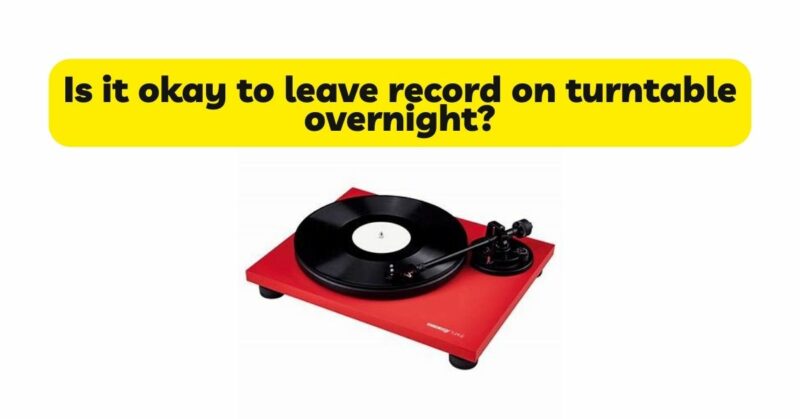
For vinyl enthusiasts, the question of whether it is okay to leave a record on the turntable overnight is a common concern. While it may seem convenient to leave a record ready for playback, there are several factors to consider that can impact the condition and longevity of both the record and the turntable. In this article, we will explore the implications of leaving records on the turntable overnight and provide best practices to ensure the preservation and optimal performance of your vinyl collection.
- Heat and Humidity: Leaving a record on the turntable overnight can expose it to prolonged heat and humidity. The heat generated by the turntable’s motor and the proximity of the stylus to the vinyl surface can cause the record to warp or degrade over time. Additionally, high humidity levels can promote the growth of mold and mildew, leading to irreversible damage to the record’s surface.
- Dust and Dirt: Leaving a record exposed on the turntable increases the risk of dust and dirt settling on its surface. Dust particles can create surface noise and affect the stylus’s tracking ability, resulting in compromised sound quality. Furthermore, dirt particles can cause scratches or other physical damage to the record if they come into contact with the stylus during playback.
- Sunlight and UV Exposure: Direct sunlight or exposure to ultraviolet (UV) rays can cause fading and discoloration of the record’s artwork and labels. Extended exposure to sunlight can also lead to warping and damage to the vinyl itself. It is crucial to protect records from direct sunlight or any other sources of UV radiation to maintain their visual appeal and overall condition.
- Stylus Wear: Leaving a record on the turntable overnight means that the stylus remains in contact with the grooves for an extended period, even when not actively playing the record. This prolonged contact can accelerate stylus wear and potentially affect the quality of future playbacks. The stylus’s fine tip is delicate and can become damaged or worn if left in contact with the vinyl surface without necessary movement.
Best Practices for Preserving Records:
To ensure the longevity and optimal performance of your vinyl records, consider the following best practices:
- Remove the Record: It is generally recommended to remove the record from the turntable after each listening session. This practice reduces the risk of heat and humidity exposure, dust accumulation, and unnecessary wear on the stylus. Placing the record back in its protective sleeve and storing it properly helps maintain its condition.
- Store Records Properly: When not in use, store your records upright in a dedicated record storage unit or shelf. This vertical storage position helps prevent warping and keeps the records in a stable condition. Use inner sleeves to protect the vinyl surface from dust, scratches, and static electricity. Outer sleeves provide an additional layer of protection against environmental factors.
- Clean Records Regularly: Implement a regular cleaning routine for your records to remove dust, dirt, and other contaminants. Cleaning not only enhances the sound quality but also prolongs the lifespan of the record. Use appropriate record cleaning solutions, brushes, or record cleaning machines to ensure a thorough and safe cleaning process.
- Maintain a Controlled Environment: Store your records in a controlled environment with consistent temperature and humidity levels. Ideally, aim for temperatures between 50°F to 70°F (10°C to 21°C) and a relative humidity of 40% to 50%. Avoid storage areas prone to extreme temperature fluctuations, excessive moisture, or direct sunlight.
- Handle Records with Care: When handling records, always hold them by the edges or the label area to avoid touching the playing surface. Clean your hands thoroughly before handling records to minimize the transfer of oils, dirt, or other contaminants onto the vinyl. Mishandling or dropping records can result in physical damage such as scratches or warping.
Conclusion:
Leaving records on the turntable overnight poses risks to their condition and longevity. Prolonged exposure to heat, humidity, dust, and UV radiation can lead to warping, mold growth, scratches, and degradation of sound quality. To preserve your vinyl records and ensure their optimal performance, it is best to remove them from the turntable after each listening session and store them properly in a controlled environment. Regular cleaning, careful handling, and protection from environmental factors are essential practices to maintain the integrity of your vinyl collection. By following these best practices, you can enjoy your records for years to come, ensuring a pristine listening experience and safeguarding the value of your cherished vinyl collection.