
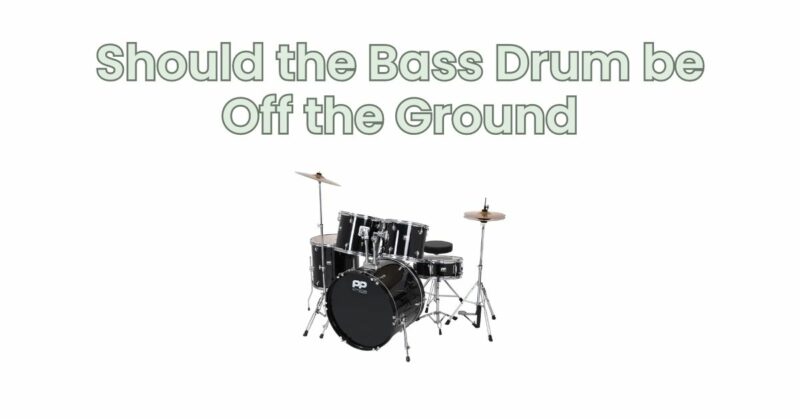
The bass drum, also known as the kick drum, is a fundamental component of the drum set, providing the low-end punch and rhythmic foundation. One question that often arises when setting up a drum kit is whether the bass drum should be elevated or placed directly on the ground. The positioning of the bass drum can significantly impact the sound projection, resonance, and player comfort. In this article, we will explore the considerations and benefits of elevating the bass drum versus keeping it on the ground to help you make an informed decision for your drumming setup.
Elevated Bass Drum:
Elevating the bass drum means placing it on a riser, bass drum lift, or any form of support that raises it off the ground. Here are some considerations for an elevated bass drum:
- Sound Projection:
Elevating the bass drum can enhance the sound projection and presence. Lifting the drum off the ground allows the sound waves to travel more freely, resulting in better projection and increased volume. This can be particularly advantageous for live performances or situations where you need your bass drum to cut through a mix or compete with loud instruments.
- Resonance and Sustain:
When the bass drum is elevated, it can resonate more freely. The drum’s shell and heads vibrate with less interference from the floor, resulting in a longer sustain and a fuller, more resonant sound. Elevating the bass drum can help maximize the drum’s natural characteristics and depth, giving it a rich and powerful tone.
- Pedal Ergonomics:
Elevating the bass drum can improve the ergonomics of the pedal setup. By raising the drum, it becomes easier to position the bass drum pedal at a comfortable height for your foot. This can reduce strain and fatigue, enabling you to play with greater control and precision.
- Visual Impact:
An elevated bass drum can have visual appeal, particularly when combined with a riser or custom platform. This setup can create a commanding presence on stage, making a bold visual statement and enhancing the overall aesthetics of your drum kit.
Bass Drum on the Ground:
Keeping the bass drum on the ground refers to positioning it directly on the floor without any elevation. Here are some considerations for a bass drum on the ground:
- Stability and Control:
Placing the bass drum directly on the ground can provide stability and control. The drum sits firmly on the floor, minimizing any potential movement or shifting during intense playing. This setup ensures a solid connection between the drum and the surface, allowing for precise pedal control and accuracy.
- Low-End Focus:
A bass drum placed on the ground can provide a focused low-end response. The proximity to the floor allows for a tighter and punchier sound, emphasizing the fundamental frequencies. This setup can be desirable in genres that require a more defined and focused bass drum tone, such as jazz or certain studio recording scenarios.
- Portability and Space Efficiency:
Keeping the bass drum on the ground offers portability advantages, as there is no need to carry or set up additional equipment like risers or lifts. This setup is also space-efficient, making it suitable for smaller stages or practice areas where floor space is limited.
- Personal Preference and Tradition:
Ultimately, the decision of whether to elevate the bass drum or keep it on the ground is a matter of personal preference and tradition. Some drummers prefer the classic look and feel of a bass drum on the ground, while others prefer the added projection and resonance of an elevated drum. Consider your playing style, musical context, and personal taste when making this decision.
Conclusion:
Deciding whether the bass drum should be off the ground or placed directly on the floor is a personal choice that depends on various factors. An elevated bass drum can enhance sound projection, resonance, and pedal ergonomics, while a bass drum on the ground offers stability, control, and a focused low-end response. Consider the specific requirements of your playing style, musical genre, and performance situation when making this decision. Experimentation and exploration are key to finding the optimal positioning that allows you to achieve the desired sound, comfort, and performance on the bass drum.