
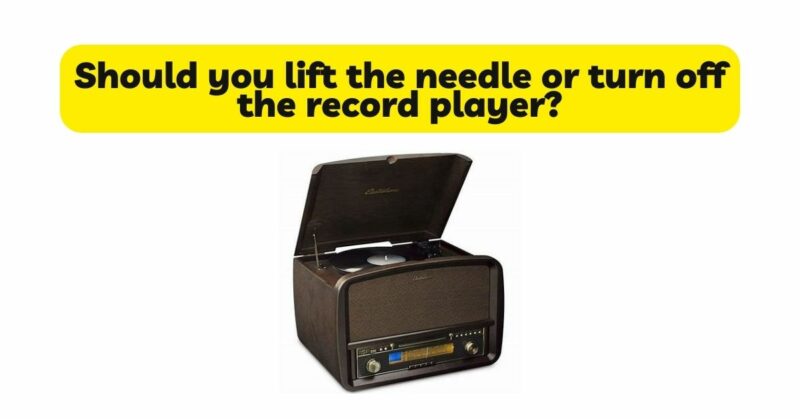
Handling a record player requires finesse and attention to detail, particularly when it comes to the needle lifting process. A common question among vinyl enthusiasts is whether it is best to lift the needle or turn off the record player when transitioning between tracks or at the end of a record. In this article, we will delve into the arguments on both sides of the debate, examining the potential impact on sound quality, record longevity, and the overall listening experience. By understanding the factors involved, you can make an informed decision regarding the most suitable approach for your record player usage.
- The Case for Lifting the Needle: Advocates of lifting the needle argue that it allows for precise control and minimizes wear on both the stylus and the record. By carefully lifting the needle, you can ensure a controlled and gradual movement, reducing the risk of accidental scratches or damage to the grooves. This method promotes record preservation and contributes to a longer lifespan for your vinyl collection.
- Preserving Sound Quality: Maintaining optimal sound quality is a priority for vinyl enthusiasts, and proponents of lifting the needle contend that it helps achieve this goal. Lifting the needle avoids the potential for the stylus to remain in contact with the record’s surface, reducing the risk of vibrations, mechanical noise, or unintended resonances that may affect the playback quality. This approach ensures a cleaner signal path, resulting in a more faithful and enjoyable listening experience.
- Avoiding Unintended Resonances: When the needle remains in contact with the spinning record, there is a possibility of unintended resonances affecting the sound quality. These resonances can be transmitted through the tonearm and platter, resulting in audible vibrations and potential distortions. Lifting the needle eliminates these unintended resonances, contributing to a cleaner break in playback and a seamless transition between tracks or records.
- Conserving Record Life: Proponents of lifting the needle argue that it helps extend the lifespan of records by minimizing wear and tear. By carefully lifting the needle, you reduce the risk of accidental scratches or damage to the grooves. This cautious approach preserves the integrity of the record’s surface, ensuring it can be enjoyed for years to come.
- The Case for Turning off the Record Player: On the other side of the debate, some argue that turning off the record player is a viable approach when transitioning between tracks or at the end of a record. They contend that stopping the record player eliminates any potential mechanical noise or vibrations that may occur while the stylus is lifted from the record. This method simplifies the process, reducing the risk of mishaps during the needle lift.
- Maintaining a Seamless Listening Experience: Advocates of turning off the record player argue that it helps maintain a seamless listening experience. By stopping the record player, you can avoid abrupt interruptions in sound or potential skips that may occur during the needle lift process. This approach allows for a more controlled and uninterrupted transition between tracks, enhancing the overall flow and enjoyment of the music.
- Personal Preference and Considerations: The decision of whether to lift the needle or turn off the record player ultimately depends on personal preference and specific considerations. Factors such as the quality of your turntable’s motor, the design of the tonearm, and the stylus suspension can influence the best approach for your specific setup. It’s important to consider manufacturer recommendations and guidelines specific to your turntable model, as they can provide valuable insights into the optimal needle lifting technique.
- Other Factors to Consider: While the needle lifting technique is a crucial consideration, it’s important to recognize that other factors contribute to sound quality and record preservation. Proper handling of records, regular cleaning of both the stylus and vinyl, appropriate turntable setup and calibration, and the use of high-quality cartridges and styli all play a significant role in the overall performance and longevity of your records.
Conclusion: The decision of whether to lift the needle or turn off the record player is a matter of personal preference and careful consideration of the factors involved. Advocates of lifting the needle emphasize precise control and record preservation, while proponents of turning off the record player prioritize a seamless listening experience. It’s important to assess the specific characteristics of your turntable setup and consider the manufacturer’s recommendations to determine the best approach for your needs. By balancing caution, convenience, and personal preference, you can choose the needle lifting technique that aligns with your goals of preserving your records, maximizing sound quality, and enjoying the beauty of vinyl playback.