
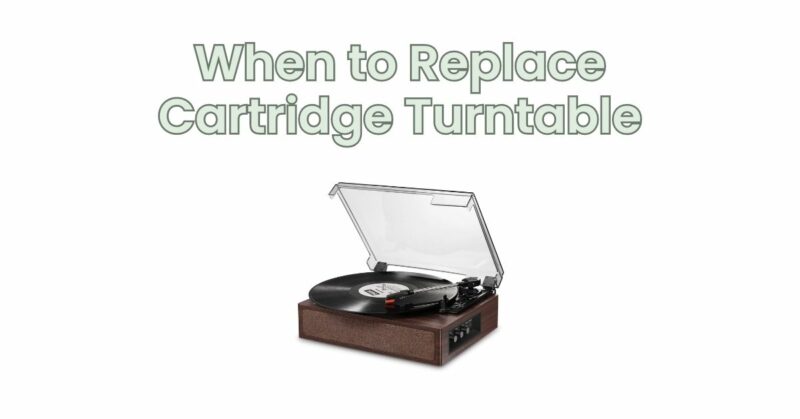
The cartridge on your turntable plays a crucial role in reproducing high-quality sound from your vinyl records. Over time, cartridges can experience wear and degradation, impacting their performance and sound quality. Knowing when to replace the cartridge is essential to ensure optimal playback. In this article, we will discuss the signs that indicate it’s time to replace the cartridge on your turntable and considerations to keep in mind when making this decision.
Signs it’s Time to Replace the Cartridge:
- Worn or Damaged Stylus:
The stylus, or needle, is a crucial component of the cartridge that tracks the grooves on the record. If the stylus is visibly worn, has a damaged tip, or has become misshapen, it’s a clear indication that it needs replacement. A worn or damaged stylus can lead to poor tracking, increased distortion, and potential damage to your vinyl records.
- Deteriorated Sound Quality:
If you notice a decline in sound quality while playing your records, it may be a sign that the cartridge needs replacement. This can manifest as reduced clarity, muffled or distorted sound, excessive surface noise, or imbalance between the left and right channels. If you’ve already cleaned your records and ensured proper setup, and the issues persist, it may be time to consider replacing the cartridge.
- Excessive Tracking Force:
If you find that you consistently need to set a high tracking force to achieve proper tracking, it may indicate a worn suspension in the cartridge. A worn suspension can cause the stylus to sink too low into the grooves, potentially damaging the records and affecting sound quality. In such cases, replacing the cartridge is a wise choice.
- Upgrading to Improve Performance:
If you’re seeking to improve the sound quality or explore different sonic characteristics, upgrading to a new cartridge is a viable option. Upgrading to a higher-quality cartridge can enhance detail retrieval, frequency response, and overall fidelity, providing a significant improvement in your vinyl playback experience.
Considerations for Cartridge Replacement:
- Compatibility:
Ensure that the replacement cartridge is compatible with your turntable. Consider factors such as cartridge mounting type (e.g., standard 1/2-inch mount or P-mount), tonearm compatibility, and cartridge output compatibility with your phono stage or preamp.
- Budget and Value:
Establish a budget for the replacement cartridge. Cartridges vary in price range, and the cost can depend on factors such as build quality, materials, and performance. Consider the value for money and the level of improvement you seek to achieve.
- Tonearm Resonance:
The cartridge and tonearm must be compatible in terms of mass and resonance. Some cartridges are designed for specific tonearm mass ranges. Ensuring compatibility helps prevent issues such as excessive resonance or damping, which can impact sound quality.
- Installation and Alignment:
Proper installation and alignment are critical for optimal performance. If you’re unfamiliar with cartridge installation and alignment procedures, it’s recommended to seek assistance from a knowledgeable technician or turntable specialist to ensure proper setup.
Conclusion:
Knowing when to replace the cartridge on your turntable is crucial for maintaining high-quality vinyl playback. Look for signs of a worn or damaged stylus, deteriorated sound quality, excessive tracking force, or consider upgrading to improve performance. Consider factors like compatibility, budget, tonearm resonance, and proper installation when selecting a replacement cartridge. By addressing cartridge issues promptly and making informed decisions, you can enjoy optimal sound quality, prolong the life of your records, and continue to appreciate the unique experience of vinyl playback.