
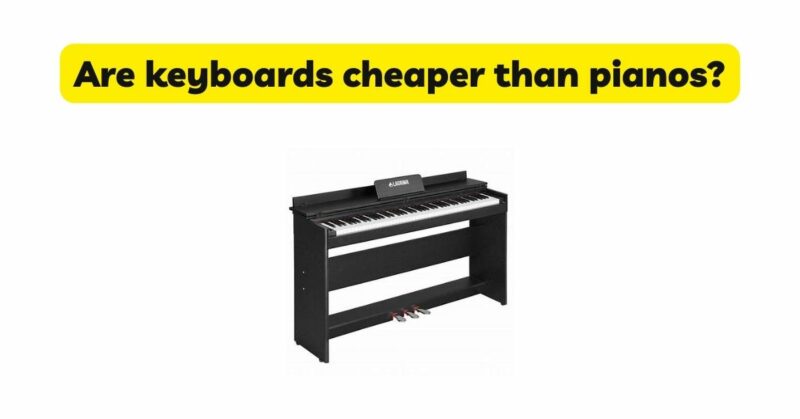
When it comes to choosing a musical instrument, one of the primary considerations is the cost. Keyboards and pianos are both popular choices, but there is often a misconception that keyboards are always cheaper than pianos. In this article, we will explore the cost comparison between keyboards and pianos, debunking the notion that one is inherently cheaper than the other. By understanding the factors that contribute to the cost of these instruments, you can make an informed decision based on your budget and musical aspirations.
- Types of Keyboards and Pianos: To better understand the cost comparison, let’s explore the different types of keyboards and pianos available:
a) Keyboards: Keyboards encompass a wide range of electronic instruments, including digital keyboards, synthesizers, stage pianos, and workstation keyboards. Keyboards are versatile instruments that offer a variety of sounds, effects, and features. They are generally more affordable than pianos, making them accessible to beginners and those with budget constraints.
b) Pianos: Pianos, on the other hand, are acoustic instruments that produce sound through mechanical action. There are two main types of pianos: grand pianos and upright pianos. Pianos are renowned for their rich sound and expressive capabilities, and they are often considered the pinnacle of musical instruments. Pianos can range in price from affordable options to high-end, luxurious instruments.
- Factors Affecting the Cost Comparison: While it is true that keyboards are often more affordable than pianos, it is important to consider the various factors that influence the cost comparison:
a) Type and Quality: The cost of both keyboards and pianos can vary significantly depending on the type and quality of the instrument. Keyboards come in a range of options, from entry-level models to professional-grade instruments. Similarly, pianos vary in quality, from beginner models to concert-ready grand pianos. Therefore, it is essential to compare instruments within the same category and quality level to make an accurate cost comparison.
b) Brand Reputation: Brand reputation plays a role in the cost of both keyboards and pianos. Well-established brands with a long history of producing high-quality instruments often command higher prices. These brands invest in research, development, and craftsmanship, resulting in superior sound quality, durability, and customer support. Lesser-known or budget-friendly brands may offer more affordable options without compromising on quality.
c) Size and Complexity: The size and complexity of an instrument can impact its cost. Keyboards, especially portable ones, are often smaller and more compact than pianos. Pianos, particularly grand pianos, require more materials and intricate construction, which can contribute to higher production costs. The size and complexity of an instrument can affect its price range.
d) Acoustic vs. Digital: The distinction between acoustic and digital instruments also affects the cost comparison. Acoustic pianos, with their mechanical action and authentic sound production, tend to be more expensive due to the craftsmanship involved in their construction. Digital keyboards, while offering versatility and portability, are generally more affordable because they rely on electronic components for sound generation.
e) Features and Technology: Both keyboards and pianos can offer a wide range of features and technologies that impact their cost. Keyboards often come with built-in speakers, a variety of instrument sounds, effects, recording capabilities, and connectivity options. Pianos may have additional features such as multiple pedals, soundboard enhancements, or advanced key action mechanisms. The presence and complexity of these features can influence the overall cost.
f) New vs. Used Instruments: The decision to purchase a new or used instrument can significantly affect the cost comparison. New instruments often come with warranties, guarantees, and the assurance of quality, but they are generally more expensive. Used instruments can provide cost savings, but buyers should carefully evaluate the condition, functionality, and age of the instrument before making a purchase.
- Finding the Right Balance: Ultimately, the cost comparison between keyboards and pianos depends on various factors, including the type, quality, brand, size, features, and technology. It is important to consider your budget, musical goals, and personal preferences when making a decision.
a) Beginner Considerations: If you are a beginner or on a limited budget, keyboards offer a more affordable entry point into the world of music. They provide access to a wide range of sounds, learning features, and portability. Keyboards are suitable for learning and practice, allowing you to develop fundamental skills before investing in a piano.
b) Advanced Players and Professionals: Advanced players and professionals often seek the expressive capabilities and nuanced sound of a piano. If you have the budget and space, investing in a piano can be a rewarding choice. Pianos offer a unique playing experience and are highly regarded in various musical genres.
- Long-Term Considerations: When considering the cost, it is essential to evaluate the long-term benefits and value of the instrument. Pianos, with their timeless appeal and potential for resale value, can be considered a long-term investment. Keyboards, on the other hand, may require upgrades or replacement as your skills and musical aspirations evolve.
Conclusion: While keyboards are often more affordable than pianos, it is crucial to consider the various factors that contribute to the cost of both instruments. Factors such as type, quality, brand reputation, size, features, and technology all play a role in determining the price range. By understanding these factors and considering your budget, musical goals, and long-term aspirations, you can make an informed decision that aligns with your preferences and budget constraints. Remember that the most important aspect is finding an instrument that inspires and supports your musical journey, regardless of its price.