
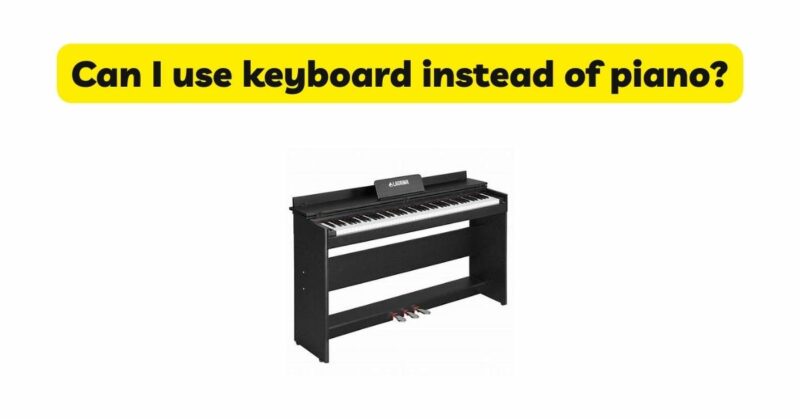
The world of music offers a vast array of instruments, and for aspiring pianists, the question often arises: Can I use a keyboard instead of a piano? In this article, we will delve into the considerations, advantages, and potential benefits of using a keyboard as a substitute for a traditional acoustic piano. By examining the unique characteristics, practicalities, and creative possibilities of the keyboard, we aim to provide insights that will empower individuals to make an informed decision about using a keyboard as their instrument of choice.
- Accessibility and Affordability: One of the primary advantages of using a keyboard instead of a piano is its accessibility and affordability. Traditional acoustic pianos can be costly to purchase, maintain, and transport. Keyboards, on the other hand, come in a wide range of prices, making them more accessible to individuals with varying budgets. Additionally, keyboards are typically more compact and portable than pianos, requiring less space and eliminating the need for professional assistance during transportation. This accessibility and affordability make keyboards a practical option for beginners or those with limited resources.
- Versatility and Sound Options: Keyboards offer a remarkable level of versatility and sound options, making them a compelling alternative to traditional pianos. While acoustic pianos produce a unique and distinct sound, keyboards provide a wide range of instrument voices, including pianos, strings, organs, synthesizers, and more. This versatility allows musicians to explore various genres, experiment with different sounds, and even create unique compositions. Whether your musical interests lie in classical, jazz, pop, or electronic music, the keyboard provides the flexibility to cater to your preferred style.
- Learning Fundamentals and Technique Development: Learning the fundamentals of playing the piano and developing proper technique are crucial aspects of becoming a proficient musician. While acoustic pianos offer an excellent platform for technique development, modern keyboards have made significant advancements in replicating the feel and touch of an acoustic piano. Many keyboards now feature weighted keys or graded hammer action, simulating the weighted touch of the piano keys. This allows beginners to develop finger strength, control, and dexterity, laying a strong foundation for future piano playing. With dedicated practice and proper guidance, individuals can achieve a high level of technique on the keyboard.
- Portability and Convenience: One of the significant practical advantages of using a keyboard instead of a piano is its portability and convenience. Acoustic pianos are large, heavy, and immobile, requiring a dedicated space for installation. Keyboards, on the other hand, are compact, lightweight, and portable. They can be easily moved and set up in different locations, allowing for greater flexibility in practicing and performing. This portability makes keyboards suitable for musicians who frequently travel, perform at different venues, or have limited space at home. Additionally, keyboards often have headphone outputs, enabling quiet practice sessions without disturbing others.
- Technological Advancements and Learning Resources: Modern keyboards come equipped with a wide array of technological advancements and learning resources, enhancing the learning experience for beginners. Many keyboards offer built-in tutorials, learning modes, and interactive lessons designed specifically for novice pianists. These features provide step-by-step guidance, finger placement assistance, and real-time feedback, allowing individuals to progress at their own pace. Additionally, keyboards often have connectivity options, enabling access to online tutorials, sheet music libraries, and interactive learning platforms. These resources can be invaluable tools for beginners to engage with and expand their musical knowledge.
- Sound Quality and Reproduction: While keyboards may not fully replicate the rich and resonant sound of an acoustic piano, they have made significant advancements in sound sampling technology. High-quality keyboards strive to produce piano sounds that closely resemble the tonal characteristics of acoustic pianos. Although the sound quality may vary depending on the specific keyboard model and its built-in sound engine, modern keyboards can offer impressive piano sounds that satisfy beginners and intermediate players. With proper amplification or headphones, individuals can experience an immersive and enjoyable piano playing experience on a keyboard.
- Cost-Effective Maintenance: Maintenance costs can be a significant consideration when choosing an instrument. Acoustic pianos require regular tuning, which can be an ongoing expense. Additionally, the wear and tear of piano strings and components may necessitate occasional repairs or replacements. Keyboards, on the other hand, typically have minimal maintenance requirements. They do not require tuning, and the components are generally more durable and long-lasting. This cost-effective maintenance aspect makes keyboards a financially advantageous option for individuals who prefer a hassle-free and budget-friendly instrument.
Conclusion: Using a keyboard instead of a traditional piano offers numerous advantages and considerations. Keyboards provide accessibility, affordability, versatility, and convenience, making them a compelling alternative for aspiring pianists. With advancements in technology and sound sampling, keyboards can produce impressive piano sounds while offering a wide range of additional instrument voices. The portability of keyboards allows for practicing and performing in various settings, and their learning resources and interactive features can enhance the learning experience. Ultimately, the decision to use a keyboard instead of a piano depends on your specific circumstances, goals, and preferences. Regardless of your choice, consistent practice, dedication, and a love for music are the keys to unlocking your musical potential. Embrace the keyboard as a versatile and viable alternative, and embark on a fulfilling journey of piano playing.