
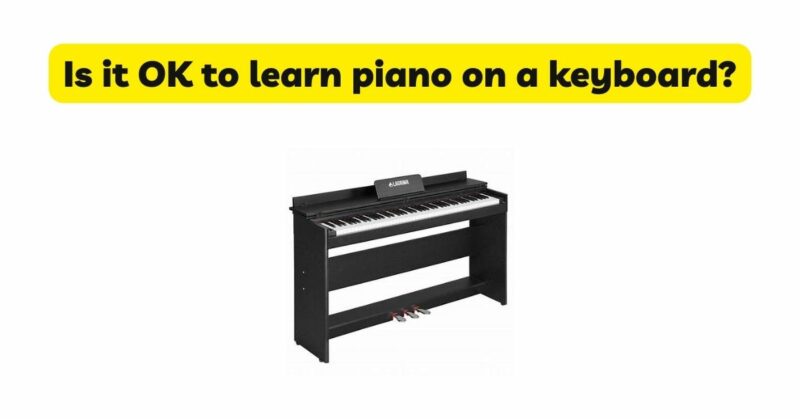
Learning to play the piano is a fulfilling and rewarding endeavor that opens up a world of musical expression. While traditional acoustic pianos have long been the instrument of choice, modern technology has introduced digital keyboards that offer a convenient and accessible alternative. In this article, we will explore the benefits and considerations of learning piano on a keyboard, helping you make an informed decision about embarking on your musical journey.
- Accessibility and Convenience: One of the key advantages of learning piano on a keyboard is its accessibility and convenience. Keyboards are compact, portable, and lightweight, making them ideal for individuals with limited space or those frequently on the move. Unlike acoustic pianos, which require substantial space and regular maintenance, keyboards can be easily stored and transported. This flexibility allows aspiring pianists to practice anytime, anywhere, without compromising on the quality of their learning experience.
- Affordability: Financial considerations often play a significant role when deciding to learn an instrument. Keyboards are generally more affordable compared to acoustic pianos, making them an attractive option for beginners and those on a limited budget. Entry-level keyboards offer a range of features and functionalities at a fraction of the cost of a traditional piano. This affordability factor allows aspiring pianists to begin their musical journey without the significant upfront investment associated with purchasing an acoustic piano.
- Technological Advancements: Digital keyboards have come a long way in terms of technological advancements. Many keyboards now feature weighted keys that simulate the touch and feel of an acoustic piano. Some models even offer graded hammer action, replicating the progressive resistance found in the keys of a traditional piano. Additionally, keyboards often have built-in sound options that allow users to experiment with different instrument sounds, rhythms, and accompaniments. These features enhance the learning experience by providing a versatile and interactive platform for exploration and creativity.
- Learning Tools and Resources: Learning piano on a keyboard can be further facilitated by the abundance of online resources and learning tools available. Numerous websites, tutorials, and mobile applications offer comprehensive lessons, sheet music, and interactive exercises tailored for keyboard learners. These resources provide step-by-step guidance, theory explanations, and practice materials, allowing individuals to progress at their own pace and tailor their learning experience to their specific goals. The digital nature of keyboards also enables connectivity to computers and tablets, opening up a world of educational software and virtual piano lessons.
- Limitations to Consider: While learning piano on a keyboard offers numerous advantages, it is essential to consider its limitations. Keyboards, even those with weighted keys, may not provide the exact touch and response of an acoustic piano. This discrepancy can pose challenges when transitioning to playing on an acoustic instrument in the future. Additionally, the sound produced by keyboards, although high-quality, may not replicate the rich and resonant tone of an acoustic piano. However, advancements in sound sampling technology have narrowed this gap considerably, making the difference less noticeable for beginner and intermediate players.
- Transitioning to an Acoustic Piano: For individuals who aspire to become advanced pianists or pursue a professional career in music, transitioning from a keyboard to an acoustic piano at some point may be necessary. Acoustic pianos offer a different playing experience, requiring greater finger strength and control due to their mechanical action. However, the skills and musical foundation acquired through learning on a keyboard can still be valuable when transitioning to an acoustic instrument. With guidance from an experienced piano teacher, students can adapt and refine their technique to accommodate the nuances of an acoustic piano.
Conclusion: Learning piano on a keyboard can be a viable and effective option for aspiring musicians, offering accessibility, affordability, and technological advantages. Keyboards provide a platform for beginners to develop their skills, explore various sounds, and access a wealth of online resources. While there are limitations to consider, such as touch and sound differences compared to acoustic pianos, the benefits of learning on a keyboard make it a practical choice for many individuals. Whether you choose a keyboard or an acoustic piano, the most important aspect is your commitment, dedication, and passion for music.