
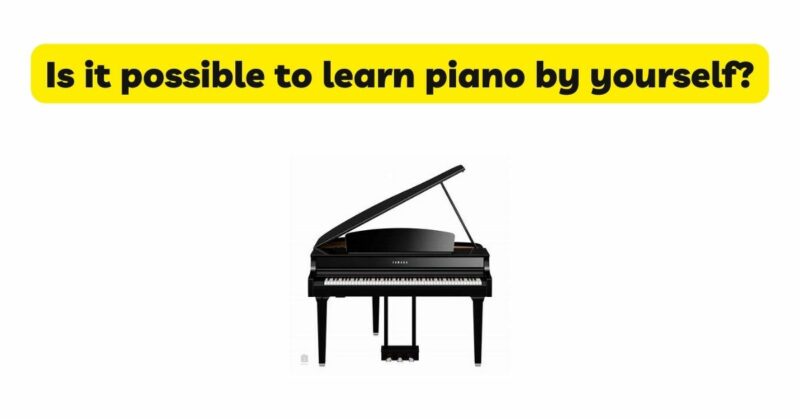
Learning to play the piano is a captivating journey that allows individuals to express their creativity and connect with music on a profound level. A common question that arises is whether it is possible to learn piano by oneself. With the advent of technology and the abundance of online resources, self-teaching has become increasingly popular. In this article, we will explore the possibilities and considerations of learning piano independently, equipping aspiring pianists with the knowledge and guidance to embark on a successful solo learning experience.
- The Power of Self-Directed Learning: Learning piano by oneself offers the opportunity for self-directed learning. It allows individuals to take control of their musical education, set their own pace, and explore areas of personal interest. Self-directed learning fosters independence, creativity, and a deeper connection with the instrument.
- Access to Comprehensive Learning Resources: In the digital age, an extensive range of learning resources is readily available at our fingertips. Online platforms, tutorials, instructional videos, interactive apps, and virtual pianos provide a wealth of materials for self-teaching. These resources offer comprehensive instruction, music theory lessons, sheet music databases, and practice tools, enabling learners to embark on their musical journey with confidence.
- Structuring a Personalized Learning Path: Learning piano independently requires creating a personalized learning path. It involves setting goals, designing a curriculum, and establishing a practice routine. By identifying appropriate resources, selecting method books, and utilizing online tutorials and lesson plans, learners can structure their learning process to suit their individual needs and aspirations.
- Developing Fundamental Skills: To learn piano effectively, developing fundamental skills is essential. These skills include hand positioning, finger technique, sight-reading, and understanding musical notation. Online resources can guide learners in acquiring and refining these skills through step-by-step instructions, exercises, and practice materials.
- Music Theory and Notation: Understanding music theory and notation is crucial for becoming proficient in piano playing. Self-teaching requires dedication to studying music theory concepts such as scales, chords, intervals, and key signatures. Familiarizing oneself with sheet music and developing the ability to read musical notation opens up a world of musical possibilities.
- Technique and Posture: Developing proper technique and posture is essential for efficient and injury-free piano playing. Although self-teaching presents challenges in acquiring correct technique, online tutorials and videos can provide visual guidance for developing proper hand positioning, finger placement, and body posture. It is crucial to pay attention to these aspects to ensure long-term progress and prevent the development of bad habits.
- Ear Training and Musicality: Self-teaching also encompasses developing a keen ear for pitch, rhythm, and musicality. Ear training exercises, listening to various musical genres, and studying recordings of accomplished pianists can enhance one’s ability to recognize intervals, chords, and melodic patterns. Cultivating musicality through expression, dynamics, and phrasing adds depth and emotion to piano playing.
- Seeking Feedback and Evaluation: Although learning piano independently does not involve a traditional teacher-student relationship, seeking feedback and evaluation is still crucial. Self-assessment through audio or video recordings, sharing progress with fellow musicians or online communities, and participating in virtual masterclasses or workshops can provide valuable feedback. This external evaluation helps identify areas for improvement and provides a sense of accountability.
- Overcoming Challenges and Staying Motivated: Learning piano by oneself requires self-discipline, persistence, and the ability to overcome challenges. It is essential to set realistic expectations, stay motivated, and remain committed to consistent practice. Developing strategies to overcome obstacles, seeking inspiration from accomplished pianists, and finding joy in the process can help maintain enthusiasm and drive.
- Supplementing with Professional Guidance: While self-teaching is possible, supplementing the learning process with occasional professional guidance can be beneficial. Periodic lessons with a qualified piano teacher offer personalized feedback, address specific challenges, and ensure proper technique and progress. Professional guidance can enhance the self-teaching experience and offer insights that may not be readily available online.
Conclusion: Learning piano by oneself is indeed possible and can lead to a fulfilling and rewarding musical journey. With the abundance of online resources, learners have access to comprehensive instruction, interactive tools, and a global community of fellow learners. By structuring a personalized learning path, focusing on fundamental skills, music theory, technique, and musicality, individuals can make significant progress in self-teaching. While occasional guidance from a professional teacher can enhance the learning journey, the independence and flexibility of self-teaching offer unique opportunities for self-expression and growth as a musician. With dedication, perseverance, and a passion for music, learning piano by oneself can be a rewarding and transformative experience.