
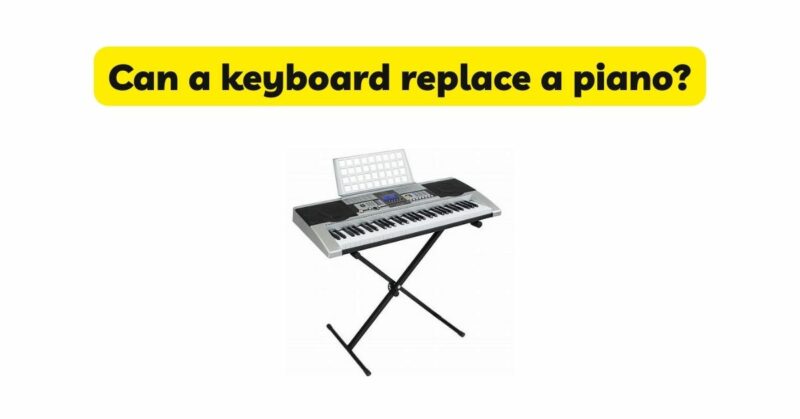
The advent of modern technology has revolutionized the way we create and experience music. Traditional instruments have been transformed into their digital counterparts, making them more accessible and versatile. One such instrument that has undergone significant changes is the piano. With the rise of electronic keyboards, a common question arises: Can a keyboard truly replace a piano? In this article, we will delve into the pros and cons of using a keyboard as a substitute for a piano, considering various aspects such as sound quality, portability, cost, and learning experience.
- Sound Quality:
One of the most significant differences between a piano and a keyboard lies in their sound production. A traditional piano employs hammers striking strings to produce its rich and resonant tones, while a keyboard uses electronic circuitry to recreate piano sounds digitally. Despite advancements in sound sampling technology, keyboards often fall short of capturing the depth and complexity of an acoustic piano’s sound. The unique tonal characteristics, harmonics, and dynamic range of a piano are challenging to replicate authentically on a keyboard.
- Portability:
One area where keyboards excel over pianos is portability. Pianos are bulky, heavy instruments that require substantial space and effort to transport. In contrast, keyboards are lightweight, compact, and easily portable, allowing musicians to perform and practice on the go. This portability makes keyboards a popular choice for gigging musicians, students, and those who have limited space in their homes.
- Cost:
Another crucial aspect to consider when comparing a keyboard to a piano is the cost. Acquiring a traditional piano can be a significant investment, with prices ranging from a few thousand to tens of thousands of dollars, depending on the quality and type of piano. In contrast, keyboards are generally more affordable, with a wide range of options available to suit different budgets. This affordability makes keyboards a practical choice for beginners or those on a tight budget.
- Learning Experience:
Learning to play the piano is a journey that encompasses not only technical skills but also an understanding of the instrument’s nuances and expressive capabilities. Traditional pianos offer a tactile experience, allowing players to develop finger strength, touch sensitivity, and an appreciation for the physicality of the instrument. While keyboards often mimic the feel of a piano with weighted keys, they may not provide the same level of responsiveness or feedback. Nevertheless, keyboards offer additional features such as built-in learning tools, metronomes, and recording capabilities, which can enhance the learning experience for beginners.
- Versatility and Technology Integration:
Keyboards have the advantage of versatility and integration with modern technology. They often come equipped with various instrument sounds, effects, and customizable features that allow musicians to explore different genres and experiment with their compositions. Additionally, keyboards can be connected to computers and music production software, opening up a world of possibilities for recording, editing, and composing music digitally. This integration with technology makes keyboards a valuable tool for music producers, composers, and those interested in electronic music.
Conclusion:
In conclusion, while a keyboard offers several advantages such as portability, affordability, and integration with technology, it cannot fully replace the experience of playing a traditional piano. The sound quality and authenticity of a piano’s tones remain unmatched by even the most advanced keyboards. Additionally, the tactile and physical aspects of playing a piano contribute to a unique and rewarding learning experience. However, keyboards have their own merits and are excellent alternatives for those seeking convenience, versatility, and cost-effectiveness. Ultimately, the choice between a keyboard and a piano depends on individual preferences, goals, and circumstances. Both instruments have their place in the world of music, offering musicians diverse avenues for creativity and expression.