
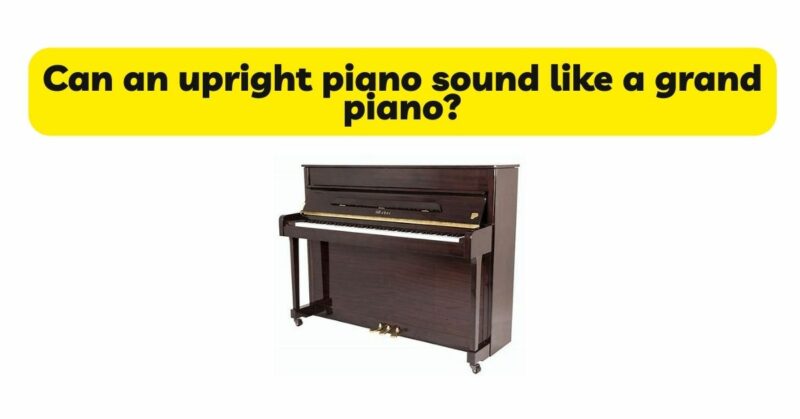
The distinctive sound of a grand piano has long been revered by musicians and enthusiasts alike. However, advancements in upright piano design and technology have narrowed the gap between the two instrument types, challenging the notion that only grand pianos can produce a superior sound. In this article, we will explore whether an upright piano can truly sound like a grand piano. By examining factors such as design innovations, sound sampling, string scaling, and individual preferences, we aim to shed light on the potential of upright pianos to emulate the grand piano sound and provide musicians with a comparable playing experience.
- Design Innovations: Traditionally, the vertical orientation of upright pianos posed challenges in replicating the sound of a grand piano. However, modern upright pianos have undergone significant design innovations to enhance their tonal capabilities and resonance. Manufacturers have implemented improvements such as taller and wider soundboards, longer strings, and enhanced structural supports. These innovations have resulted in a more resonant and dynamic sound production, allowing some upright pianos to closely approach the tonal quality of grand pianos. By adopting elements of grand piano design, upright pianos have made remarkable strides in achieving a more grand piano-like sound.
- Sound Sampling and Digital Technology: With the advent of digital pianos and hybrid pianos, upright pianos have gained the ability to replicate the sound of a grand piano through advanced sound sampling and digital technology. Digital pianos utilize high-quality recordings of acoustic grand pianos to produce authentic and realistic piano sounds. Some digital pianos employ sophisticated sampling techniques that capture the nuances of a grand piano’s sound, including the resonance, timbre, and sustain. Hybrid pianos combine acoustic elements with digital technology, incorporating digital sound engines that simulate the sound of a grand piano while retaining the tactile experience of playing an acoustic instrument. These advancements have significantly bridged the gap between upright and grand pianos in terms of sound reproduction.
- String Scaling and Tonal Range: String scaling plays a crucial role in determining the tonal range and character of a piano. Grand pianos typically have longer strings compared to upright pianos, allowing for a broader range of tones and increased resonance. However, manufacturers have developed innovative string scaling techniques for upright pianos to extend their tonal capabilities. By carefully scaling the strings, some upright pianos can achieve a more extended tonal range, enhancing their ability to replicate the sound of a grand piano. While the tonal range may not match that of a concert grand piano, advancements in string scaling have brought upright pianos closer to producing a grand piano-like sound.
- Resonance and Sound Projection: One of the defining characteristics of grand pianos is their ability to project sound with depth and resonance. The horizontal string orientation and larger soundboard of grand pianos contribute to their exceptional sound projection. While upright pianos may have inherent limitations in sound projection due to their vertical design, manufacturers have developed techniques to enhance resonance and sound dispersion. By optimizing soundboard design, placement, and structural elements, some upright pianos can produce a more resonant and projected sound, emulating the grand piano experience. Additionally, advancements in cabinet construction and materials have contributed to improved sound projection in upright pianos, narrowing the gap between the two instrument types.
- Individual Preferences and Musical Context: Sound perception is subjective, and individual preferences play a significant role in determining whether an upright piano can sound like a grand piano. Some musicians and listeners may prefer the distinct tonal qualities of grand pianos, appreciating their rich and resonant sound. Others may find the tonal characteristics of certain upright pianos to be equally satisfying. Furthermore, the musical context in which the piano is used should be considered. While grand pianos are often preferred for concert halls and large performance venues, upright pianos can provide an excellent sound experience in smaller spaces such as studios, practice rooms, or intimate settings. It is crucial to evaluate the sound quality within the specific musical context and personal preferences of the pianist.
- Piano Preparation and Voicing: Voicing and piano preparation techniques can also play a role in optimizing the sound of an upright piano to resemble that of a grand piano. Skilled piano technicians can adjust the voicing, hammer shaping, and regulation of an upright piano to achieve a more grand piano-like sound. These techniques can enhance the tonal balance, projection, and dynamic response of the instrument, bringing it closer to the characteristics of a grand piano. Professional piano preparation and voicing can significantly influence the sound quality of an upright piano and improve its ability to emulate the grand piano sound.
Conclusion: Advancements in design, sound sampling, string scaling, and digital technology have enabled upright pianos to approach the sound of grand pianos. With innovations in upright piano construction, tonal enhancements, and the integration of digital elements, it is now possible for some upright pianos to replicate the tonal qualities and characteristics of grand pianos. While the sound of a grand piano may still possess certain unique qualities, upright pianos have evolved to provide musicians with a comparable playing experience and a sound that satisfies their musical aspirations. Ultimately, the ability of an upright piano to sound like a grand piano depends on factors such as design, technology, individual preferences, and the context in which the piano is used. It is crucial to explore various upright piano models, consult with piano professionals, and consider personal musical goals to find an instrument that closely emulates the grand piano sound while meeting individual needs and preferences.