
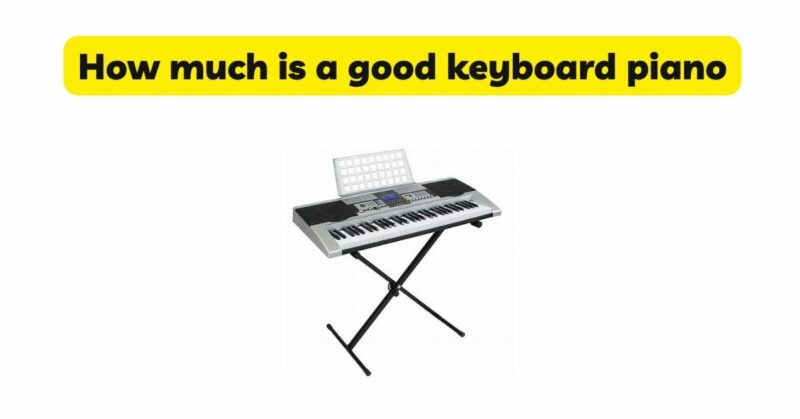
Keyboard pianos have gained popularity among musicians and enthusiasts for their versatility, portability, and advanced features. When considering the purchase of a keyboard piano, one important aspect to evaluate is the cost. In this article, we delve into the factors that influence the price of a high-quality keyboard piano, including key considerations such as keyboard types, key action, sound quality, built-in features, brand reputation, and additional accessories. By examining these factors, we aim to provide insights into the cost range of a good keyboard piano and help readers make an informed decision when selecting an instrument that suits their musical needs and budget.
- Keyboard Types and Key Action: The type of keyboard and the key action are crucial factors in determining the cost of a keyboard piano. There are various keyboard types available, including weighted, semi-weighted, and synth-action keyboards. Weighted keyboards with hammer action, which closely mimic the feel of an acoustic piano, tend to be more expensive due to the complexity of their mechanisms. Semi-weighted and synth-action keyboards, while more affordable, may not offer the same level of realism in touch sensitivity. The quality and responsiveness of the key action directly influence the overall playing experience, and keyboards with more realistic key action tend to come at a higher cost.
- Sound Quality and Sample Libraries: Sound quality is a significant consideration when evaluating the price of a keyboard piano. High-quality keyboard pianos often utilize advanced sound sampling technology to replicate the authentic sound of acoustic instruments, such as pianos, organs, and orchestral instruments. The complexity and accuracy of the sample libraries impact the realism and richness of the sound produced. Keyboard pianos with extensive sample libraries and advanced sound processing capabilities tend to have a higher price tag, as they offer a wider range of expressive possibilities and a more immersive playing experience.
- Built-in Features and Technology: The presence of built-in features and advanced technology can significantly affect the cost of a keyboard piano. Higher-end models often include features such as built-in speakers, multi-track recording capabilities, USB connectivity, MIDI compatibility, onboard effects, and advanced sound manipulation options. Additionally, the availability of performance controls, such as sliders, knobs, and assignable buttons, can enhance the versatility and expressiveness of the instrument. The inclusion of these features adds value to the keyboard piano but also contributes to a higher price point.
- Brand Reputation and Build Quality: Brand reputation and build quality play a significant role in determining the cost of a keyboard piano. Well-established brands with a history of producing high-quality instruments often have a premium price associated with their products. These brands invest in research and development, use premium materials, and have a reputation for superior craftsmanship. While instruments from reputable brands may come at a higher cost, they often provide better build quality, reliability, customer support, and long-term durability, making them a worthwhile investment.
- Additional Accessories and Expansion Options: The inclusion of additional accessories and expansion options can influence the overall cost of a keyboard piano. Some models may come bundled with accessories such as a sustain pedal, a keyboard stand, a bench, or a carrying case. The availability of expansion slots or compatibility with additional sound libraries or expansion packs can also affect the price. These accessories and expansion options add convenience and flexibility to the instrument but may increase the upfront cost.
- Entry-Level vs. Professional-Grade Keyboards: The price of a good keyboard piano can vary based on whether it is an entry-level or professional-grade instrument. Entry-level keyboards are typically more affordable, offering essential features and functionality for beginners or casual players. Professional-grade keyboards, on the other hand, cater to the needs of advanced musicians, offering more advanced features, superior sound quality, and enhanced performance capabilities. Professional-grade keyboards often come at a higher price due to their advanced technology and extensive features, making them suitable for performers, studio recording, and live music production.
Conclusion: The cost of a good keyboard piano is influenced by various factors, including the keyboard type, key action, sound quality, built-in features, brand reputation, and additional accessories. While prices can vary significantly, it is essential to strike a balance between one’s budget and the desired features and quality. Understanding the specific musical needs and preferences, along with evaluating the long-term usability and versatility of the instrument, is crucial in determining the right investment. Additionally, it is advisable to try out different models, research customer reviews, and consult with knowledgeable professionals to make an informed decision. By considering these factors, prospective buyers can find a high-quality keyboard piano that offers an enjoyable playing experience, reliability, and value for their investment.