
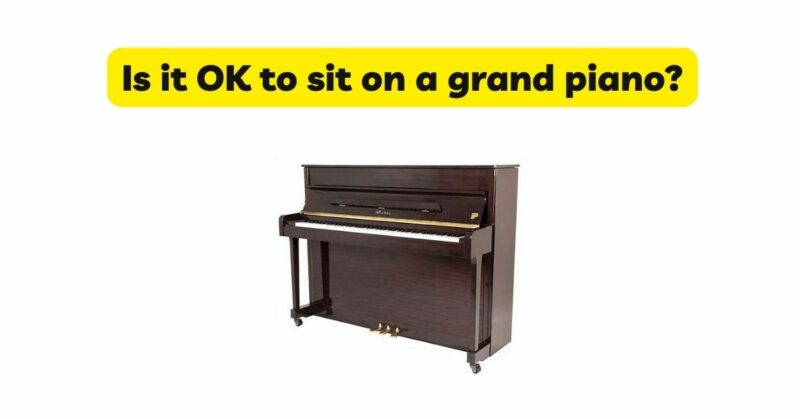
Grand pianos are not only revered for their exceptional sound and visual appeal but also for their exquisite craftsmanship and delicate construction. Given the instrument’s prestige, a common question that arises is whether it is acceptable to sit on a grand piano. In this article, we will explore the etiquette and considerations surrounding this issue. By examining factors such as instrument care, potential damage, safety concerns, and the cultural significance of grand pianos, we aim to provide insight into the appropriateness of sitting on a grand piano.
- Instrument Care and Preservation: Grand pianos are crafted with utmost care and precision, with delicate internal mechanisms and sensitive components. Sitting on a grand piano poses a risk of causing damage to the instrument. The weight and pressure exerted while sitting can potentially impact the delicate internal structure, compromising the piano’s functionality and sound quality. Moreover, the weight distribution of a person sitting on the piano can strain the piano’s frame, potentially leading to structural issues. To preserve the integrity and longevity of a grand piano, it is generally advised to avoid sitting on the instrument.
- Potential Damage to the Finish: The finish of a grand piano, whether it is high-gloss or satin, is susceptible to scratches, marks, and wear. Sitting on a grand piano can inadvertently cause damage to the piano’s finish, particularly if the clothing worn has buttons, zippers, or other sharp or abrasive elements. Even minor scratches or blemishes on the piano’s finish can detract from its aesthetic appeal and potentially reduce its value. To maintain the pristine appearance of a grand piano, it is advisable to refrain from sitting on it.
- Safety Concerns: Sitting on a grand piano can pose safety risks for both the individual and the instrument. The curved shape of the piano’s lid, coupled with its smooth surface, can make it precarious and unstable to sit on. A loss of balance or an accidental slip can result in injury to the person sitting and potential damage to the piano, such as the lid closing abruptly or hinges breaking. Additionally, sitting on the piano may also pose risks to the internal components, such as keys, hammers, and strings. To ensure personal safety and the integrity of the instrument, it is recommended to avoid sitting on a grand piano.
- Cultural Significance and Respect for the Instrument: Grand pianos hold a significant cultural and historical importance in the world of music. They are often found in prestigious concert halls, music institutions, and private residences. Sitting on a grand piano can be seen as a disregard for the instrument’s value and the reverence it commands. Treating a grand piano with respect acknowledges its cultural significance and the craftsmanship that went into its creation. Adhering to proper piano etiquette involves refraining from sitting on the instrument and demonstrating an understanding of the instrument’s importance.
- Alternative Ways to Appreciate the Piano: While sitting on a grand piano may not be advisable, there are alternative ways to appreciate and interact with the instrument. Listening to the piano being played, attending live performances, or engaging in music lessons are excellent ways to experience the beauty and power of a grand piano. Admiring the instrument from a respectful distance, appreciating its visual aesthetics, and understanding its historical and musical significance can cultivate a deep appreciation for the grand piano without compromising its integrity.
- Piano Etiquette and Professional Standards: Professional musicians, pianists, and piano teachers adhere to a set of standards and etiquette when it comes to grand pianos. In the professional realm, it is generally expected that pianists treat the instrument with the utmost care and respect. This includes refraining from sitting on the piano and ensuring that proper maintenance and care are taken to preserve its quality. Following these standards not only demonstrates professionalism but also fosters a sense of reverence for the instrument and its role in the music world.
Conclusion: Sitting on a grand piano is generally considered inappropriate and potentially damaging to the instrument. Grand pianos are delicate and finely crafted instruments that deserve to be treated with care and respect. The risk of damaging the internal components, compromising the instrument’s sound quality, and causing harm to oneself outweighs any momentary convenience or novelty of sitting on the piano. Respecting the cultural significance, craftsmanship, and beauty of a grand piano involves adhering to proper piano etiquette and finding alternative ways to appreciate the instrument. By doing so, we ensure the preservation and longevity of these remarkable musical treasures.