
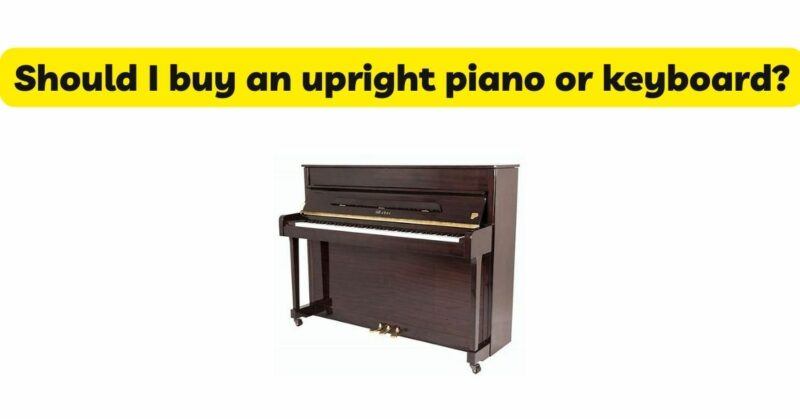
The decision to buy a musical instrument is an exciting and important one. When considering whether to invest in an upright piano or a keyboard, there are several factors to evaluate. Upright pianos offer a rich and authentic playing experience, while keyboards provide convenience and versatility. In this article, we will explore the various aspects to consider when deciding between an upright piano and a keyboard. By examining factors such as sound quality, touch sensitivity, maintenance requirements, cost considerations, and personal preferences, readers will be equipped to make an informed decision that aligns with their individual needs, goals, and circumstances.
- Sound Quality and Authenticity: One of the primary considerations when deciding between an upright piano and a keyboard is the sound quality and authenticity. Upright pianos produce a rich and resonant sound due to their acoustic mechanism and larger size. The strings, hammers, and wooden construction contribute to the unique and authentic piano tone that many musicians find captivating. Keyboards, on the other hand, aim to replicate the sound of an upright piano through digital sampling and sound generation. While they have made significant advancements in sound quality, there can be subtle differences in tone, depth, and resonance compared to an acoustic instrument. Consider your preference for sound authenticity and whether the nuanced characteristics of an upright piano are essential to your musical expression.
- Touch and Feel: The touch and feel of an instrument greatly impact the playing experience. Upright pianos offer a tactile and dynamic response due to their weighted keys and mechanical action. The interaction between the player’s fingers and the keys allows for expressive playing and nuanced dynamics. Keyboards, particularly those designed to emulate the feel of an acoustic piano, aim to replicate the touch sensitivity through weighted or semi-weighted keys with graded hammer action. While they provide a realistic touch, some players may find the feel of a real piano to be more authentic and responsive. Consider your playing style, preference for touch sensitivity, and the importance of a realistic piano-like experience.
- Maintenance and Durability: Maintenance and durability are important factors to consider when choosing an instrument. Upright pianos require regular maintenance, including tuning, voicing, and occasional repairs. They are sensitive to changes in temperature and humidity, necessitating ongoing care and attention. Additionally, moving and transporting an upright piano can be a cumbersome and costly process. Keyboards, on the other hand, have minimal maintenance requirements. They do not require tuning and are not as susceptible to environmental factors. Keyboards are also lightweight and portable, making them easier to move and transport. Consider your willingness and ability to invest time and money in the maintenance of an upright piano versus the convenience and low maintenance of a keyboard.
- Cost Considerations: Cost is an important factor to consider when comparing an upright piano to a keyboard. Upright pianos, particularly high-quality instruments, can be a significant financial investment. They require a higher upfront cost and ongoing expenses for maintenance, tuning, and potential repairs. Keyboards offer a more accessible option with a wide range of models available to suit different budgets. They have a lower initial cost and lower maintenance expenses. Consider your budget and financial resources, keeping in mind the long-term costs associated with each instrument.
- Versatility and Additional Features: Keyboards offer a range of additional features and functionalities that can enhance a musician’s versatility and creativity. Many keyboards come with various instrument voices, rhythms, built-in effects, recording capabilities, and connectivity options. These features allow musicians to explore different genres, experiment with sounds, and compose music with greater flexibility. Upright pianos, on the other hand, are focused primarily on delivering the authentic piano experience without the extensive array of additional features found in keyboards. Consider your musical goals and the importance of additional functionalities when deciding between an instrument that prioritizes authenticity and one that provides versatility.
- Personal Preferences and Musical Goals: Ultimately, personal preferences and musical goals play a significant role in the decision-making process. Consider the type of music you wish to play, your preferred playing style, and the role the instrument will serve in your musical journey. Reflect on your aspirations as a musician and how the instrument aligns with your goals. Additionally, consider your living space and any limitations or constraints that may impact your choice. A keyboard may be more suitable for those with limited space or a need for portability, while an upright piano may be preferred by those who prioritize authenticity and a traditional playing experience.
Conclusion: Choosing between an upright piano and a keyboard requires careful consideration of various factors, including sound quality, touch sensitivity, maintenance requirements, cost considerations, personal preferences, and musical goals. Upright pianos offer an authentic and resonant sound, a tactile playing experience, and a sense of tradition. They require regular maintenance and are less portable. Keyboards provide convenience, versatility, portability, and additional features. They have lower maintenance requirements, are more affordable, and cater to a wide range of musical styles and needs. Ultimately, the decision should align with your individual needs, preferences, and circumstances. Consider your sound preference, touch sensitivity, maintenance capabilities, budget, living space, and the importance of additional features when making your decision. Both instruments have their own unique qualities and can provide a fulfilling musical experience when chosen according to personal preferences and goals.