
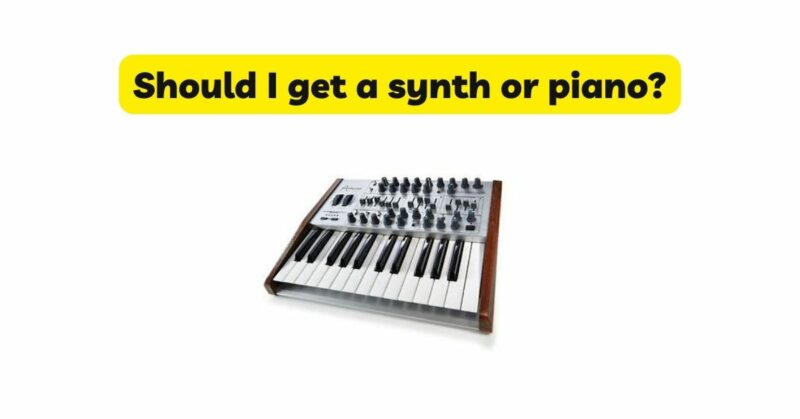
When it comes to selecting a musical instrument, the choice between a synthesizer and a piano can be a challenging one. Both instruments offer unique qualities and serve different musical purposes. In this article, we will explore the factors to consider when deciding whether to get a synthesizer or a piano. From sound versatility and expressive capabilities to playing styles and personal preferences, we will delve into the considerations that can help you make an informed decision and find the instrument that best suits your musical aspirations.
I. Sound Versatility and Musical Styles
One of the crucial factors to consider is the type of sound versatility you seek and the musical styles you want to explore. Synthesizers excel in offering a wide range of sounds, textures, and effects. They can reproduce traditional instrument sounds, such as pianos, strings, and brass, as well as create innovative and experimental electronic sounds. If you are interested in genres like electronic music, pop, or experimental genres that require diverse sound palettes, a synthesizer might be the better choice.
On the other hand, if you lean towards classical, jazz, or traditional genres, where the emphasis is on acoustic instruments and timeless tonalities, a piano would be a more fitting choice. Pianos offer the authentic sound and expressive nuances associated with classical compositions and can be an excellent instrument for those interested in traditional piano repertoire or accompanying vocalists and instrumentalists.
II. Expressive Capabilities and Playing Styles
Another crucial consideration is the expressive capabilities and playing styles associated with each instrument. Pianos offer a touch-sensitive keyboard and the ability to vary dynamics, articulation, and phrasing through finger pressure and touch. They allow for a wide range of expression and control over the sound, making them suitable for musicians interested in nuanced interpretations and playing styles.
On the other hand, synthesizers offer various features that enhance expressive control, such as modulation wheels, aftertouch, and real-time parameter adjustments. These features enable musicians to manipulate sound in unique ways, adding modulation effects, creating dynamic textures, and experimenting with sonic expressions. If you are interested in exploring sound design, real-time manipulation, and pushing creative boundaries, a synthesizer may be the instrument of choice.
III. Learning Curve and Skill Development
Consider the learning curve and skill development required for each instrument. Pianos demand a certain level of technical proficiency, including finger dexterity, hand independence, and music theory knowledge. Learning to read sheet music and understand musical concepts like harmony, melody, and rhythm is crucial for piano players. The path to mastering the piano may involve formal lessons and regular practice.
Synthesizers, while not as technically demanding as pianos, require an understanding of sound synthesis, programming, and electronic music production techniques. Learning to navigate synthesizer interfaces, manipulate parameters, and create sounds from scratch may involve studying tutorials, experimenting with different synthesis methods, and developing a deeper understanding of sound design principles.
IV. Practical Considerations: Space, Portability, and Budget
Practical considerations play a significant role in the decision-making process. Evaluate the space available in your living or practice area. Pianos, especially acoustic grand pianos, require substantial space and may not be suitable for small apartments or limited areas. In such cases, a digital piano or a compact keyboard with weighted keys can be a space-saving alternative.
Portability is another factor to consider. Pianos, being large and heavy, are challenging to transport, limiting their mobility for live performances or gigs. Synthesizers, on the other hand, are more portable and can be easily carried to rehearsals, performances, or studio sessions. Compact keyboard synthesizers are especially convenient for musicians who need mobility and versatility.
Budget is an important consideration as well. Pianos can range from affordable digital pianos to high-end acoustic grand pianos, with maintenance costs and regular tunings adding to the overall investment. Synthesizers offer a range of options, from budget-friendly entry-level models to professional-grade instruments with advanced features. Consider your budget and the features that align with your musical goals.
V. Personal Preferences and Musical Goals
Ultimately, personal preferences and musical goals should guide your decision. Reflect on your musical aspirations, the styles you want to explore, and the instrument that resonates with you on a personal level. Consider the instrument that will inspire and motivate you to practice and create music.
Additionally, consider the long-term commitment to the instrument. Pianos are known for their timeless appeal, durability, and longevity. They can be heirloom instruments passed down through generations. Synthesizers, while also capable of lasting a long time, may be subject to technological advancements and evolving trends in sound production.
Conclusion:
Choosing between a synthesizer and a piano depends on various factors, including sound versatility, expressive capabilities, playing styles, learning curve, practical considerations, and personal preferences. Consider the type of sound palette you desire, the expressive control you seek, and the musical styles you want to explore.
If you are interested in a wide range of sounds, sonic experimentation, and genres like electronic music, a synthesizer may be the better choice. If you prefer the authentic sound of acoustic instruments, nuanced expression, and genres like classical or traditional music, a piano may be the instrument for you.
Remember to also consider the practical aspects, such as space, portability, and budget, as well as the long-term commitment and your personal connection to the instrument. Ultimately, the choice should align with your musical aspirations and provide you with the instrument that will inspire creativity, fulfill your musical goals, and bring joy to your musical journey.