
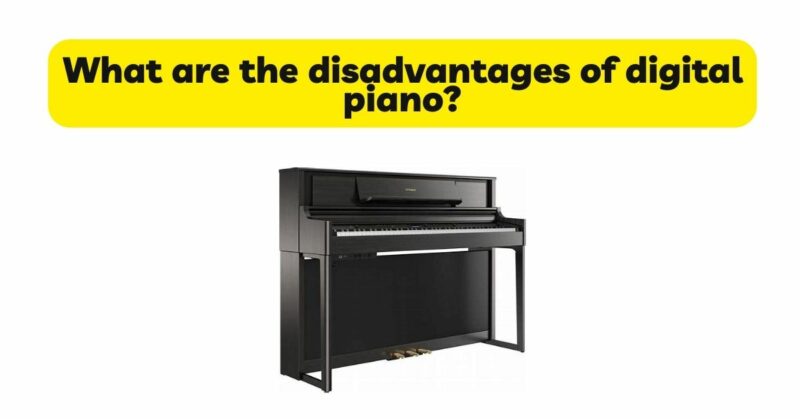
Digital pianos have undoubtedly made significant advancements in recent years, offering numerous benefits and functionalities. However, like any technological innovation, they are not without their limitations. In this article, we will explore the disadvantages of digital pianos, shedding light on the areas where they may fall short compared to their acoustic counterparts. Understanding these drawbacks will help potential buyers make informed decisions and set realistic expectations when considering a digital piano.
- Lack of Authenticity in Sound: While digital pianos have made great strides in replicating the sound of acoustic pianos, they still face challenges in capturing the full depth and resonance of a high-quality acoustic instrument. Despite advanced sampling techniques, there can be subtle differences in tone and timbre, especially in the higher and lower registers. The complexities of acoustic piano sounds, such as sympathetic resonance and subtle variations in harmonics, are difficult to replicate completely. This discrepancy may be noticeable to trained ears and seasoned pianists who are accustomed to the nuances of an acoustic piano.
- Limited Dynamic Range: Acoustic pianos offer an extensive dynamic range, allowing players to express a wide spectrum of volume and tonal variations. Digital pianos, although improving in this area, may still have limitations in capturing the same level of nuance and sensitivity. While they can produce a wide range of volume levels, the transition between the softest and loudest sounds may not be as smooth or as nuanced as on an acoustic piano. Pianists who rely heavily on dynamic expression may find digital pianos slightly lacking in this aspect.
- Key Action and Touch Sensitivity: While digital pianos have made significant advancements in emulating the touch and feel of acoustic pianos, some pianists may still find the key action and touch sensitivity to be slightly different. Despite incorporating weighted keys with graded hammer action, there may be slight variations in the responsiveness and feedback compared to an acoustic instrument. Additionally, the escapement mechanism, which provides the distinctive “let-off” feeling when releasing keys, may not be as pronounced or precise in digital pianos, affecting the overall playing experience for some musicians.
- Limited Acoustic Resonance: Acoustic pianos possess a unique resonance that occurs when the strings vibrate in sympathy with one another, creating a rich and immersive sound. Digital pianos often simulate this resonance digitally, but it may not be as organic or authentic as the natural resonance found in acoustic instruments. The lack of physical strings and soundboard vibration in digital pianos can result in a slightly different listening experience, especially when playing complex or sustained chords or using the sustain pedal extensively.
- Dependence on Electricity and Technology: Digital pianos rely heavily on electricity and electronic components to function. While this may seem like a minor inconvenience in a world powered by electricity, it can become a limitation in certain situations. Power outages or technical malfunctions can render a digital piano unusable until the issue is resolved. Moreover, as digital pianos incorporate complex technology, they may be more susceptible to potential technical failures or glitches over time. Acoustic pianos, on the other hand, do not face such dependence on external factors and are considered more reliable in this regard.
- Depreciation and Upgradability: Digital pianos, like most electronic devices, tend to depreciate in value over time. As newer models with improved features and technologies are released, older digital pianos may become outdated in terms of functionality and sound quality. Upgrading to a newer model often becomes necessary to keep up with the advancements in digital piano technology. Acoustic pianos, however, generally retain their value better and can last for generations with proper maintenance.
Conclusion: While digital pianos have numerous advantages and have made remarkable progress in replicating the sound and feel of acoustic pianos, they are not without their disadvantages. The limitations in sound authenticity, dynamic range, key action, touch sensitivity, acoustic resonance, dependence on electricity and technology, and depreciation should be considered when evaluating a digital piano. Understanding these drawbacks will help individuals set realistic expectations and make informed decisions based on their specific musical requirements, budget, and preferences. Ultimately, whether one chooses a digital piano or an acoustic piano will depend on personal circumstances, needs, and the importance placed on these limitations.