
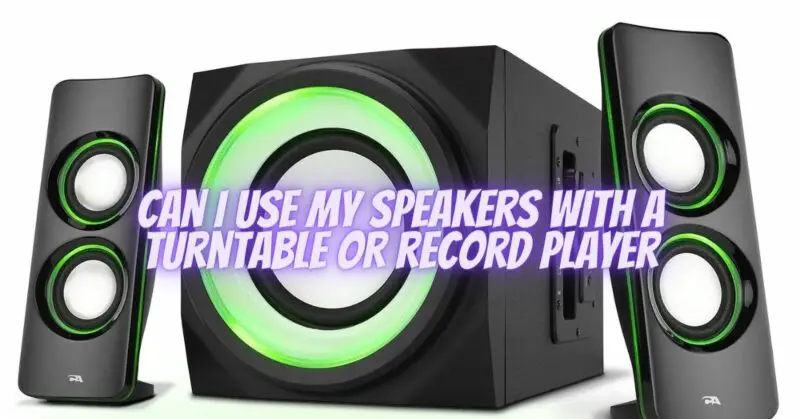
If you have a turntable or record player and are looking to connect it to speakers for audio playback, it is important to understand the compatibility and considerations involved. While turntables require a specific setup to work properly with speakers, it is indeed possible to use your speakers with a turntable and enjoy the warm and authentic sound of vinyl records. In this article, we will explore the compatibility factors and considerations when connecting speakers to a turntable or record player.
- Pre-Amplification:
Most turntables require a phono preamplifier to amplify the low-level signal produced by the turntable’s cartridge. This step is necessary to bring the signal to a level suitable for powering speakers:
a. Built-in phono preamp: Some turntables come with a built-in phono preamplifier. In this case, you can connect the turntable directly to your speakers or an amplifier/receiver that has a dedicated phono input.
b. External phono preamp: If your turntable does not have a built-in phono preamp, you will need to connect an external phono preamplifier between the turntable and the speakers or amplifier. The phono preamp amplifies the signal from the turntable to line-level and ensures proper audio playback.
- Speaker Connections:
Once you have the phono preamplifier set up, you can connect the speakers to your turntable:
a. Amplifier/receiver: If you have an amplifier or receiver with a phono input, connect the output of the phono preamp to the phono input of the amplifier/receiver. Then, connect your speakers to the amplifier/receiver’s speaker outputs.
b. Powered speakers: Alternatively, if you have powered speakers (also known as active speakers) with built-in amplification, you can connect the output of the phono preamp directly to the line-level input of the powered speakers. This eliminates the need for a separate amplifier or receiver.
- Grounding:
Grounding is an important consideration when using a turntable:
a. Ground wire: Turntables often have a ground wire that needs to be connected properly to reduce hum or interference. Check your turntable’s manual for instructions on grounding and connect the ground wire to the appropriate grounding terminal on the phono preamp or amplifier/receiver.
- Speaker Placement:
Consider the placement of your speakers for optimal sound reproduction:
a. Stereo imaging: Position your speakers in a way that creates a proper stereo image, with an equilateral triangle formed between the speakers and your listening position.
b. Acoustic considerations: Avoid placing speakers too close to walls or corners to minimize unwanted reflections and bass buildup. Experiment with speaker placement to achieve balanced sound and imaging.
- Audio Adjustments:
When using a turntable, it’s important to make some audio adjustments for optimal playback:
a. Tracking force and anti-skate: Adjust the tracking force and anti-skate settings on your turntable according to the manufacturer’s instructions. These settings ensure proper tracking of the record groove and prevent excessive wear or skipping.
b. Cartridge alignment: Proper cartridge alignment is essential for accurate sound reproduction. Follow the instructions provided with your turntable to align the cartridge correctly.
Conclusion:
Using your speakers with a turntable or record player requires proper setup and considerations for compatibility. Ensure you have the necessary preamplification with either a built-in phono preamp or an external phono preamplifier. Connect the output of the phono preamp to an amplifier/receiver or directly to powered speakers. Pay attention to grounding, speaker placement, and make necessary audio adjustments on your turntable. With the right setup and careful attention to detail, you can enjoy the warm and nostalgic sound of vinyl records through your speakers, adding a touch of analog charm to your audio experience.