
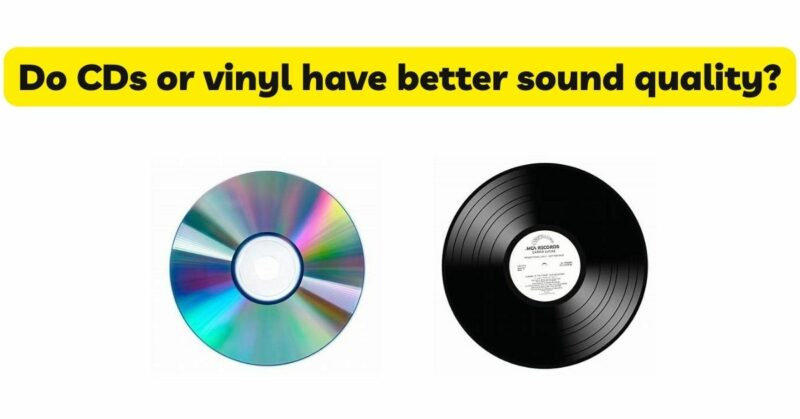
The comparison between the sound quality of CDs and vinyl records has sparked passionate debates among audiophiles and music enthusiasts. Each format has its unique characteristics and merits, but determining which one offers better sound quality requires a thorough examination of various factors. In this article, we will delve into the strengths and limitations of both CDs and vinyl records, explore the factors that influence sound quality, and consider listener perceptions to shed light on the ongoing vinyl vs. CD sound quality debate.
- Analog vs. Digital Sound Reproduction: Vinyl records and CDs represent different approaches to sound reproduction: analog and digital. Vinyl records capture sound waves as physical grooves, preserving the continuous analog nature of the original recording. CDs, on the other hand, store audio as digital data, utilizing high-resolution sampling and quantization techniques. Vinyl enthusiasts argue that analog reproduction offers a more natural and authentic sound, while digital technology has advanced significantly, allowing CDs to achieve impressive sound fidelity.
- Dynamic Range and Audio Fidelity: Dynamic range, which refers to the difference between the softest and loudest sounds in a recording, is an essential aspect of sound quality. Vinyl records are often praised for their wide dynamic range, allowing for the faithful reproduction of subtle nuances and powerful musical passages. However, it is crucial to note that CDs can also provide an extensive dynamic range when properly mastered. Modern digital formats, such as CDs and high-resolution audio, can accurately represent the full dynamic spectrum of the original recording.
- Distinctive Sound Characteristics: Vinyl records possess unique sound characteristics that some listeners find appealing. The analog nature of vinyl can contribute to a warm and rich sound, often attributed to harmonic distortion and other imperfections. Vinyl enthusiasts argue that these imperfections add character and enhance the emotional connection to the music. In contrast, CDs offer a clean and precise sound reproduction, free from the inherent artifacts and limitations of vinyl. The absence of these artifacts contributes to the perception of higher fidelity in CDs.
- Limitations and Artifacts: Vinyl records are not without their limitations and inherent artifacts. Surface noise, pops, crackles, and other imperfections can be present, particularly in older or poorly maintained records. These factors can impact the overall sound quality and listening experience. CDs, on the other hand, provide a consistent and artifact-free playback experience. The digital nature of CDs eliminates surface noise and other physical limitations, allowing for a clean and accurate representation of the original recording.
- Playback Equipment and Setup: The quality of playback equipment and proper setup significantly influence the sound quality of both vinyl and CD playback. High-quality turntables, cartridges, phono preamps, amplifiers, and speakers are necessary for optimal vinyl audio reproduction. Similarly, high-quality CD players or DACs (Digital-to-Analog Converters), amplifiers, and speakers are crucial for achieving the best sound quality from CDs. Both formats demand careful attention to equipment selection, calibration, and proper setup to realize their full sonic potential.
- Listener Bias and Psychological Factors: Listener bias and psychological factors can heavily influence sound quality perception. Vinyl records often evoke a sense of nostalgia and engage listeners through a tactile and ritualistic experience. The act of handling vinyl, carefully placing the needle, and engaging with album artwork can create a deeper emotional connection to the music. These factors, along with the intentional and focused listening that vinyl encourages, can enhance the overall perception of sound quality. However, CDs offer convenience and accessibility, enabling listeners to access a vast catalog of music without the need for physical interaction.
- Individual Preferences and Contextual Factors: Sound quality perception is subjective and varies among individuals based on personal preferences and contextual factors. Musical genre, listening environment, playback equipment, and individual hearing capabilities all contribute to how one perceives sound quality. What one listener considers better may differ from another’s opinion. Therefore, it is essential to consider individual preferences and contextual factors when evaluating the sound quality of CDs and vinyl records.
Conclusion: Determining whether CDs or vinyl records have better sound quality is a complex matter influenced by various factors. Both formats possess unique characteristics and strengths that cater to different listener preferences. Vinyl records offer a warm and rich sound with their analog nature and inherent imperfections, which some find appealing and emotionally engaging. CDs, on the other hand, provide a clean and precise sound reproduction, free from the artifacts and limitations of vinyl. The sound quality debate is subjective and dependent on individual preferences, listening conditions, and the context in which music is enjoyed. Ultimately, the choice between CDs and vinyl should be based on personal preference, taking into account factors such as the listening experience, convenience, and access to music.