
Synthesizers have been revered for their ability to create a vast array of sounds and textures, making them a prominent tool in modern music production. However, for newcomers to the world of synthesizers, the question of whether they are easy to use often arises. In this article, we will explore the ease of use of synthesizers, considering factors such as user interface design, sound programming, learning resources, and practical application. By delving into these aspects, we aim to provide a comprehensive understanding of the accessibility and user-friendliness of synthesizers.
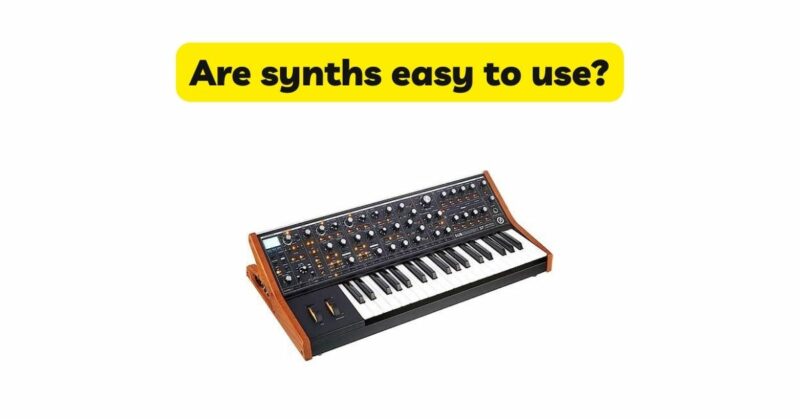
User Interface Design: The user interface of a synthesizer plays a crucial role in determining its ease of use. A well-designed interface should be intuitive, visually appealing, and logically laid out. Physical synthesizers with knob-per-function layouts, where each control has a dedicated knob or button, offer immediate access to parameters, simplifying the programming process. Clear labeling and visual feedback on displays or LED indicators enhance user understanding and make adjustments more intuitive. Manufacturers often prioritize user-friendliness in interface design to ensure that beginners and experienced users alike can easily navigate and control the instrument.
Sound Programming: Sound programming is a fundamental aspect of using a synthesizer. The ease of programming varies depending on the complexity of the synthesizer’s architecture and the user’s familiarity with sound synthesis concepts. Basic subtractive synthesizers, which feature oscillators, filters, and envelopes, are generally more approachable for beginners. These instruments provide a limited but focused set of parameters to shape and sculpt sounds, allowing users to grasp the basics without overwhelming complexity.
Some synthesizers also offer simplified programming interfaces or preset libraries that make it easier for users to access a variety of sounds without delving into intricate programming techniques. Additionally, graphical interfaces or visual representations of sound parameters can aid in understanding the relationship between different controls and their impact on the overall sound, facilitating the learning process.
Learning Resources and Support: The availability of learning resources and support significantly contributes to the ease of using synthesizers. In recent years, the internet has become a treasure trove of tutorials, video courses, forums, and online communities dedicated to synthesizer education. Beginners can access step-by-step guides, video demonstrations, and helpful tips from experienced users, fostering a supportive learning environment.
Many manufacturers provide comprehensive manuals and documentation that cover various aspects of using their synthesizers. These resources often include explanations of synthesis concepts, programming examples, and troubleshooting guides. Additionally, workshops, seminars, and online classes conducted by experts offer valuable opportunities for hands-on learning and interaction with fellow enthusiasts.
Practical Application and Integration: Using a synthesizer in real-world scenarios, such as composing and performing music, is an essential aspect of ease of use. A synthesizer should seamlessly integrate into a musician’s workflow and offer practical features that facilitate creative expression. Integration with digital audio workstations (DAWs) and compatibility with MIDI (Musical Instrument Digital Interface) allow users to harness the power of software and expand the capabilities of their synthesizers. The ability to save and recall patches or presets simplifies the process of accessing favorite sounds in different musical contexts.
Additionally, performance-oriented features like built-in sequencers, arpeggiators, and performance controls (such as pitch bend and modulation wheels) enhance the playing experience and encourage exploration. The ability to connect and control external devices, such as MIDI controllers or other synthesizers, further expands the possibilities and versatility of the instrument.
Conclusion: Synthesizers can offer both complexity and accessibility, depending on the model and user’s experience level. The ease of use of synthesizers is influenced by factors such as user interface design, sound programming capabilities, availability of learning resources, and practical application features. Manufacturers strive to create instruments that are intuitive and user-friendly, enabling beginners to navigate the instrument’s controls and create their desired sounds.
With the wealth of learning resources available, newcomers can embark on their synthesizer journey with confidence. Online tutorials, manuals, workshops, and online communities provide valuable support and guidance. As users gain experience and knowledge, they can delve into more complex synthesis techniques and push the boundaries of their creativity.
Ultimately, the ease of using a synthesizer also depends on the individual’s willingness to learn and experiment. Like any musical instrument, practice and familiarity with the synthesizer’s functions are key to unlocking its full potential. With dedication, patience, and an exploratory mindset, synthesizers can become powerful tools for musical expression, opening up a world of sonic possibilities for musicians of all levels.