
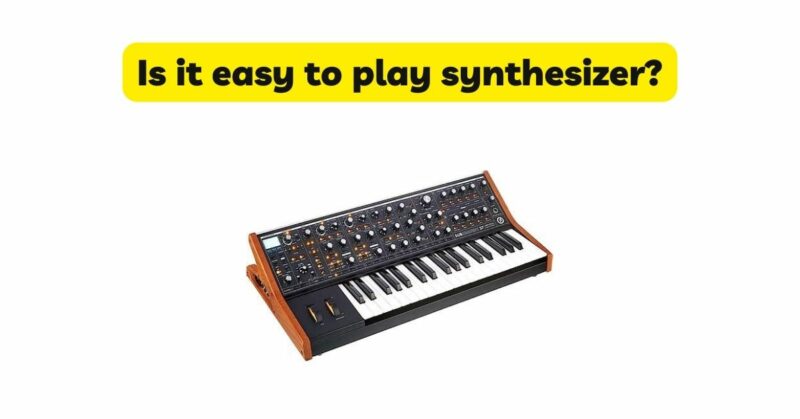
In the realm of music, synthesizers have long held a prominent position as versatile instruments that can produce a wide range of sounds. They have become a popular choice among musicians and enthusiasts due to their ability to create unique tones and textures. One question that often arises is whether playing a synthesizer is easy. In this article, we will delve into the world of synthesizers and explore the various aspects that contribute to the ease of playing these fascinating instruments.
Understanding Synthesizers: Before we can assess the ease of playing a synthesizer, it is essential to understand what a synthesizer is and how it functions. At its core, a synthesizer is an electronic musical instrument that generates and manipulates sounds. Unlike traditional instruments like guitars or pianos, synthesizers create sound electronically through oscillators, filters, and various modulation techniques. This electronic nature allows for a vast array of sounds, from realistic instrument emulations to experimental and futuristic tones.
User Interface: One of the key factors that determine the ease of playing a synthesizer is its user interface. Synthesizers come in various forms, ranging from hardware synths with physical controls to software-based virtual instruments controlled by a computer or MIDI controller. The layout and design of the user interface play a vital role in how intuitive and accessible the instrument is to the player. Well-designed interfaces with clear labeling and logically placed controls contribute to an easier learning curve.
Sound Programming: Synthesizers offer extensive sound programming capabilities, allowing users to create unique sounds from scratch or modify existing presets. While this level of customization can be daunting for beginners, many modern synthesizers simplify the process through user-friendly interfaces and preset libraries. Some instruments even offer visual representations of sound parameters, making it easier for players to understand the impact of each parameter on the sound.
Learning Resources and Tutorials: The availability of learning resources and tutorials significantly affects the ease of playing a synthesizer. Fortunately, the rise of the internet and online communities has made it easier than ever to access tutorials, videos, and forums dedicated to synthesizer education. Beginners can find step-by-step guides, video demonstrations, and helpful tips from experienced players, allowing them to grasp the fundamentals of synthesizer playing at their own pace.
MIDI Integration and Connectivity: Synthesizers often feature MIDI (Musical Instrument Digital Interface) integration, which enables them to connect and communicate with other devices such as computers, MIDI controllers, or sequencers. MIDI connectivity expands the possibilities for playing and controlling synthesizers, making it easier to integrate them into existing music production setups. It allows players to use a familiar keyboard layout or even compose and arrange music using a computer-based digital audio workstation (DAW).
Physical Skills and Musical Background: Like any musical instrument, playing a synthesizer requires a certain level of physical skill and musical understanding. While the initial learning curve may vary depending on the player’s background, synthesizers offer an advantage over acoustic instruments in terms of immediate feedback and sound generation. This immediate response allows players to explore different sounds and techniques more readily, facilitating the learning process.
Versatility and Expressiveness: Synthesizers offer a vast range of sounds and effects that can be manipulated and combined to create expressive performances. This versatility provides players with endless possibilities for creativity and experimentation. With a synthesizer, players can explore different genres, emulate various instruments, and even create entirely new sounds, all of which contribute to an engaging and enjoyable playing experience.
Conclusion: Playing a synthesizer can be both a rewarding and accessible endeavor. While it may require some initial effort to familiarize oneself with the instrument’s interface and sound programming capabilities, synthesizers offer a unique avenue for musical expression and creativity. With the abundance of learning resources available, the ease of playing a synthesizer has significantly improved, allowing aspiring musicians to dive into the world of electronic soundscapes with confidence. So, if you’re interested in exploring new sonic territories, don’t hesitate to embark on your synthesizer journey. The possibilities are virtually endless!