
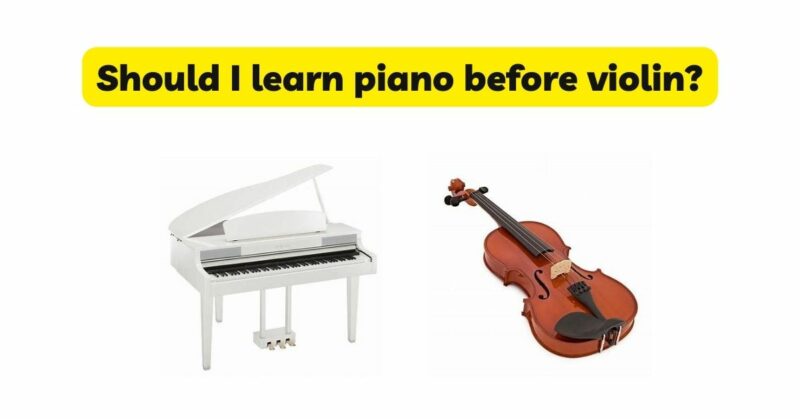
When embarking on a musical journey, many aspiring musicians find themselves facing the dilemma of choosing an instrument to learn. Two popular options that often emerge are the piano and the violin. While both instruments possess their unique charms and challenges, the question arises: should one learn piano before delving into the world of the violin? This article aims to explore this query from various angles, considering factors such as musical foundation, technical skills, and personal preferences, to provide readers with a comprehensive understanding of this decision.
- The Role of Musical Foundation:
Learning the piano as a foundation: The piano is often regarded as an excellent starting point for musical education due to its visual layout, which makes it easier to understand music theory, notation, and basic concepts such as melody, harmony, and rhythm. Piano lessons can help develop essential skills like hand-eye coordination, finger dexterity, and an understanding of musical structure. This solid foundation can then be transferred to other instruments, including the violin.
Learning the violin without prior piano experience: While the piano offers a strong foundation, it is not a prerequisite for learning the violin. Many accomplished violinists have started their musical journey without prior piano training. Learning the violin directly can foster a unique musical connection and appreciation for its specific tonality, expression, and techniques. It allows aspiring violinists to develop a deep understanding of the instrument right from the start.
- Technical Considerations:
Piano’s polyphonic nature: One significant advantage of learning the piano first is that it allows musicians to develop a sense of polyphony. The instrument’s ability to produce multiple notes simultaneously enhances one’s understanding of complex harmonies and counterpoint, which can be advantageous when tackling intricate violin compositions that require multitasking.
Violin’s technical demands: On the other hand, learning the violin without prior piano experience can provide a different set of technical advantages. The violin demands physical coordination, motor skills, and fine muscle control, especially when it comes to bowing techniques, finger positioning, and intonation. Directly engaging with these aspects of violin playing can build a strong foundation for the unique technical challenges the instrument presents.
- Personal Preferences and Musical Goals:
Passion and interest: The decision of whether to learn piano before violin may also depend on personal interests and passions. If a strong affinity exists for either instrument, following one’s passion could be the determining factor. The choice of instrument should align with individual musical aspirations, as both the piano and the violin offer vast and diverse repertoires across various genres.
Timbre and expression: Consideration should also be given to the tonal qualities and expressive capabilities of each instrument. The piano’s rich timbre and wide dynamic range, with its ability to play both melody and harmony simultaneously, can provide a fulfilling musical experience. Conversely, the violin’s soulful and expressive nature, with its ability to emulate the human voice, offers a distinct emotional connection and a unique path for musical expression.
Conclusion:
Ultimately, the decision of whether to learn the piano before the violin or vice versa depends on various factors, including personal preferences, musical goals, and individual learning styles. While the piano can provide a strong foundation in music theory and technical skills, the violin offers a direct connection to the instrument’s unique tonality and expression. Whether one chooses to learn the piano first or dive straight into the world of the violin, the most important aspect is the dedication, passion, and commitment one brings to the chosen instrument.
By considering the role of musical foundation, technical considerations, and personal preferences, aspiring musicians can make an informed decision that aligns with their aspirations and sets them on a fulfilling musical journey. Whichever path is chosen, the key lies in embracing the instrument wholeheartedly, seeking guidance from experienced teachers, and dedicating oneself to consistent practice.