
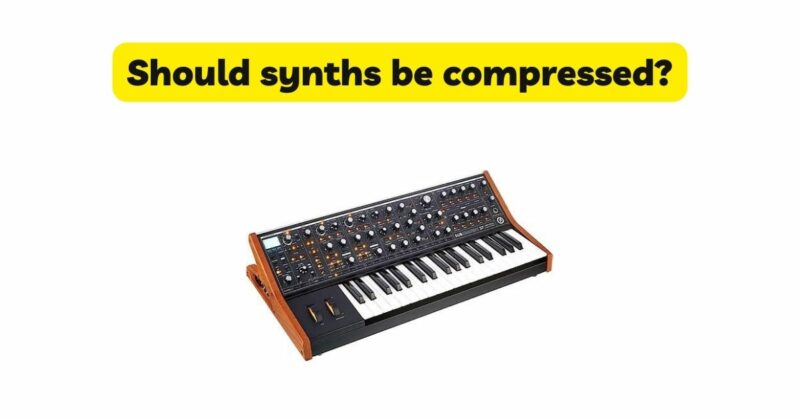
Compression is a fundamental tool in audio production, widely used to control dynamics and enhance the overall balance and impact of a mix. When it comes to synthesizers, however, the question arises: Should synths be compressed? In this article, we will delve into the world of compression and explore its relevance and potential benefits for synthesizers. By understanding the principles behind compression and its impact on synth sounds, we can make informed decisions to shape and elevate our sonic creations.
- Controlling Dynamic Range: One of the primary purposes of compression is to control the dynamic range of an audio signal. Synthesizers, particularly those with wide-ranging timbres and expressive capabilities, can exhibit significant variations in volume levels. Compression allows us to tame excessive peaks and lift softer elements, resulting in a more balanced and controlled sound. By applying compression to synths, we can ensure that the dynamic range remains in check, making the sound more consistent and manageable in a mix.
- Enhancing Sustain and Presence: Synthesizers often produce sounds with varying sustain characteristics. Some synth patches may have notes that decay quickly, while others may have extended sustain tails. Compression can play a crucial role in shaping the sustain of synth sounds, allowing us to control the release phase and extend the perceived duration of the notes. Additionally, compression can enhance the presence and sustain of synth sounds, making them more present and impactful in a mix by bringing out the subtle details and harmonics.
- Adding Punch and Character: Compression has the potential to add a sense of punch and character to synth sounds. By carefully adjusting attack and release times, we can shape the transients of the sound, emphasizing or de-emphasizing the initial impact. This can be particularly useful in creating synth sounds that cut through a dense mix or require a more pronounced and defined attack. Compression can also bring out the inherent characteristics of certain synthesizers, such as the subtle saturation and harmonics of analog circuits, adding a unique warmth and color to the sound.
- Emulating Vintage Hardware: Many producers and musicians turn to synthesizer emulations and virtual instruments to capture the essence of vintage hardware synths. In the analog realm, vintage synths were often paired with compressors during recording or mixing to tame their dynamic range and impart a distinct sonic character. By applying compression to virtual analog synths or software-based emulations, we can recreate this classic combination, adding an authentic vintage touch to our productions.
- Managing Modulation and Effects: Synthesizers frequently employ modulation techniques and effects, such as tremolo, vibrato, or delay. These elements can introduce fluctuations in volume levels, potentially causing inconsistencies in a mix. Compression acts as a safeguard, helping to manage the dynamic variations introduced by modulation and effects, ensuring that they blend seamlessly within the overall sonic landscape. It allows us to retain the expressive qualities of the modulation while maintaining a controlled and balanced sound.
- Creative Sound Design: While compression is often associated with dynamic control, it can also be employed creatively in sound design. By pushing the boundaries of compression parameters, such as using extreme ratios, unconventional attack and release settings, or sidechain techniques, we can achieve unique and experimental sound textures. Synthesizers, with their inherently flexible and malleable nature, provide an ideal canvas for exploring the creative possibilities of compression in sound design.
- Contextual Considerations: Ultimately, the decision to compress a synth sound should be context-dependent. It is essential to evaluate the specific requirements of the mix, the desired sonic characteristics, and the role of the synthesizer within the composition. While compression can be a valuable tool, it is not always necessary or appropriate. Some synth sounds may benefit from their natural dynamics and may require minimal processing to maintain their organic and expressive qualities. Trusting your ears and considering the broader musical context will guide you in making the right choices regarding compression for synthesizers.
Conclusion: Compression, when used judiciously, can be a powerful tool for shaping and enhancing synthesizer sounds. It allows us to control dynamic range, add punch and character, extend sustain, and manage modulation and effects. However, the decision to compress should always be made with careful consideration of the specific musical context and artistic intent. Balancing the need for dynamic control with preserving the natural expressiveness of synthesizers is key to achieving captivating and impactful soundscapes. By embracing compression as a creative and technical tool, we unlock new possibilities to shape and refine the sonic potential of our synthesizers.