
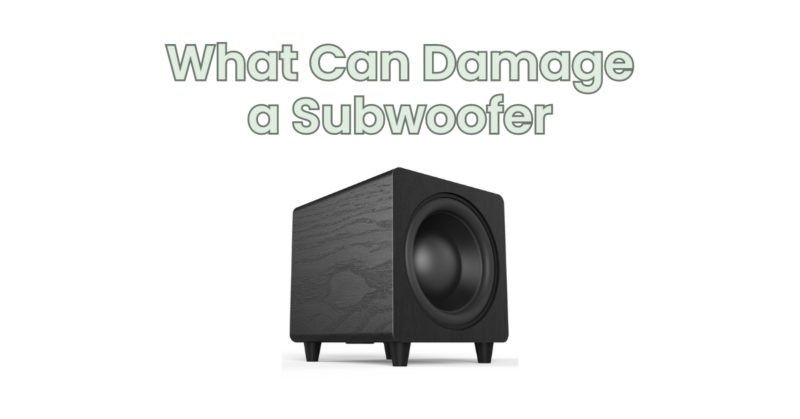
Subwoofers are essential components of audio systems, delivering powerful low-frequency sounds and enhancing the overall audio experience. However, like any other audio equipment, subwoofers are susceptible to damage if not used or handled properly. In this article, we will explore some common causes of subwoofer damage and how to prevent them.
- Overpowering or Underpowering: One of the primary causes of subwoofer damage is incorrect power management. Overpowering a subwoofer by sending too much wattage can lead to overheating, blown voice coils, and other electrical failures. On the other hand, underpowering a subwoofer can result in distorted audio, as the amplifier may push the subwoofer to its limits, causing clipping and damaging the speaker components. It is important to match the power requirements of the subwoofer with an appropriate amplifier to prevent damage.
- Distorted or Clipped Audio Signals: Sending distorted or clipped audio signals to the subwoofer can cause damage to the speaker components. Distorted signals result in uneven and erratic movements of the subwoofer cone, potentially leading to mechanical failures. Ensure that the audio signals sent to the subwoofer are clean and free from distortion, and avoid excessive bass boost or equalization settings that can introduce clipping.
- Overexcursion: Overexcursion occurs when the subwoofer cone moves excessively beyond its designed limits. This can happen when the subwoofer receives signals with very low frequencies or at high volumes. Overexcursion can cause the voice coil to bottom out or the cone to hit the frame, resulting in damage to the subwoofer. Properly set crossover frequencies and volume levels can help prevent overexcursion.
- Improper Enclosure Design: Subwoofers are designed to operate within specific enclosure types, such as sealed, ported, or bandpass enclosures. Using a subwoofer in an enclosure that is not suitable for its design can cause performance issues and potential damage. The wrong enclosure can result in excessive pressure or air leakage, leading to distortion, overheating, or mechanical failures. Always follow the manufacturer’s recommendations regarding enclosure type and size for your specific subwoofer model.
- Physical Damage and Mishandling: Subwoofers are vulnerable to physical damage if mishandled or improperly installed. Rough handling, dropping, or impact can cause damage to the cone, voice coil, or other internal components. It is important to handle subwoofers with care during installation and transportation. Additionally, ensure that the subwoofer is securely mounted or placed to prevent vibrations or movement that can potentially damage the speaker.
- Environmental Factors: Environmental conditions can also impact the longevity and performance of a subwoofer. Exposure to extreme temperatures, high humidity, or direct sunlight can cause damage to the cone, surround, or other components over time. It is advisable to place subwoofers in a well-ventilated area away from direct exposure to the elements.
To prevent damage and prolong the lifespan of your subwoofer, here are some general tips:
- Match the subwoofer’s power handling capacity with an appropriate amplifier.
- Ensure clean and undistorted audio signals are sent to the subwoofer.
- Set crossover frequencies and volume levels appropriately to avoid overexcursion.
- Use the correct enclosure type and size for your subwoofer.
- Handle the subwoofer with care during installation and transportation.
- Protect the subwoofer from extreme environmental conditions.
By following these guidelines and exercising caution, you can prevent common causes of subwoofer damage and enjoy long-lasting, high-quality bass reproduction in your audio system.