
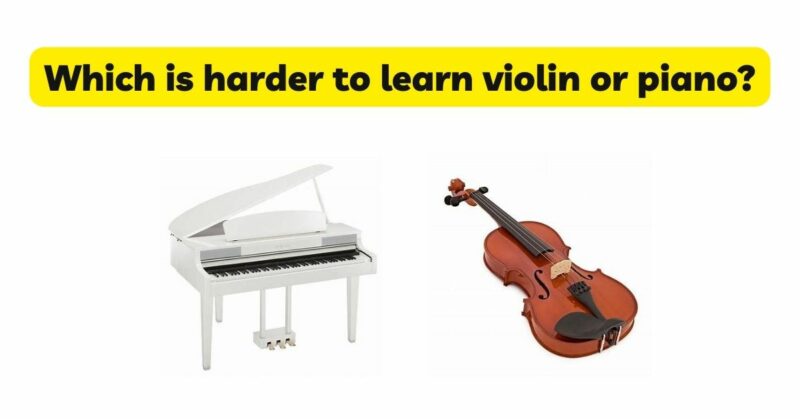
The decision to learn a musical instrument is an exciting endeavor, but choosing between the violin and the piano can be a challenging task. One common concern for aspiring musicians is the relative difficulty of learning these instruments. In this article, we will explore various aspects such as technical complexity, physical demands, musicality, and individual learning preferences to shed light on the question of which instrument is harder to learn: the violin or the piano. By considering these factors, we aim to provide a balanced perspective on the learning curves of both instruments and help individuals make an informed decision based on their personal preferences and circumstances.
- Technical Complexity: The technical complexity of an instrument is a key factor to consider when evaluating the difficulty of learning. The piano, with its linear keyboard layout and visual representation of notes, offers a relatively straightforward approach to learning music theory and understanding pitch relationships. It allows beginners to grasp musical concepts such as rhythm, dynamics, and harmony more easily. In contrast, the violin poses challenges in terms of finger placement, bowing technique, and intonation. Producing a clear and resonant sound on the violin requires precise finger control, bowing direction, and consistent intonation. The technical complexity of both instruments should be taken into account, but personal aptitude and prior musical experience can influence the ease of learning.
- Physical Demands: The physical demands of an instrument play a significant role in the learning process. The piano requires coordination between both hands, finger strength, and dexterity to navigate the keyboard. However, the weight of the keys provides a stable platform for playing. On the other hand, the violin demands physical coordination, proper posture, and muscle control. Holding the instrument correctly, maneuvering the bow, and executing precise finger movements require physical coordination and stamina. The violin also requires finger flexibility and strength to produce clear and resonant tones. While both instruments have physical demands, personal factors such as age, physical fitness, and prior experience with similar activities can influence the perceived difficulty.
- Musicality and Expression: Musicality and expression are essential aspects of learning any instrument. The piano offers a broad range of expressive possibilities due to its ability to play multiple notes simultaneously, allowing for complex harmonies, chords, and melodic lines. Playing the piano involves understanding dynamics, articulation, and phrasing to convey emotions effectively. Conversely, the violin provides a unique avenue for expressiveness through bowing techniques, vibrato, and nuanced finger placement. Learning to produce a beautiful and expressive sound on the violin requires attention to intonation, tone production, and shaping musical phrases. While musicality and expression are inherent to both instruments, personal preferences and individual strengths may influence the perceived ease of expressing oneself through each instrument.
- Individual Learning Preferences: Individual learning preferences and aptitudes are crucial factors in determining the relative difficulty of learning an instrument. Some individuals may find the tactile nature of the piano more accessible, as the keys provide a clear visual representation of the music. Others may be drawn to the expressive potential of the violin and its direct connection to the player’s body. Personal learning styles, interests, and motivations can significantly impact the perceived difficulty of learning an instrument. Exploring both instruments and considering personal inclinations can help individuals select the instrument that resonates with them and aligns with their learning preferences.
- Teaching Methods and Resources: The availability of teaching methods and resources can influence the ease of learning an instrument. Both the piano and the violin have abundant instructional materials, online resources, and qualified teachers. However, the quality and accessibility of these resources can vary. The piano benefits from a vast repertoire, well-established teaching methods, and readily available sheet music. Additionally, digital technologies offer interactive apps and online tutorials that facilitate learning. The violin may require more specialized guidance to ensure correct technique and posture. The availability of quality instruction, method books, and suitable repertoire can impact the perceived difficulty of learning an instrument.
- Commitment and Practice: Regardless of the instrument chosen, commitment and consistent practice are vital to progress and mastery. Both the violin and the piano require dedicated practice to develop skills, technique, and musicality. The time and effort invested in practice, along with regularity and focused attention, are determining factors in achieving proficiency. The perceived difficulty of learning an instrument is closely tied to the commitment and practice habits of the learner. Consistency, perseverance, and a growth mindset are essential for overcoming challenges and reaching one’s musical goals.
Conclusion: Determining which instrument, the violin or the piano, is harder to learn is subjective and depends on various factors such as personal aptitude, prior experience, physicality, musical preferences, and learning style. The technical complexity, physical demands, musicality, individual learning preferences, and available resources all contribute to the perceived difficulty. While the piano may offer a more visually intuitive learning experience, and the violin presents unique challenges in technique and physical coordination, both instruments require dedication and consistent practice. The most important factor is to choose an instrument that resonates with your musical aspirations and aligns with your learning preferences. By embracing the learning process with patience, guidance from qualified instructors, and persistent practice, individuals can navigate the challenges and embark on a fulfilling musical journey, whether they choose the violin or the piano.