
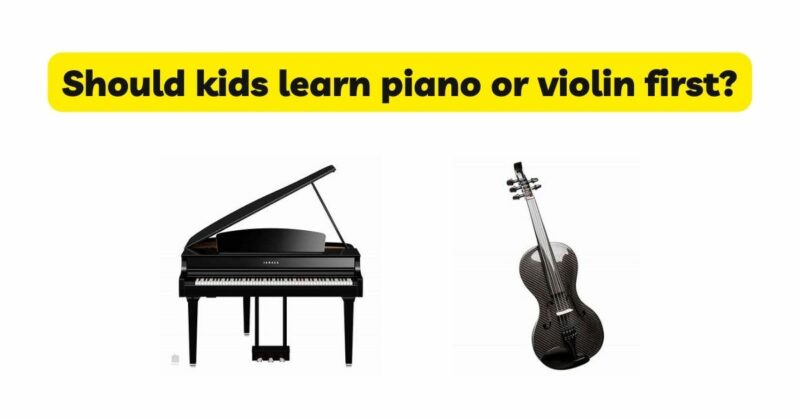
When it comes to musical education for children, the decision to start with the piano or violin often arises. Both instruments have a rich history and offer unique benefits. The choice can significantly impact a child’s musical journey, but it ultimately depends on various factors. In this article, we will explore the advantages and considerations of learning the piano and violin as a first instrument for children.
- The Physical Aspects:
Learning any instrument requires physical coordination and dexterity. When comparing the piano and violin, there are notable differences in the physical demands they place on young learners.
1.1 Piano:
Playing the piano involves using both hands simultaneously to press keys and produce sound. This enhances hand-eye coordination, finger independence, and fine motor skills. Additionally, the piano’s fixed pitch and linear layout make it easier to grasp the concepts of melody, harmony, and rhythm.
1.2 Violin:
In contrast, the violin requires more intricate physical techniques. Holding the violin properly, positioning the bow, and producing the correct intonation require dedicated practice and physical development. Learning the violin cultivates a sense of body awareness, coordination, and patience.
- Musical Foundation:
The choice between piano and violin as the first instrument can significantly influence a child’s understanding of music theory and overall musical foundation.
2.1 Piano:
The piano is often considered an excellent starting point for young learners due to its visual representation of musical notes on the keyboard. This visual clarity helps children understand music theory concepts such as scales, intervals, and chords more readily. Additionally, the piano’s polyphonic nature allows children to experience harmony and melody simultaneously, fostering a comprehensive understanding of music structure.
2.2 Violin:
While the violin does not offer the same visual representation as the piano, it offers a unique advantage in ear training and pitch recognition. Children learning the violin must rely on their ears to produce accurate intonation, developing a keen sense of pitch. This aural training can enhance a child’s overall musicality and ability to play in tune, which can be transferred to other instruments in the future.
- Emotional Expression:
Music is a powerful medium for emotional expression. Both the piano and violin offer opportunities for children to convey their emotions through their playing.
3.1 Piano:
The piano’s broad range and versatility make it ideal for expressing a wide array of emotions. Children can learn to control dynamics, phrasing, and articulation, allowing them to convey subtleties and nuances in their performances. The piano’s dynamic nature also makes it suitable for different musical genres, enabling children to explore various styles and develop their musical preferences.
3.2 Violin:
The violin’s unique tone and expressive capabilities make it a highly emotive instrument. It allows for intricate techniques such as vibrato and bow control, enabling children to create beautiful, soul-stirring melodies. The violin’s expressive qualities can foster a deep emotional connection with the instrument, encouraging young learners to explore the expressive side of music.
- Practical Considerations:
When deciding between the piano and violin, practical considerations should also be taken into account.
4.1 Cost and Accessibility:
The cost and accessibility of instruments can vary significantly. Pianos can be expensive, and the initial investment may deter some families. However, electronic keyboards offer a more affordable alternative, allowing children to learn the basics before transitioning to an acoustic piano. Violins come in various sizes to accommodate different age groups, but rental options are widely available, reducing the initial financial burden.
4.2 Physical Requirements:
The physical dimensions of instruments should be considered, especially for younger children. Pianos require space, whereas violins are portable and can be played in various settings. If space is a concern, the violin may be a more practical choice.
Conclusion:
Ultimately, the decision of whether a child should learn piano or violin first depends on various factors, including their interests, physical abilities, and access to resources. The piano offers a solid foundation in music theory and physical coordination, while the violin nurtures aural skills and emotional expression. It is crucial to consider the child’s preferences and goals, as well as practical considerations such as cost and accessibility. Ultimately, whichever instrument a child chooses to learn first, they will embark on a rewarding musical journey that can foster creativity, discipline, and a lifelong love for music.