
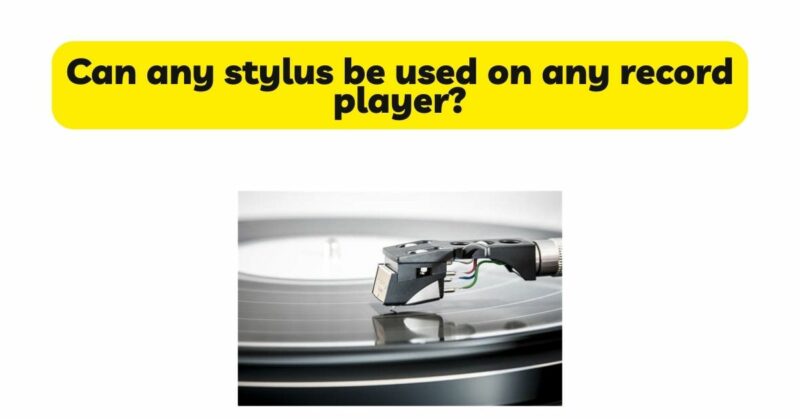
The stylus is a vital component of a record player, responsible for reading the grooves on vinyl records and translating them into audible music. It plays a crucial role in the quality of sound reproduction and the preservation of your cherished vinyl collection. However, it is important to note that not all styluses are universally compatible with all record players. In this article, we will delve into the factors that determine stylus compatibility with record players, helping you make informed decisions when selecting a stylus for your specific setup.
- Stylus Types and Sizes: Styluses come in various types and sizes, each designed for specific record types and playing conditions. The most common stylus types are conical, elliptical, and microline. Conical styluses have a rounded shape and are typically more affordable, while elliptical and microline styluses feature a more advanced shape that offers better tracking and improved audio fidelity. Additionally, stylus sizes may vary, ranging from 0.7 mil to 3 mil. It is crucial to understand the stylus requirements of your record player to ensure compatibility with the stylus type and size.
- Cartridge and Stylus Integration: The stylus is typically part of a larger component known as the cartridge, which houses the stylus and the generator responsible for converting the mechanical movements of the stylus into an electrical signal. Cartridges are available in different types, such as moving magnet (MM) and moving coil (MC), and have specific mounting styles, such as standard mount (1/2 inch) and P-mount (T4P). Stylus compatibility with a record player is contingent upon the cartridge’s compatibility with the turntable. Therefore, it is essential to consider the cartridge’s specifications and compatibility with your record player before selecting a stylus.
- Tonearm Specifications: The tonearm of a record player holds and positions the cartridge and stylus as it tracks the record grooves. Different record players have diverse tonearm specifications, including effective mass, effective length, and tracking force range. These specifications directly affect the stylus’ performance and compatibility. It is crucial to select a stylus that matches your record player’s tonearm specifications to ensure optimal tracking and audio quality.
- Record Type and Condition: The compatibility of a stylus with a record player also depends on the type and condition of the records being played. Vinyl records come in various sizes, speeds (e.g., 33 1/3, 45, and 78 RPM), and materials (e.g., standard vinyl, picture discs). Additionally, the condition of the record, including wear, scratches, and dust, can impact stylus compatibility and performance. It is important to consider these factors when selecting a stylus to ensure it is suitable for the specific record types and conditions you intend to play.
- Specialized Stylus Requirements: Certain record players may have specialized stylus requirements due to their unique features or playback capabilities. For example, some high-end record players offer the ability to play quadraphonic or stereo/mono hybrid records, requiring specific stylus designs. Additionally, record players with adjustable VTA (Vertical Tracking Angle) or azimuth may necessitate styluses with specific profiles to achieve optimal performance. It is essential to consult your record player’s documentation or seek advice from experts to understand any specialized stylus requirements.
- Upgrading Styluses and Compatibility: If you are considering upgrading the stylus on your record player, compatibility becomes even more important. Upgrading to a higher-quality stylus can significantly enhance audio fidelity and overall listening experience. However, it is crucial to research and select a stylus that is not only compatible with your record player but also an improvement over the existing stylus. Consider factors such as stylus type, size, shape, tracking ability, and overall construction quality. Additionally, keep in mind that some styluses may require specific cartridge compatibility or adjustments to achieve optimal performance.
Conclusion: While the stylus is a fundamental component of a record player, it is essential to recognize that not all styluses are universally compatible with all record players. Stylus compatibility depends on factors such as stylus type, size, cartridge compatibility, tonearm specifications, record type and condition, and specialized requirements. By understanding these factors and ensuring compatibility, you can achieve optimal audio performance, prolong the life of your records, and fully enjoy the rich, analog sound that vinyl has to offer. When in doubt, consult your record player’s documentation, reach out to the manufacturer, or seek advice from audio experts to ensure stylus compatibility and make informed decisions.