
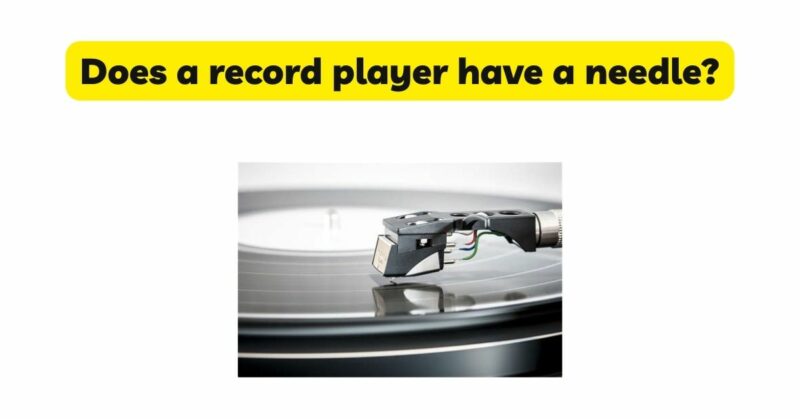
Record players, also known as turntables, have been an integral part of music culture for decades. They provide a unique and immersive listening experience that has captivated audiophiles and music enthusiasts alike. A common question that arises is whether a record player has a needle. In this article, we will explore the anatomy of a record player, examine the crucial component responsible for reading vinyl records, and shed light on the importance of the needle in the playback process.
I. Understanding the Record Player: To grasp the role of the needle, it is essential to have a basic understanding of how a record player functions. A record player consists of several key components, including a platter, a tonearm, a cartridge, and a stylus.
II. The Tonearm and Cartridge: The tonearm is the mechanical arm that holds and positions the cartridge, which contains the stylus (also referred to as the needle). The cartridge serves as a housing for the stylus and contains the necessary electrical components to convert the physical vibrations of the stylus into an electrical signal.
III. The Stylus:
- Stylus Construction: The stylus, often referred to as the needle, is a small, slender component attached to the cartridge. It is responsible for making direct contact with the grooves of the vinyl record. The stylus is typically constructed with a hard and durable material such as diamond or sapphire. These materials are chosen for their ability to maintain shape and provide accurate tracking of the record grooves over extended periods.
- Stylus Types: There are various types of stylus designs, including conical, elliptical, and microline. Each type has its own characteristics and performance attributes. The conical stylus, with its rounded shape, is commonly found in entry-level turntables and offers a balance between affordability and sound quality. Elliptical and microline styluses have more intricate shapes, allowing for increased accuracy and improved fidelity when tracking the record grooves.
IV. Functionality of the Stylus: The stylus serves a critical role in the record playback process. When the stylus makes contact with the grooves on the vinyl record, it converts the physical vibrations within the grooves into electrical signals. These electrical signals are then transmitted through the cartridge and further amplified to produce audible sound.
V. Importance of the Stylus: The quality and condition of the stylus significantly impact the sound quality and overall listening experience. A worn or damaged stylus can introduce distortion, reduced frequency response, and increased surface noise. On the other hand, a well-maintained and properly aligned stylus can extract the full potential of the record, preserving the nuances and subtleties intended by the artist.
VI. Maintenance and Replacement: To ensure optimal performance and longevity, regular maintenance and proper care of the stylus are essential. Cleaning the stylus, inspecting it for wear, and replacing it when necessary are crucial steps to preserve sound quality and protect both the stylus and the vinyl records. Proper alignment and tracking force adjustment are also necessary to achieve accurate playback and prevent unnecessary wear on the stylus and records.
Conclusion: In the world of record players, the stylus (or needle) is a crucial component responsible for extracting sound from vinyl records. It serves as the interface between the grooves on the record and the electrical signals that generate audible sound. Understanding the anatomy and functionality of the stylus enhances our appreciation for the intricate process of vinyl playback. By caring for and maintaining the stylus, we can ensure optimal sound quality and continue to enjoy the timeless charm of vinyl music.