
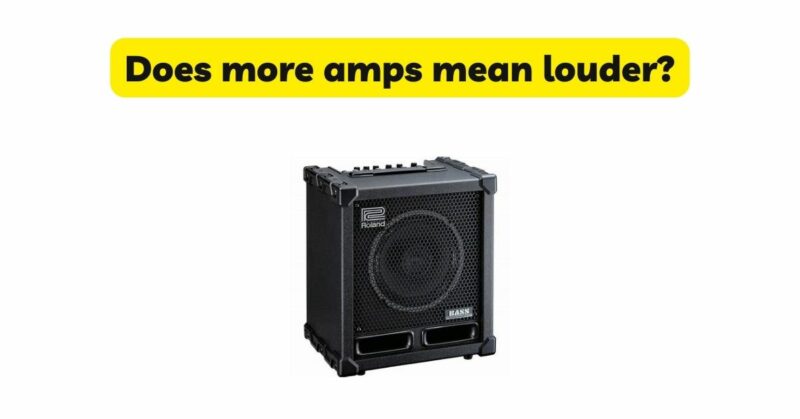
When it comes to audio systems, one common misconception is that more amplifiers automatically translate into a louder sound. However, the relationship between amplifiers and sound level is more nuanced than a simple correlation. In this article, we will delve into the factors that influence sound volume, discuss the role of amplifiers in audio systems, and explore how other variables contribute to the overall loudness.
- Understanding Amplifiers: Amplifiers are electronic devices designed to increase the amplitude of an audio signal. They take a low-level signal from a source, such as a CD player or turntable, and amplify it to a level suitable for driving speakers. Amplifiers are crucial for powering speakers and ensuring that the audio signal is reproduced accurately and with adequate volume.
- Power Output and Speaker Sensitivity: The power output of an amplifier is a key determinant of the sound level it can produce. Amplifiers with higher power ratings are generally capable of driving speakers to higher volumes. However, it’s important to note that sound level is not solely dependent on the amplifier’s power output. Speaker sensitivity also plays a significant role. Speaker sensitivity refers to how efficiently a speaker converts electrical power into sound energy. Speakers with higher sensitivity ratings require less power to achieve the same volume level as speakers with lower sensitivity ratings.
- Matching Amplifiers and Speakers: To optimize sound volume, it is crucial to match the amplifier’s power output to the speaker’s power handling capacity. Using an amplifier that is too powerful for a speaker can potentially damage the speaker or cause distortion. Conversely, using an underpowered amplifier may not allow the speaker to reach its full potential in terms of volume and dynamics. Proper matching ensures that the amplifier can provide sufficient power to drive the speakers effectively, resulting in optimal sound quality and volume.
- Room Acoustics and Listening Environment: The acoustic properties of a room or listening environment significantly impact the perceived sound volume. Factors such as room size, shape, furnishings, and materials can affect the way sound propagates and interacts with the surroundings. Larger rooms tend to have more air volume, which can result in a greater sense of spaciousness and potentially higher perceived volume. Additionally, rooms with hard surfaces may reflect sound waves, leading to a more reverberant sound and the perception of increased volume. Conversely, rooms with soft furnishings and acoustic treatments can absorb sound energy, potentially reducing perceived volume.
- Listener Distance and Positioning: The distance between the listener and the speakers also affects perceived volume. As sound waves travel through the air, they disperse and lose intensity. The farther the listener is from the speakers, the weaker the sound will be. Conversely, sitting closer to the speakers can result in a more direct and intense sound experience. Listener positioning within the listening environment, such as sitting in the sweet spot or off-axis, can also affect perceived volume and tonal balance.
- Dynamic Range and Musical Content: The dynamic range of the musical content being played is another important factor to consider. Dynamic range refers to the variation between soft and loud passages within a piece of music. Amplifiers with high power reserves can accurately reproduce dynamic swings, ensuring that both the softest and loudest parts of the music are faithfully reproduced. Music with a wide dynamic range can create a more immersive and engaging listening experience, contributing to the perception of higher volume during crescendos or climactic sections.
- Limitations and Thresholds: Amplifiers have their limits in terms of power output and distortion. Every amplifier has a maximum power output it can deliver before reaching its limits. Beyond this threshold, the amplifier may introduce distortion or potentially damage itself or connected speakers. It is important to operate amplifiers within their recommended power output range to ensure optimal performance and avoid compromising sound quality.
- Perception and Subjectivity: Perceived volume is subjective and varies from person to person. Factors such as hearing sensitivity, personal preferences, and listening habits can influence how individuals perceive sound volume. What may be considered loud by one person might be moderate for another. It is important to find a volume level that is comfortable and enjoyable for the listener, taking into account their unique hearing characteristics.
- Supporting Factors: While amplifiers play a crucial role in sound reproduction, other components in the audio chain also contribute to the overall loudness. The quality and efficiency of the source material, such as recordings or streaming services, can impact the volume and dynamics of the music. Additionally, the quality and design of the preamplifier and the interconnect cables used in the system can affect the signal transfer and potentially impact the perceived volume.
- Conclusion: While amplifiers do play a vital role in driving speakers and achieving optimal sound volume, their impact is not solely responsible for the loudness of an audio system. The relationship between amplifiers and sound level is influenced by factors such as power output, speaker sensitivity, room acoustics, listening distance, dynamic range, and listener perception. Achieving the desired volume level requires careful consideration of these variables, along with proper amplifier-speaker matching and an understanding of personal preferences. Ultimately, the goal is to create a balanced and enjoyable listening experience that aligns with individual preferences and the characteristics of the audio system.