
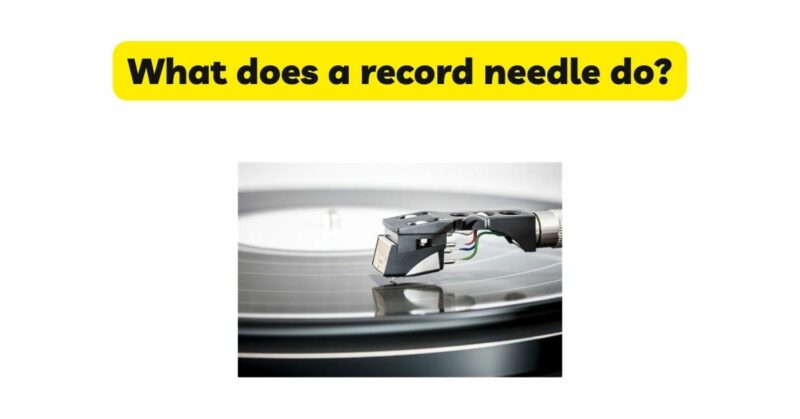
In the world of vinyl records, the record needle, also known as the stylus, plays a crucial role in the process of sound reproduction. This small and delicate component serves as the vital link between the physical grooves of a record and the audio signals that ultimately produce music. In this article, we will delve into the intricacies of what a record needle does, exploring its functions, components, and the significance it holds in the world of vinyl playback.
- The Anatomy of a Record Needle: To understand the functionalities of a record needle, it is essential to familiarize ourselves with its structure and components. A typical record needle consists of the stylus, cantilever, and cartridge connection. The stylus is the portion that makes physical contact with the record grooves, while the cantilever acts as the bridge between the stylus and the cartridge.
- Tracing the Grooves: Tracking and Retrieving Sound Information: The primary function of a record needle is to trace the intricate grooves engraved on a vinyl record. As the turntable spins the record, the stylus, guided by the tonearm, moves along the grooves. This motion allows the needle to retrieve the audio information encoded within the grooves, capturing the nuances of the recorded music.
- Physical Motion and Vibration: As the stylus moves along the grooves, it encounters variations in the groove depth and shape. These variations cause the stylus to vibrate, responding to the physical information present on the record. The stylus must be designed to accurately and delicately navigate these vibrations to ensure faithful reproduction of the recorded sound.
- Transducing Mechanical Motion into Electrical Signals: While the needle’s physical motion captures the audio information from the grooves, its main purpose is to transduce this mechanical motion into electrical signals. The cantilever transfers the vibrations from the stylus to the cartridge, which houses the transducer, usually in the form of a magnet or coil. The transducer converts the mechanical vibrations into electrical signals.
- Cartridge: The Converter of Mechanical to Electrical Signals: The cartridge plays a pivotal role in the function of a record needle. It houses the transducer, which generates the electrical signals in response to the vibrations captured by the stylus. The type and quality of the cartridge can greatly influence the accuracy and fidelity of the reproduced sound.
- Amplification and Signal Processing: The electrical signals produced by the cartridge are extremely weak and require further amplification and processing to be suitable for driving speakers or headphones. This is where phono preamplifiers, also known as phono stages, come into play. The phono preamp applies the necessary equalization and amplification to the signals, preparing them for playback.
- The Impact of Needle Design: The design of the needle itself greatly affects its performance and the quality of sound reproduction. Needles can come in different shapes and sizes, including spherical (conical), elliptical, and line contact. Each design offers a unique balance of tracking ability, frequency response, and durability.
- Tracking Force and Alignment: Achieving optimal sound reproduction requires the correct tracking force and alignment of the needle. Tracking force refers to the downward pressure exerted by the needle on the record, ensuring proper contact and tracking within the grooves. Additionally, proper alignment of the needle, both in terms of azimuth and vertical tracking angle, ensures accurate playback and reduces wear on the record and needle.
- Maintaining the Needle and Record Care: To prolong the lifespan of the needle and ensure optimal performance, proper care and maintenance are crucial. Regular cleaning of the needle, as well as keeping the records free from dust and debris, can prevent degradation in sound quality and extend the life of both the needle and the records themselves.
Conclusion: The record needle, though small and delicate, plays a vital role in the world of vinyl sound reproduction. It functions as the intermediary between the physical grooves of a record and the electrical signals that bring music to life. By tracing the grooves, capturing vibrations, and transducing mechanical motion into electrical signals, the record needle faithfully reproduces the recorded sound. Understanding the functions and significance of the record needle enhances our appreciation for the artistry and craftsmanship involved in vinyl playback and deepens our enjoyment of the unique and immersive experience that records offer.