
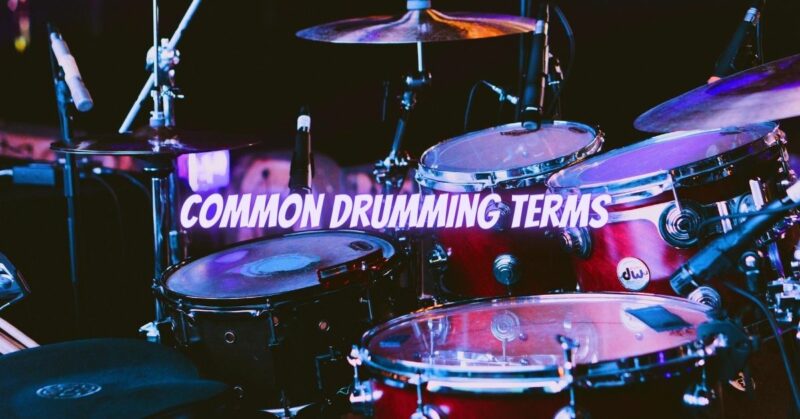
Drumming, like any musical discipline, comes with its own set of terminology that may be unfamiliar to beginners or non-drummers. Understanding these common drumming terms is essential for effective communication, learning, and collaborating with fellow musicians. In this article, we will demystify drumming by providing explanations of common drumming terms, helping you develop a solid foundation in drumming vocabulary.
- Beat: The beat is the fundamental pulse or rhythm of a piece of music. It is the underlying framework that guides the timing and feel of the song.
- Tempo: Tempo refers to the speed at which a piece of music is played. It is typically measured in beats per minute (BPM).
- Groove: The groove is the rhythmic feel or pattern that establishes the musical “pocket” or “feel” of a song. It encompasses the interplay of the drums and other instruments to create a cohesive and infectious rhythm.
- Fill: A fill is a rhythmic pattern or embellishment played between musical phrases or sections to add excitement and variation. Fills often involve intricate drumming patterns and can be improvised or pre-arranged.
- Rudiments: Rudiments are fundamental drumming patterns that serve as the building blocks of drumming technique. They include single strokes, double strokes, paradiddles, flams, and more. Practicing rudiments helps develop coordination, speed, and precision.
- Ghost Notes: Ghost notes are soft, subtle drum hits played at a lower volume than the accented notes. They add complexity and texture to drumming patterns, often creating a more intricate groove.
- Rimshot: A rimshot is a drumming technique where the drumstick strikes both the drumhead and the metal rim simultaneously. It produces a distinctive, louder sound with increased attack and projection.
- Cross-Stick: Cross-stick refers to a technique where the drummer strikes the rim of the snare drum with the drumstick while the opposite hand holds the stick against the drumhead. This technique produces a resonant and muted sound, often used in softer or more delicate musical passages.
- Hi-Hat: The hi-hat is a pair of cymbals mounted on a stand that can be opened and closed by a foot pedal. It is played with drumsticks or the foot pedal and serves as a versatile component for creating various rhythmic patterns and accents.
- Crash Cymbal: The crash cymbal is a large cymbal that produces a bright and explosive sound when struck. It is often used to accentuate key moments or transitions in a song.
- Ride Cymbal: The ride cymbal is a larger cymbal with a more sustained sound. It is typically used to establish a steady ride pattern and provide rhythmic and tonal foundation.
- Snare Drum: The snare drum is a versatile drum that produces a crisp, sharp sound. It is typically placed between the drummer’s legs and played with drumsticks or brushes. The snare drum is known for its distinctive “crack” sound and is crucial in establishing the backbeat of a song.
- Bass Drum: The bass drum, also known as the kick drum, is a large drum played with a foot pedal. It produces a deep and low-pitched sound, providing the foundation and pulse of the rhythm section.
- Tom-Toms: Tom-toms are cylindrical drums of varying sizes and pitches. They are usually mounted on stands or attached to the bass drum and are played with drumsticks. Tom-toms provide melodic and rhythmic color to drumming patterns and fills.
- Dampening/Muffling: Dampening or muffling refers to techniques or accessories used to control the resonance and sustain of drums. Dampening can be achieved through the use of dampening gels, drumheads with built-in muffling, or external muffling materials such as cloth or tape.
Conclusion: Familiarizing yourself with common drumming terms is an essential step in developing a solid foundation in drumming. Understanding these terms will help you communicate effectively with fellow musicians, enhance your learning experience, and navigate various drumming resources. As you continue your drumming journey, expand your vocabulary by exploring additional terms and concepts specific to your preferred musical genres and styles. Embrace the language of drumming and enjoy the journey of musical expression behind the drum set.