
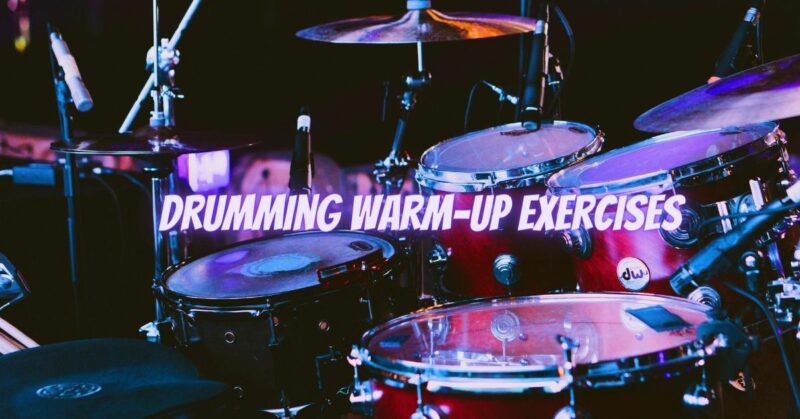
Effective warm-up exercises are essential for drummers to prepare their bodies and minds for a productive and energized drumming session. Drumming requires coordination, stamina, and flexibility, and a well-planned warm-up routine can help prevent injuries, enhance technique, and improve overall performance. In this article, we will explore a range of drumming warm-up exercises designed to optimize your drumming experience and set the stage for a successful practice or performance.
- Stretching and Limbering: Start your warm-up routine with stretching exercises to loosen up your muscles and increase flexibility. Focus on stretches that target the arms, wrists, fingers, and shoulders. Perform wrist rolls, finger stretches, and gentle shoulder rolls to improve circulation and promote mobility in these crucial drumming areas. Remember to stretch both sides evenly and avoid overstretching to prevent strains or injuries.
- Hand and Finger Exercises: Next, concentrate on exercises that strengthen and warm up your hands and fingers, improving dexterity and control. Here are a few exercises to incorporate:
a. Finger Tapping: Begin by tapping each finger of your dominant hand onto a solid surface, such as a drum pad or practice pad. Gradually increase the speed and precision of your taps, focusing on maintaining an even and consistent rhythm.
b. Finger Independence: Work on finger independence by practicing patterns that involve lifting and lowering each finger individually. Start with simple exercises and gradually increase the complexity, challenging yourself to maintain control and accuracy.
c. Finger Rolls: Hold a drumstick between your thumb and each finger, one at a time, and roll the stick up and down using only that finger’s motion. This exercise promotes finger strength and control.
- Rudiments: Rudiments are fundamental patterns and sticking combinations that help develop drumming technique and coordination. Incorporate a few rudiments into your warm-up routine, focusing on precision and clarity. Some commonly used rudiments include single stroke roll, double stroke roll, paradiddle, flam, and drag. Practice these rudiments slowly at first, gradually increasing the speed and ensuring each stroke is even and controlled.
- Stick Control Exercises: Stick control exercises improve your hand and wrist control while enhancing your sense of timing and dynamic control. Here are a couple of stick control exercises to consider:
a. Single Stroke Roll Control: Play a steady single stroke roll, focusing on maintaining an even and consistent volume for each stroke. Concentrate on controlling stick height and rebound to achieve a balanced sound.
b. Accented Pattern: Alternate between accented and unaccented strokes, emphasizing the accented notes while maintaining consistent volume and control in the unaccented strokes. This exercise develops control and dynamic range.
- Footwork Exercises: Don’t neglect your feet during your warm-up routine, as drumming often requires intricate footwork on the bass drum pedal and hi-hat pedal. Incorporate exercises that focus on strengthening and coordinating your foot movements. Work on basic bass drum patterns, alternating single strokes, and double strokes with your dominant foot. Practice footwork coordination exercises to synchronize your feet with your hands.
- Timekeeping and Groove: To solidify your sense of timekeeping and groove, play along with a metronome or a drum loop. Start with a slower tempo and gradually increase the speed as you warm up. Focus on maintaining a steady beat, locking in with the click or the groove, and internalizing the feel of different tempos and musical styles.
- Dynamic Control: Warm up your dynamic control by practicing exercises that focus on playing at various volume levels. Start by playing softly and gradually increase the volume, focusing on maintaining control and a balanced sound. Experiment with accents, ghost notes, and different stick heights to develop a nuanced and controlled dynamic range.
- Musical Application: Finally, apply your warm-up exercises to musical contexts. Play along with your favorite songs or drum along to backing tracks, incorporating the techniques and skills you have warmed up. This step helps transition your warm-up routine into an engaging practice or performance session.
Conclusion: A well-structured warm-up routine sets the foundation for an enjoyable and productive drumming session. By incorporating stretching, hand and finger exercises, rudiments, stick control exercises, footwork exercises, timekeeping and groove exercises, dynamic control practice, and musical application, you can optimize your drumming warm-up routine. Remember to start slowly, focus on technique and control, and gradually increase the speed and intensity. Warm-up exercises not only prepare your body physically but also help you mentally engage with your drumming, ensuring a rewarding and satisfying drumming experience.