
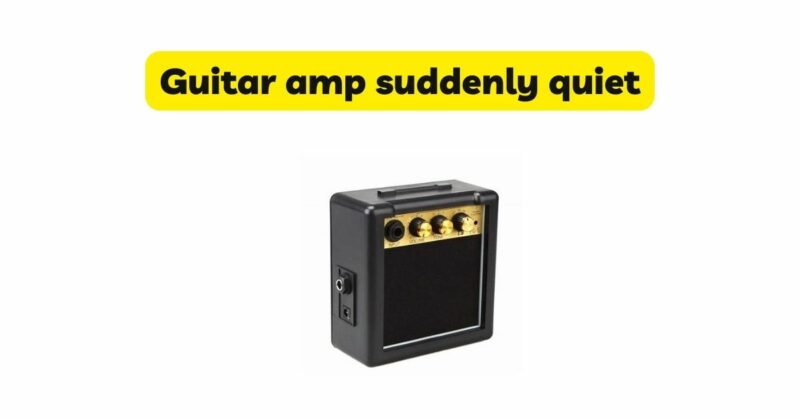
As a guitarist, there’s nothing more frustrating than having your guitar amp suddenly become quiet during a jam session or performance. A sudden drop in volume can significantly affect your playing experience and compromise the overall sound quality. In this article, we will delve into the possible reasons why a guitar amp may suddenly become quiet and explore troubleshooting steps to identify and resolve the issue.
- Faulty Tube/Valve: Tube or valve amps are known for their warm tones and rich harmonics. However, these amplifiers rely on vacuum tubes or valves that can fail over time. A faulty tube can lead to a significant drop in volume. To troubleshoot this issue, try swapping out each tube one by one with known working replacements. If the volume increases when a particular tube is replaced, that tube is likely the culprit and should be replaced. Additionally, ensure that the tubes are securely seated in their sockets as loose connections can also cause a drop in volume.
- Loose or Faulty Speaker Connections: A common cause of sudden volume loss is loose or faulty speaker connections. Check the speaker cable that connects your amp to the speaker cabinet. Ensure that it is securely plugged into both the amp’s speaker output and the cabinet’s input. If the cable is damaged or old, consider replacing it. Furthermore, inspect the speaker connections inside the cabinet to ensure they are tight and properly connected. Loose or damaged connections can lead to a loss of volume or intermittent dropouts.
- Power Supply Issues: A stable and consistent power supply is crucial for the proper functioning of a guitar amp. If there are issues with the power supply, it can cause a sudden drop in volume. Check the power cable and ensure it is securely connected to both the amp and the power outlet. If possible, try using a different power outlet to rule out any issues with the electrical circuit. Additionally, consider using a power conditioner or surge protector to filter out any electrical disturbances that may affect the amp’s performance.
- Faulty Components: Guitar amps consist of various electronic components, including capacitors, resistors, and transistors, which can deteriorate or fail over time. A faulty component can cause a sudden decrease in volume output. If you have experience with electronics, you can visually inspect the components for signs of damage, such as bulging capacitors or burnt resistors. However, it is recommended to consult a qualified technician for a comprehensive inspection and repair of the amp’s internal components.
- Master Volume and Gain Settings: Sometimes, a simple oversight in the amp’s settings can cause a perceived drop in volume. Check the master volume control and ensure it is turned up to an appropriate level. Additionally, verify the gain or drive settings, as too low of a gain setting can result in a quieter sound. Experiment with different settings to find the optimal balance between volume and tone. If your amp has multiple channels or modes, make sure you are on the correct channel and adjust the settings accordingly.
- Pedal or Effects Chain Issues: If you use pedals or an effects chain with your guitar amp, they can sometimes introduce volume-related problems. Faulty or misconfigured pedals can cause a drop in volume when engaged. To troubleshoot this, bypass each pedal in your chain one by one to identify if a particular pedal is causing the volume loss. Check the batteries or power supply for each pedal and ensure they are functioning correctly. If necessary, clean the pedal jacks and connectors to eliminate any connectivity issues.
- Speaker Damage or Aging: Over time, speakers can become damaged or worn out, leading to reduced volume output. Inspect the speaker cone for any visible signs of damage, such as tears or holes. Additionally, listen closely to the speaker for any buzzing or rattling sounds, as these can indicate speaker damage. If you suspect speaker issues, consider replacing the speaker or having it repaired by a professional speaker technician.
Conclusion: A sudden decrease in volume from your guitar amp can be a frustrating experience, but it is important to remain calm and systematically troubleshoot the possible causes. By addressing issues such as faulty tubes, loose connections, power supply problems, faulty components, incorrect settings, pedal or effects chain issues, and speaker damage, you can regain the desired volume and restore your playing experience. If you’re unsure or uncomfortable with the troubleshooting process, seeking the assistance of a qualified technician is always a recommended course of action. Remember, maintaining your gear and addressing issues promptly will ensure that you can continue to enjoy your guitar playing to the fullest.