
As an electric guitarist, you are constantly seeking ways to enhance and shape your instrument’s distinctive sound. Whether you’re striving for more power, clarity, or character, there are various techniques and tools you can employ to make your electric guitar sound more electric. In this article, we will explore a range of tips and strategies to help you unlock the true potential of your instrument, allowing you to create captivating tones and express your musical vision.
- Experiment with Pickup Selection: Pickups play a vital role in shaping the electric sound of your guitar. Different types of pickups, such as single-coils, humbuckers, or P90s, offer distinct tonal characteristics. Experiment with different pickup combinations or swap out your existing pickups to find the ones that best suit your desired electric sound. Single-coils tend to provide brighter, clearer tones, while humbuckers offer a warmer, thicker sound. Explore the sonic possibilities by blending different pickups together or installing pickups with different output levels to achieve a unique electric tone.
- Adjust the Pickup Height: The height of your pickups can significantly impact the sound they produce. Experiment with raising or lowering the pickups to find the sweet spot that enhances the desired electric characteristics. Generally, raising the pickups closer to the strings will yield a stronger and more pronounced sound, while lowering them can create a smoother, more mellow tone. Fine-tune the pickup height to achieve the ideal balance between output and clarity.
- Utilize the Tone Control: The tone control on your electric guitar is a powerful tool for shaping the overall sound. Experiment with different tone settings to find the sweet spot that adds the desired character to your electric sound. Rolling off the tone control can result in a darker, smoother tone, while cranking it up can provide added brightness and bite. Explore the range of tones available by gradually adjusting the tone control while playing and listening attentively to the changes in sound.
- Explore Different Picking Techniques: The way you attack the strings can significantly influence the electric sound produced by your guitar. Experiment with different picking techniques, such as alternate picking, palm muting, or string skipping, to achieve varying levels of articulation, dynamics, and aggression. Adjust your picking position, attack angle, and intensity to elicit the desired electric qualities from your instrument. Remember that subtleties in picking technique can have a profound impact on the resulting sound.
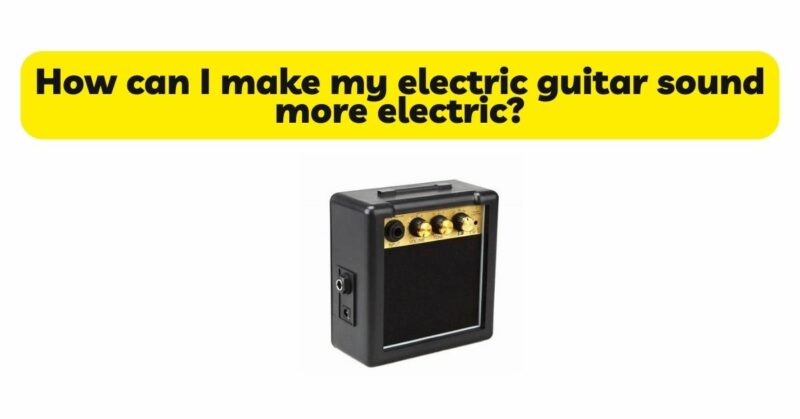
- Experiment with Different Amp Settings: Your amplifier is a crucial component in shaping the electric sound of your guitar. Experiment with different amp settings to achieve the desired tone. Adjust the gain or overdrive settings to add grit and distortion, while manipulating the equalizer (EQ) controls can sculpt the frequency response of your sound. Explore the different amp channels, switch between clean and dirty tones, and experiment with effects such as reverb, delay, or modulation to add depth and complexity to your electric sound.
- Consider Using Effects Pedals: Effects pedals can be valuable tools for enhancing the electric sound of your guitar. Explore the wide range of effects available, such as distortion, fuzz, modulation, or time-based effects, to add texture and dimension to your tone. Experiment with different pedal combinations and settings to find the perfect blend of effects that complement your desired electric sound. Remember to use effects tastefully, ensuring they enhance your playing without overpowering your guitar’s natural tone.
- Experiment with Different Playing Techniques: Beyond picking techniques, exploring different playing techniques can also add an electric flair to your sound. Experiment with techniques such as string bends, vibrato, slides, hammer-ons, pull-offs, or pinch harmonics to inject expressiveness and personality into your playing. These techniques not only add an electric character to your sound but also allow you to create unique tonal variations and evoke emotion through your playing.
- Consider Guitar Setup and String Selection: The setup of your guitar and the choice of strings can impact the electric sound. Optimize your guitar’s setup by adjusting the action, intonation, and truss rod to achieve optimal playability and resonance. Experiment with different string gauges and materials (e.g., nickel-plated steel, pure nickel, stainless steel) to find the ones that offer the desired electric response and tonal characteristics. Each guitar has its unique tonal qualities, so explore different setup options and string combinations to find the sweet spot for your desired electric sound.
Conclusion: Unlocking the true electric potential of your guitar requires a combination of experimentation, technique, and sonic exploration. By implementing the tips discussed above, including experimenting with pickup selection, adjusting pickup height and tone control, exploring different picking techniques, experimenting with amp settings and effects pedals, exploring various playing techniques, and considering guitar setup and string selection, you can take your electric sound to new heights. Embrace the versatility of your electric guitar, let your creativity soar, and allow the captivating electric tones to inspire your musical journey.