
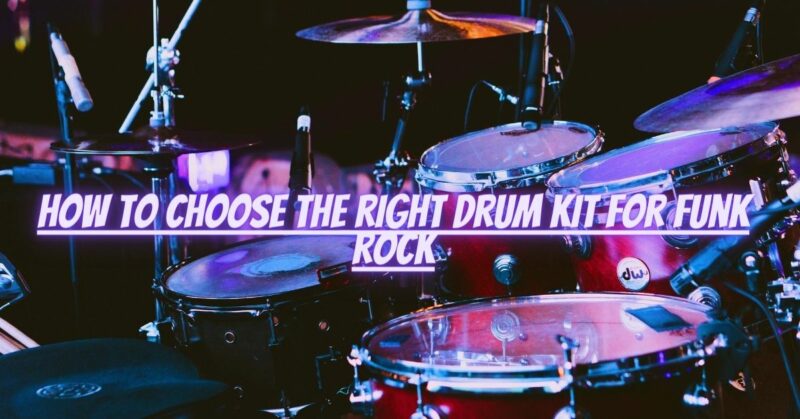
Funk rock is a dynamic and rhythmic genre that combines the tight grooves of funk with the raw energy of rock. As a drummer in a funk rock band, your drum kit plays a vital role in creating the infectious and driving rhythms that define the genre. In this article, we will guide you through the process of choosing the right drum kit for funk rock. From drum sizes and materials to cymbal choices and drumhead selection, we’ll explore the key elements to consider when configuring your kit to capture the essence and groove of funk rock.
- Drum Sizes and Materials: Funk rock drumming demands a balance between power and precision. Consider using drum sizes that offer a punchy and focused sound. Opt for a bass drum around 22 to 24 inches for a solid and defined low-end punch. Choose rack toms between 10 and 13 inches and a floor tom between 14 and 16 inches for enhanced projection and versatility. Drum shells made from maple, birch, or a blend of woods are popular choices for their balanced tone, allowing for both warmth and attack.
- Snare Drum Selection: The snare drum is a key element in funk rock drumming, providing the backbone of the groove. Look for a snare drum that offers crispness, sensitivity, and versatility. Consider a medium-sized snare drum, around 5.5 to 6.5 inches in depth, for a balanced and dynamic sound. Choose a snare drum that provides a sharp attack and a wide tuning range. Experiment with different snare drum materials, such as wood, brass, or steel, to find the desired tone that cuts through the mix while maintaining warmth and character.
- Cymbal Choices: Funk rock drumming calls for cymbals that offer a combination of brightness, sustain, and musicality. Aim for a well-balanced cymbal setup that complements the genre’s grooves. Choose a ride cymbal that provides clarity and definition, with a balanced mix of stick definition and wash. Opt for crash cymbals that deliver a cutting and explosive sound, capable of punctuating climactic moments in funk rock songs. Hi-hats should offer a crisp and articulate sound, allowing for precise and dynamic footwork. Experiment with different cymbal sizes and weights to find the right combination that suits your playing style and complements the funk rock groove.
- Drumhead Selection: Selecting the right drumheads is crucial for achieving the desired sound in funk rock drumming. Opt for drumheads that offer durability, attack, and controlled sustain. Clear drumheads on the toms provide brightness and focused tones, allowing for defined and punchy grooves. Consider coated drumheads on the snare drum to achieve a warm and slightly controlled sound, enhancing the funk feel. For the bass drum, choose a drumhead that offers a balance of low-end thump and controlled resonance, providing a solid foundation for the groove.
- Funky Percussion: Funk rock often incorporates percussion elements to add texture and rhythmic complexity. Consider adding auxiliary percussion instruments, such as cowbells, tambourines, or shakers, to your drum setup. These instruments can enhance the groove and provide additional rhythmic layers to complement the funk rock sound. Experiment with different placement and combinations of percussion instruments to find the right blend for your funk rock drumming style.
- Ergonomics and Playability: Setting up your drum kit ergonomically is crucial for comfort and optimal performance. Adjust the drum and cymbal heights, angles, and positions to suit your playing style and physical requirements. Use quality hardware and accessories that offer stability, durability, and ease of adjustment, allowing you to focus on your performance without distractions.
Conclusion: Selecting the right drum kit for funk rock involves considering drum sizes, materials, cymbal choices, drumhead selection, incorporating funky percussion, and configuring your kit ergonomically. By choosing drum sizes that offer punch and focus, selecting a versatile and responsive snare drum, experimenting with cymbals that provide brightness and sustain, using drumheads that offer attack and control, incorporating funky percussion elements, and setting up your kit with comfort and playability in mind, you can create an instrument that captures the infectious grooves and energy of funk rock. Remember to listen to funk rock recordings, study the drumming styles of influential drummers in the genre, and practice with a focus on groove, precision, and musicality. With the right drum kit setup, you’ll be ready to lay down the funky foundation that gets people moving and grooving to the irresistible sound of funk rock.