
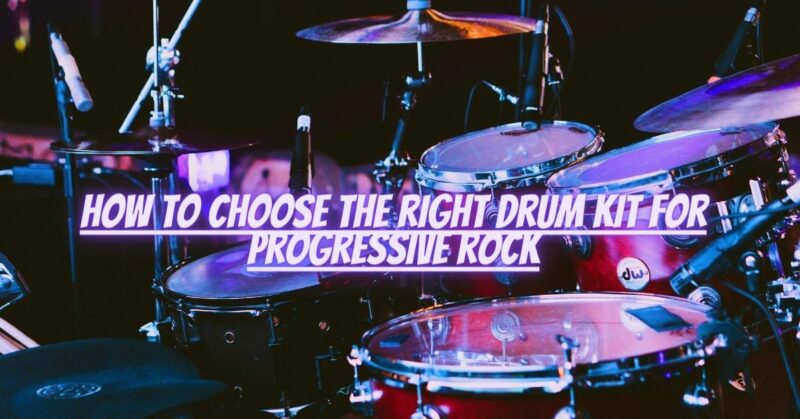
Progressive rock is a genre that embraces innovation, complexity, and musical exploration. As a drummer in a progressive rock band, selecting the right drum kit is essential to capture the genre’s dynamic range, intricate rhythms, and expansive soundscapes. In this article, we will guide you through the process of choosing a drum kit tailored for progressive rock. From drum sizes and materials to cymbal choices and auxiliary percussion, we’ll cover the key factors to consider, enabling you to create an ideal setup for unleashing your creativity in the realm of progressive rock.
- Drum Sizes and Materials: Progressive rock often features a wide range of dynamics and sonic textures. Consider a drum kit with multiple toms, ranging from 10 to 16 inches, to allow for melodic fills and versatile drumming patterns. A 22-inch bass drum is a popular choice, providing a balanced and punchy low-end. Birch, maple, or hybrid shells are common options for their versatility, allowing for a wide dynamic range and excellent projection.
- Snare Drum Selection: The snare drum is a focal point in progressive rock, providing clarity, articulation, and dynamic control. Look for a snare drum that offers versatility and responsiveness across different playing techniques and dynamics. Consider a medium-depth snare drum around 5 to 6.5 inches, constructed from materials like maple, brass, or steel, for a balanced and expressive sound. Experiment with different snare drumheads to find the right blend of sensitivity, articulation, and projection.
- Cymbal Choices: Progressive rock often calls for a diverse array of cymbal sounds to accentuate complex rhythms and atmospheric passages. Consider a combination of cymbals that offer a balance between brightness and darkness. Opt for a ride cymbal with a clear and defined stick sound, capable of cutting through intricate patterns. Hi-hats should provide crisp articulation and a versatile range of dynamics. Incorporate crash cymbals with varying sizes and thicknesses to achieve a spectrum of explosive accents and crashes. Experiment with china cymbals and splashes to add unique textures to your playing.
- Auxiliary Percussion: Progressive rock often incorporates auxiliary percussion to enhance the sonic palette and create unique textures. Consider adding instruments such as chimes, bells, wood blocks, or even electronic pads to your setup. Experiment with different placements and mounting options to ensure easy access and seamless integration within your drum kit. Auxiliary percussion allows for the exploration of unconventional sounds and adds depth to your progressive rock compositions.
- Drumhead Selection: Selecting the right drumheads is crucial for achieving the desired sound in progressive rock drumming. Opt for versatile drumheads that offer a balance between sustain and control. Coated drumheads on the snare drum enhance warmth and provide a controlled response, allowing for articulate ghost notes and powerful backbeats. Clear drumheads on the toms offer a balance of attack, sustain, and projection. For the bass drum, choose a drumhead that provides the desired level of attack and low-end presence.
- Electronic Integration: Progressive rock often incorporates electronic elements and sound manipulation. Consider integrating electronic pads, triggers, or sample pads into your drum kit. This integration allows for the triggering of electronic sounds, samples, or effects, expanding your sonic possibilities and adding depth to your progressive rock arrangements. Experiment with layering acoustic and electronic sounds to create complex textures and ethereal soundscapes.
- Ergonomics and Playability: Consider the ergonomics and playability of your drum kit, especially for the intricate and demanding nature of progressive rock drumming. Ensure that the drum shells and hardware are sturdy and capable of withstanding intense and dynamic playing. Adjust the drum and cymbal heights, angles, and positions to accommodate your playing style and comfort. Invest in quality hardware and accessories that provide stability and durability for your drum kit, allowing you to unleash your creativity without constraints.
Conclusion: Choosing the right drum kit for progressive rock drumming involves considering drum sizes and materials, snare drum selection, cymbal choices, auxiliary percussion, drumhead selection, electronic integration, ergonomics, and playability. By selecting drums that offer a wide dynamic range and versatility, choosing a versatile snare drum, opting for cymbals that provide a balance between brightness and darkness, incorporating auxiliary percussion, using appropriate drumheads, and ensuring playability and durability, you can create an ideal drum kit that captures the spirit and intricacies of progressive rock. With the right setup, you’ll have the tools to explore complex rhythms, create atmospheric soundscapes, and unleash your creativity within the progressive rock genre.