
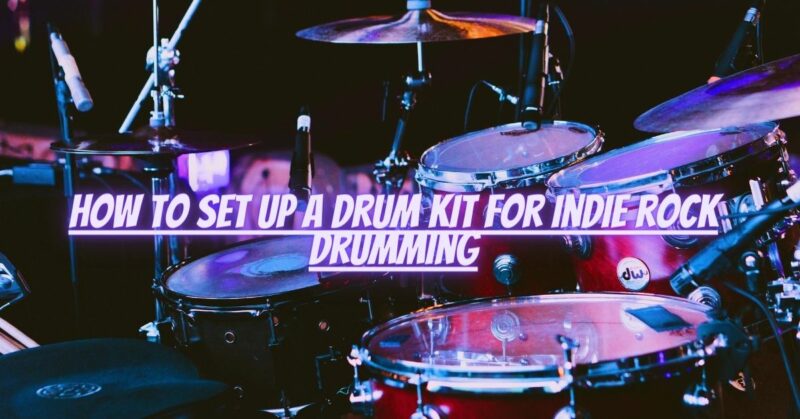
Indie rock drumming is known for its raw energy, creativity, and eclectic soundscapes. As an indie rock drummer, your drum kit setup plays a crucial role in creating the distinctive sonic palette that defines the genre. In this article, we will guide you through the process of setting up a drum kit specifically tailored for indie rock drumming. From drum sizes and cymbal choices to auxiliary percussion and drumhead selection, we’ll explore the key elements that contribute to the unique indie rock drumming sound.
- Drum Sizes and Configurations: When setting up a drum kit for indie rock, consider a versatile configuration that allows for dynamic playing and tonal flexibility. A standard setup typically includes a 22″ bass drum, 12″ and 16″ rack toms, and a 14″ or 16″ floor tom. This configuration offers a wide range of tonal options while providing a balanced and punchy sound.
- Snare Drum: The snare drum is the centerpiece of your drum kit. Opt for a snare drum that delivers a crisp and versatile sound. A 14″ x 5.5″ or 14″ x 6.5″ snare drum is a popular choice for indie rock, providing a balanced mix of sensitivity, depth, and projection. Experiment with different drumhead options to find the perfect balance between attack and warmth.
- Cymbal Selection: Cymbals contribute greatly to the indie rock sound, adding shimmering accents and driving energy. Consider a balanced set of cymbals that complement the genre’s dynamic range. A typical setup may include a bright and articulate ride cymbal, a crash cymbal with a quick and explosive response, and a set of hi-hats that offer a crisp and defined sound. Experiment with different sizes and weights to find the perfect combination that suits your playing style and musical preferences.
- Auxiliary Percussion: Indie rock drumming often incorporates auxiliary percussion to add texture and sonic variety. Consider adding instruments like tambourines, shakers, or cowbells to your drum kit setup. These instruments can be mounted on stands or clamped onto your existing hardware, allowing you to introduce rhythmic layers and subtle accents to your playing.
- Drumhead Selection: Choosing the right drumheads is crucial for achieving the desired sound in indie rock drumming. Opt for drumheads that provide a balance between attack, sustain, and tonal warmth. Coated drumheads are commonly used on the snare drum to enhance articulation and control. Clear drumheads on toms deliver focused and resonant tones, while bass drumheads with built-in dampening can provide punch and low-end control.
- Experiment with Drum Tuning: Indie rock embraces a wide range of sonic textures, from tight and focused to loose and resonant. Experiment with different drum tunings to achieve the desired tonal characteristics for each song. Higher tunings with controlled overtones may be suitable for more upbeat and punchy tracks, while lower tunings with added sustain can create a more atmospheric and expansive sound.
- Drum Dampening: Controlling the sustain and resonance of your drums is essential in indie rock drumming. Experiment with drum dampening techniques using products like muffling gels, dampening rings, or moon gels to achieve the desired balance between sustain and controlled decay. This allows you to tailor the drum sound to fit different song arrangements and playing styles.
- Ergonomics and Comfort: Consider ergonomics and comfort when setting up your drum kit for indie rock. Ensure that the drum throne, pedal, and hardware are adjusted to a comfortable playing position. Pay attention to proper posture and technique to avoid unnecessary strain during energetic performances.
- Personalize Your Setup: While there are general guidelines for setting up an indie rock drum kit, don’t be afraid to personalize your setup based on your preferences and the specific requirements of your band’s sound. Experiment with different drum sizes, drumhead combinations, and auxiliary percussion options to find the unique sonic palette that best represents your indie rock style.
Conclusion: Setting up a drum kit for indie rock drumming involves a careful balance of sonic considerations and personal preferences. By choosing drum sizes and configurations that provide tonal versatility, selecting cymbals that complement the genre’s dynamic range, incorporating auxiliary percussion for added texture, experimenting with drumhead selection and tuning, considering ergonomics and comfort, and personalizing your setup to fit your style, you can create a drum kit that serves as the sonic foundation for your indie rock band. Remember to embrace experimentation and allow your setup to evolve as your musical journey progresses. With the right setup, you’ll be ready to unleash your creativity and contribute to the captivating indie rock soundscapes that define the genre.