
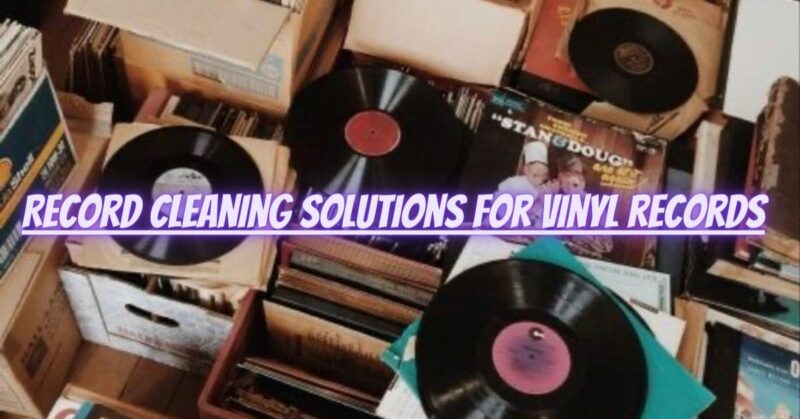
Vinyl records are cherished for their warm sound and unique listening experience. To maintain the quality and longevity of your vinyl collection, proper cleaning is essential. Record cleaning solutions are specifically formulated to remove dust, dirt, and other contaminants that can accumulate on vinyl surfaces. In this article, we will explore different types of record cleaning solutions and provide guidance on how to choose the right one for your vinyl records.
- Distilled Water and Isopropyl Alcohol Mixture: A cost-effective and widely used cleaning solution for vinyl records involves creating a mixture of distilled water and isopropyl alcohol. This solution effectively removes dust, fingerprints, and light surface contaminants. To prepare the solution, combine distilled water (preferably demineralized or deionized) with a small amount of isopropyl alcohol (90-99% concentration). Mix them in a spray bottle and apply a few sprays onto a lint-free microfiber cloth or a specialized record cleaning brush. Gently clean the record in a circular motion, following the grooves, and then wipe dry with a clean cloth.
- Record Cleaning Fluids: Commercially available record cleaning fluids offer a more comprehensive and specialized approach to cleaning vinyl records. These fluids are designed to dissolve and remove stubborn contaminants while minimizing any potential damage to the vinyl surface. They typically come in spray bottles or dropper applicators. Apply a few drops or sprays of the cleaning fluid onto a record cleaning brush or a microfiber cloth and gently clean the record’s surface, taking care to follow the grooves. Wipe dry with a clean cloth after cleaning.
- DIY Vinegar Solution: Some vinyl enthusiasts prefer using a DIY vinegar solution to clean their records. This mixture consists of distilled water, isopropyl alcohol, and a small amount of white vinegar. The vinegar helps in removing static and reducing surface noise. To create this solution, mix distilled water, isopropyl alcohol, and white vinegar in equal parts. Apply the solution to a cleaning brush or cloth and gently clean the record, ensuring you follow the grooves. Wipe dry with a clean cloth.
- Carbon Fiber Brushes: Carbon fiber brushes are effective tools for regular maintenance and dust removal from vinyl records. While they do not require any cleaning solution, they help remove loose debris and static buildup from the record’s surface. Simply place the brush on the record, rotate it gently in a clockwise direction, and allow the bristles to sweep away the dust. It’s important to note that carbon fiber brushes are not intended for deep cleaning and should be used in conjunction with other cleaning methods.
- Pre-Moistened Record Cleaning Wipes: Pre-moistened record cleaning wipes are convenient for quick cleaning sessions and on-the-go use. These wipes are pre-soaked with a cleaning solution, eliminating the need for additional liquids or sprays. Simply remove a wipe from the package and gently wipe the record’s surface, following the grooves. Allow the record to air dry or use a clean cloth to wipe away any residue.
Conclusion: Maintaining the cleanliness of your vinyl records is vital for preserving their sound quality and longevity. Whether you choose to use a DIY solution with distilled water and isopropyl alcohol, a commercial record cleaning fluid, a DIY vinegar solution, carbon fiber brushes, or pre-moistened cleaning wipes, regular and gentle cleaning will help ensure optimal playback and extend the lifespan of your vinyl collection. Remember to handle records with care, follow the manufacturer’s instructions for cleaning solutions, and always use lint-free materials to prevent scratches. With proper cleaning techniques and the right cleaning solutions, your vinyl records will continue to provide an immersive and pristine listening experience for years to come.