
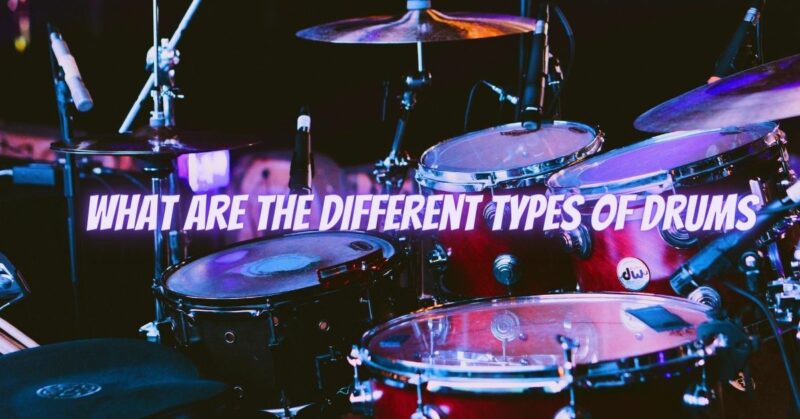
Drums have been an integral part of human culture for centuries, serving as instruments of rhythm and expression across various musical genres and cultural traditions. From ancient percussion instruments to modern drum kits, the world of drums offers a wide range of diverse and fascinating instruments. In this article, we will delve into the exciting realm of drums, exploring different types of drums from around the world and their unique characteristics.
- Snare Drum: The snare drum is a versatile and popular drum found in various musical genres. It features a shallow drum shell with a set of snare wires stretched across the bottom head. When struck, the snare wires vibrate against the bottom head, producing a distinct snappy sound. Snare drums are commonly used in orchestras, marching bands, rock, pop, and jazz music.
- Bass Drum: The bass drum, also known as the kick drum, is the largest drum in a drum kit. It produces a deep and booming sound and is played with a foot-operated pedal. The bass drum provides the rhythmic foundation, emphasizing the downbeats, and is essential in genres like rock, metal, and jazz.
- Tom-Toms: Tom-toms, or toms for short, are cylindrical drums of varying sizes and pitches. They come in different diameters and depths and are typically played with drumsticks. Toms are an essential component of drum kits, adding depth, texture, and fills to the music. They are often positioned above the bass drum or mounted on stands.
- Conga Drums: Conga drums are Afro-Cuban percussion instruments consisting of tall, narrow, single-headed drums. They are traditionally made from wood or fiberglass and are played by hand. Conga drums produce a deep, resonant sound and are widely used in Latin, Afro-Cuban, and jazz music.
- Djembe: Originating from West Africa, the djembe is a goblet-shaped drum with a skin head stretched over a wooden shell. It is played with bare hands and produces a wide range of tones, from deep bass to high-pitched slaps. The djembe is renowned for its expressive qualities and is often used in traditional African music, world music, and drum circles.
- Tabla: The tabla is a pair of small, hand drums used in classical Indian music. It consists of two drums, the smaller dayan and the larger bayan. The tabla is played with the fingers and palms, creating intricate rhythms and melodic patterns. It is known for its versatile tonal range and is a staple in Indian classical music.
- Bongo Drums: Bongo drums are a pair of small, open-bottomed drums of different sizes attached together. They are typically played with the hands and produce a sharp, resonant sound. Bongo drums are widely used in Latin music, Afro-Cuban music, and jazz, adding vibrant rhythms and improvisational elements.
- Taiko Drums: Taiko drums are large Japanese drums made from hollowed-out tree trunks and animal skin heads. They come in various sizes, from small to enormous, and are played with sticks called bachi. Taiko drums are powerful instruments that produce thunderous, reverberating sounds and are often featured in traditional Japanese music, festivals, and performances.
- Timpani: Also known as kettle drums, timpani are large, bowl-shaped drums with a tunable drumhead. They are typically played with mallets and are prominent in orchestras and classical music. Timpani drums provide deep and resonant tones and are tuned to specific pitches to complement the musical composition.
Conclusion: The world of drums is rich and diverse, offering an array of instruments with unique sounds, cultural significance, and stylistic applications. From the booming bass drum to the intricate rhythms of the tabla, each type of drum has its own character and purpose. Exploring the different types of drums allows us to appreciate the rich heritage and expressive potential of these timeless instruments. So, whether you’re drawn to the thunderous power of the taiko or the vibrant rhythms of the congas, embrace the rhythm and discover the joy of drumming in its many forms.