
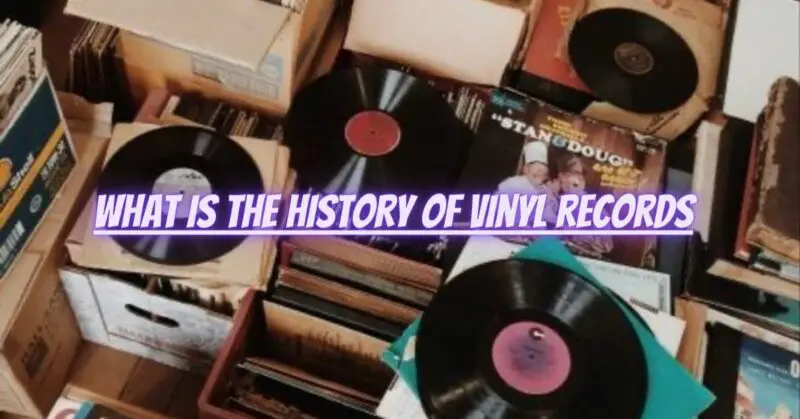
Vinyl records have played a significant role in the history of recorded music, providing a tangible and enduring medium for musical expression. From their humble beginnings to their golden era and subsequent revival, vinyl records have shaped the way we consume and appreciate music. In this article, we will take a journey through the fascinating history of vinyl records, exploring their origins, evolution, and enduring impact on the music industry.
- Early Sound Reproduction: The foundation for vinyl records can be traced back to the late 19th century with the invention of the phonograph by Thomas Edison in 1877. Edison’s phonograph used a rotating cylinder wrapped in tinfoil to record and reproduce sound. However, it was Emil Berliner, a German-born inventor, who revolutionized the medium by introducing the gramophone in the late 1880s. Berliner’s gramophone utilized a flat disc coated with a shellac resin to record and play back sound.
- The Birth of Vinyl: Vinyl records as we know them today emerged in the 1940s with the development of vinyl materials as a replacement for shellac. During World War II, shellac, a brittle and fragile material used in record production, became scarce. The search for alternative materials led to the adoption of polyvinyl chloride (PVC) as the primary material for records. Vinyl offered increased durability, flexibility, and better sound quality.
- The Microgroove Era: In the early 1950s, the introduction of microgroove technology by Columbia Records revolutionized vinyl record production. The microgroove format allowed for smaller grooves and increased playing time on a single record. This innovation allowed for the recording of entire albums on a single disc, transforming the music industry and paving the way for the emergence of long-playing (LP) records.
- Vinyl’s Golden Age: The 1960s and 1970s marked the golden age of vinyl records. With the rise of rock and popular music, vinyl records became the dominant format for music consumption. Artists and labels embraced the LP format, releasing albums that showcased album art, extensive liner notes, and a cohesive listening experience. Vinyl records became cultural artifacts, capturing the spirit of the era and inspiring generations of music enthusiasts.
- The Rise of the Compact Disc: In the 1980s, digital technology disrupted the vinyl record market with the introduction of the compact disc (CD). CDs offered convenience, portability, and the promise of superior sound quality. As a result, vinyl sales declined, and many record companies shifted their focus to CD production. By the late 1990s, vinyl records had become a niche market, primarily sustained by audiophiles and collectors.
- Vinyl’s Resurgence: The 2000s witnessed a resurgence of interest in vinyl records. Music enthusiasts and younger generations began rediscovering the unique qualities of vinyl, fueling a revival in record sales. Independent record labels, artists, and even major labels responded to the demand by reissuing classic albums and releasing new music on vinyl. Vinyl records became a symbol of authenticity, craftsmanship, and a deliberate listening experience in a digital age.
- Vinyl in the Digital Era: Vinyl records continue to thrive in the digital era, coexisting with streaming and digital downloads. The vinyl market has expanded to include a wide range of genres, limited editions, colored vinyl, and special releases, catering to the diverse interests of collectors and music enthusiasts. Record stores, online platforms, and vinyl-focused events provide avenues for discovering and sharing the joy of vinyl.
Conclusion: The history of vinyl records is a testament to the enduring appeal of analog sound and the unique experience that vinyl offers. From their early phonograph roots to their dominance in the music industry and subsequent decline and resurgence, vinyl records have left an indelible mark on music culture. Today, vinyl records continue to captivate music lovers, collectors, and audiophiles, providing a tangible connection to the past and a timeless appreciation for the art of sound. So, dust off your turntable, browse the record store aisles, and immerse yourself in the history and magic of vinyl records.