
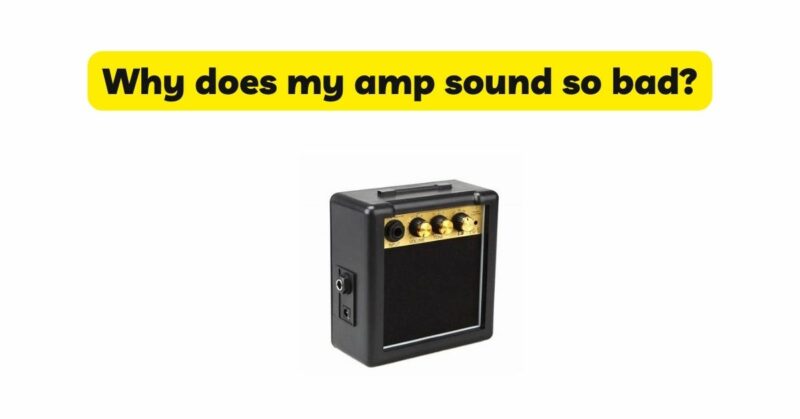
As a musician, experiencing a poor-sounding amp can be frustrating and hinder your ability to achieve the desired tone. Various factors can contribute to an amp sounding bad, including technical issues, improper settings, or room acoustics. In this article, we will explore common reasons why an amp might sound subpar and provide practical solutions to help you improve its sound quality. By troubleshooting and addressing these issues, you can unleash the full potential of your amp and enjoy a more satisfying playing experience.
- Technical Issues: a. Faulty Components: A bad-sounding amp may be the result of faulty components, such as worn-out tubes, damaged speakers, or malfunctioning circuitry. Have a qualified technician inspect your amp to identify and rectify any technical issues. b. Poor Wiring or Connections: Loose or faulty wiring can introduce noise, distortion, or intermittent sound issues. Ensure all connections, including input/output jacks, speaker cables, and power cords, are secure and functioning properly.
- Improper EQ and Tone Settings: a. Overwhelming Bass or Treble: Excessive bass or treble can lead to a muddy or harsh sound. Adjust the EQ settings on your amp to find a balanced tone, paying attention to the bass, midrange, and treble frequencies. b. Inadequate Midrange Presence: Insufficient midrange presence can result in a lackluster and thin sound. Experiment with boosting the midrange to add warmth, definition, and character to your tone.
- Room Acoustics: a. Reflections and Resonance: Poor room acoustics, characterized by excessive reflections and resonances, can negatively impact the sound of your amp. Consider acoustic treatment options such as diffusers, absorbers, or bass traps to minimize unwanted reflections and enhance clarity. b. Standing Waves: Standing waves caused by room dimensions can create frequency build-ups or cancellations, leading to uneven frequency response. Positioning your amp and adjusting speaker placement can help mitigate standing wave issues.
- Inadequate Speaker Choice: a. Mismatched Speaker and Amp: The combination of a mismatched speaker and amp can result in poor tonal balance and unsatisfactory sound. Ensure the speaker’s power handling capabilities, impedance, and tonal characteristics are compatible with your amp. b. Low-Quality Speakers: Low-quality or worn-out speakers can compromise the overall sound quality. Consider upgrading to higher-quality speakers known for their clarity, responsiveness, and tonal accuracy.
- Pedal Interactions: a. Pedal Placement and Signal Chain: The placement and order of your effects pedals can affect the sound of your amp. Experiment with different pedal arrangements and consider how they interact with your amp’s input stage to achieve the desired sound. b. Impedance Matching: Mismatched impedance between pedals and the amp can result in signal loss, tonal degradation, or undesirable noise. Ensure proper impedance matching or use buffer pedals to maintain signal integrity.
- Volume and Gain Staging: a. Improper Gain Staging: Excessive gain or improper gain staging can result in a distorted, noisy, or unpleasant sound. Optimize your gain settings to find the right balance between clarity, dynamics, and saturation. b. Speaker Overload: Pushing the amp’s volume beyond its limits or using an underpowered amp can cause speakers to distort or produce an undesirable sound. Match the amp’s power output to the speaker’s power handling capabilities for optimal performance.
- Lack of Maintenance: a. Tube Replacement: Tubes degrade over time and can significantly impact the sound quality. Replace worn-out tubes to restore optimal performance and tonal characteristics. b. Speaker Cleaning and Inspection: Dust, debris, or damage to the speaker cone can affect the sound quality. Regularly clean and inspect your speakers to ensure they are in good condition.
- Personal Preferences and Tone Expectations: a. Genre or Style Considerations: Different musical genres or playing styles may require specific tonal characteristics. Experiment with different amp settings, pedal combinations, or EQ adjustments to tailor your sound to your preferred genre or style. b. Managing Expectations: It’s important to recognize the limitations of your amp and adjust your expectations accordingly. Understand that a budget or entry-level amp may not deliver the same sound quality as a high-end professional amplifier.
Conclusion: Identifying the reasons why your amp sounds bad is the first step towards improving its sound quality. By troubleshooting technical issues, adjusting EQ settings, optimizing room acoustics, considering speaker choices, addressing pedal interactions, managing volume and gain staging, maintaining your gear, and managing your tone expectations, you can enhance the sound of your amp and enjoy a more satisfying playing experience. Remember, each amp has its unique characteristics, and by addressing these issues, you can unlock the true potential of your amp and unleash your creativity.